
News - Viscosity RSS Feed
23 Mar


0
70
The Industrial Reality of Compact Direct-to-Garment Printing Under Production StressThe adoption of Mini A4 DTG Multifunction Printers in small-scale industrial environments has introduced a paradox of compact versatility alongside significant operational constraints. Consider a scenario where a boutique print shop integrates multiple units to hand..
19 Mar

0
41
The Industrial Reality of Coffee Printer Uptime ChallengesIn specialized coffee shops deploying advanced printing technology for latte art, the Color Version Latte Coffee Printer represents a significant leap in precision and aesthetic output. However, this sophistication introduces complex technical challenges that directly affect daily operationa..
17 Mar

0
37
The Industrial Reality of Implementing Edible Food InkEdible food ink represents a niche yet rapidly evolving segment within specialized printing technologies used primarily in the food industry. While consumer-level or DIY edible ink solutions are readily available and attract hobbyist and small-scale applications, scaling such technology to indus..
17 Mar

0
45
Industrial Impact on Shop-Floor Production and Workflow
The introduction of Epson's T3200-U3-2 printhead in April 2026 marks a notable advancement in the industrial digital printing sector, particularly for UV-curing inkjet applications. Its enhanced ink heating capacity, reaching up to 50°C, enables it to handle higher-viscosity UV inks than previ..
17 Mar
0
39
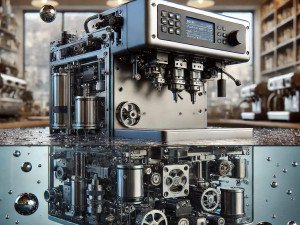
The Industrial Reality of Economical Latte Coffee Printers in Commercial SettingsDeploying economical latte coffee printers within a foodservice environment presents unique operational challenges not immediately evident from vendor specifications. In a mid-sized café environment capable of serving 300-400 customers daily, throughput demands can pus..
17 Mar
0
46
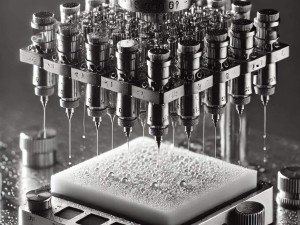
The Industrial Reality of Maintaining a Portable PrintPen in Food and Beverage EnvironmentsConsider a mid-sized gourmet café implementing the Portable PrintPen Edible Food & Drinks Printer to customize customer orders with intricate edible graphics on pastries and beverages. Despite its appeal, operators face recurring maintenance demands driven by..
17 Mar
0
47
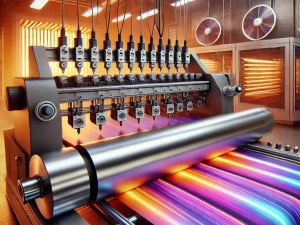
The Industrial Reality of Roll-to-Roll DTF Printing ConstraintsIn commercial textile printing environments where throughput and operational continuity dictate profit margins, the deployment of A3 Roll DTF (Direct to Film) printer machines introduces a complex interplay of mechanical and process-centric challenges. While these units promise high-res..
16 Mar
0
38
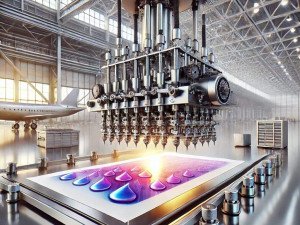
The Industrial Reality of Edible Food Ink IntegrationIn the arena of food decoration and customization, edible food ink technology has transitioned from artisanal novelty to an industrial-grade solution. However, this transition unveils a range of operational complexities and lifecycle cost implications that remain underexplored. Unlike conventiona..
16 Mar

0
36
The Industrial RealityIn the rapidly evolving landscape of food technology, the Economical Latte Coffee Printer presents challenges beyond its immediate functionality. As enterprises scale, they often encounter operational bottlenecks that hinder efficiency and throughput. These issues are complex and multifaceted, requiring a nuanced understanding..
15 Mar
0
35
The Industrial RealityEdible printing, once a niche novelty, is gaining traction in various industries, ranging from food art to beverage enhancement. The Portable PrintPen Edible Food & Drinks Printer presents intriguing possibilities, but it also poses operational bottlenecks that demand rigorous examination. As the technology permeates professio..
15 Mar

0
30
The Industrial RealityIn the modern printing industry, where precision meets mass production, the A3 Spot UV Printing Machine emerges as a pivotal tool. But hidden beneath its promising surface are operational bottlenecks that can impede performance and profitability. Understanding these challenges is crucial for businesses seeking seamless integra..
15 Mar

0
32
The Industrial RealityEdible food printers, such as the Cake Printer Pizza Printer, have emerged as disruptive technologies in culinary arts. These devices promise high precision and creativity in food styling, but hidden operational bottlenecks can impact their effectiveness. Imagine a busy restaurant leveraging this technology during peak hours o..