The Gap Between DIY and Industrial-Grade Edible Food Ink Challenges Explored
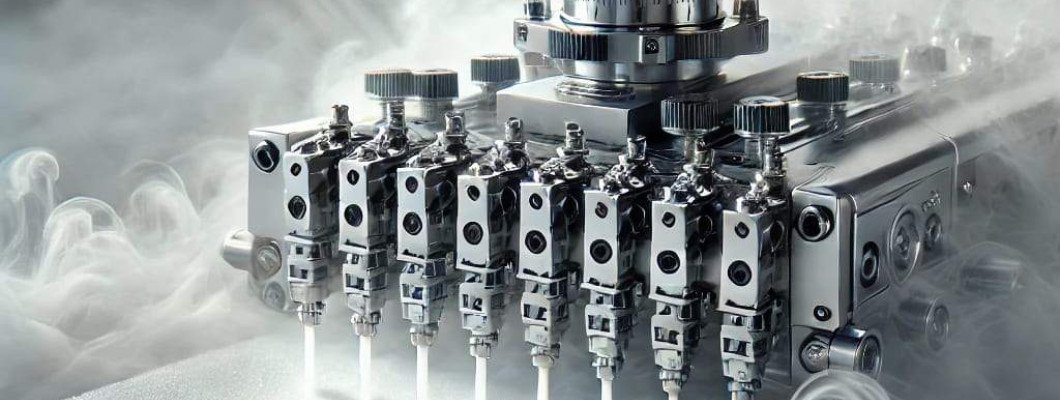
The Industrial Reality of Implementing Edible Food Ink
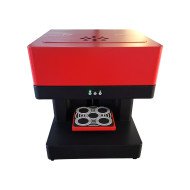
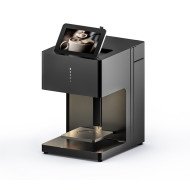
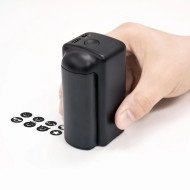
Edible food ink represents a niche yet rapidly evolving segment within specialized printing technologies used primarily in the food industry. While consumer-level or DIY edible ink solutions are readily available and attract hobbyist and small-scale applications, scaling such technology to industrial-grade environments exposes multiple unresolved operational and technical bottlenecks. These challenges manifest when consistent precision, throughput, and regulatory compliance are non-negotiable, such as in large-scale confectionery branding or pharmaceutical edible packaging.
Consider a medium-size food production plant aiming to integrate edible food ink printing into its packaging line. At the DIY level, inks are often water-based, employing vegetable colorants with limited stability, variable droplet size, and restricted substrate compatibility. Industrial-grade edible inks, however, require strict physicochemical consistency, robust printhead compatibility, thermal and mechanical stability, and above all, adherence to stringent safety and food-contact certifications. The immediate challenge lies in translating inks optimized for low-speed, small-scale printers to high-throughput industrial printheads that operate at speeds exceeding 1,000 mm/s and at precise drop volumes below 5 picoliters (pl).
One critical bottleneck is the ink rheology and its interaction with printhead mechanics under industrial conditions. DIY inks often lack the necessary viscosity stability and particulate control, causing nozzle clogging and significant print defects during prolonged runs. Additionally, the chemical composition must not only be food-safe but also maintain color vibrancy and adhesion on complex substrates ranging from sugar sheets to polymer films. These operational realities widen the gap between artisanal solutions and scalable industrial implementations.
Ink Physicochemical Properties and Printhead Stress Analysis
At an analytical level, edible food inks must exhibit stable viscosity typically within 3-10 mPa·s (millipascal-seconds) to maintain drop consistency in piezoelectric or thermal inkjet printheads. Deviations outside this range exponentially increase nozzle failure rates. Mathematical modeling of droplet ejection shows that viscosity (η) and surface tension (σ) critically influence the dimensionless Ohnesorge number (Oh = η / (ρσL)^0.5), which must lie between 0.1 and 1.0 for optimal drop formation without satellite droplets. Here, ρ is density and L characteristic length (~50 µm nozzle diameter).
Industrial printheads operate with pulse frequencies exceeding 30 kHz. This subjects the ink to rapid cyclical pressure and shear forces, accelerating particulate agglomeration in insufficiently filtered inks. Empirical data comparing standard food coloring solutions (η ≈ 5 mPa·s, σ ≈ 35 mN/m) with proprietary industrial edible inks (η ≈ 6.5 mPa·s, σ ≈ 30 mN/m) indicate the latter maintain print quality at up to 10x higher run lengths before clogging.
Hardware-Grade Comparisons and Infrastructure Integration
| Parameter | DIY Edible Ink Setup | Industrial Edible Ink System |
|---|---|---|
| Print Speed (mm/s) | 100-250 | 800-1200 |
| Droplet Volume (pl) | 10-20 | 3-7 |
| Viscosity (mPa·s) | 4-6 | 5-7 |
| Run Length per Cartridge (m2) | 5-15 | 50-100+ |
| Compliance (FDA, EU Food Reg.) | Variable, often uncertified | Strictly certified, batch tested |
Integrating industrial-grade edible inks demands compatible printhead materials resistant to corrosion by organic acids and sugars. Furthermore, thermal regulation systems tailored to maintain ink temperature within ±1°C prevent viscosity fluctuations that otherwise contribute to clogging or color inconsistency.
Operational Bottlenecks in Maintenance and Lifecycle Costs
From a lifecycle maintenance perspective, industrial edible inks require rigorous filtration methods (microfiltration below 1 µm) and frequent chemical stability testing to prevent biofilm formation inside recirculation channels. Printheads necessitate daily purging cycles and partial disassembly every 500 operational hours for deep cleaning to maintain uptime above 96%.
The asset depreciation of industrial edible ink systems is accelerated by consumable costs, including the need for specialized cartridge seals to prevent ink degradation. Maintenance schedules must incorporate downtime buffers for quality control of ink batches, adding to operational costs that DIY alternatives cannot absorb due to scale inefficiencies.
Substrate Compatibility and Color Stability over Time
Industrial edible inks are tested extensively for adhesion and colorfastness on a variety of substrates: fondant, wafer paper, sugar sheets, and edible films composed of polysaccharides or proteins. Accelerated aging tests indicate color shifts of less than 3 Delta E units over 30 days under refrigeration, contrasting with DIY inks that can exceed 10 Delta E shifts under similar conditions.
These characteristics affect the final product's market acceptance, particularly where intricate, high-resolution designs are required, such as in luxury confectionery or pharmaceutical applications. The interplay among substrate porosity, ink penetration depth (typically between 5-20 µm), and ink drying kinetics is pivotal in maintaining print integrity.
Scenario Analysis on Business Use-Cases
1. Mid-Size Bakery Scaling Custom Printed Cakes
A bakery moving from manual airbrushing to inkjet printing needs inks that maintain stability over 8-10 hour shifts without downtime. Industrial edible ink systems reduce nozzle fouling, maintaining print resolutions of 1200 dpi and droplet precision at 6 pl, enabling intricate designs catering to premium clientele. The cost increment in consumables is offset by labor savings and reduced waste.
2. Pharmaceutical Company Printing Dosage Identification
Pharmaceutical edible food inks must comply with FDA food-contact regulations and contain no allergens or prohibited substances. Industrial inks enable high-speed print at 1000 mm/s with droplet volumes consistent within ±0.5 pl, crucial for barcode reliability and anti-counterfeiting. The integration challenge includes compatibility with cleanroom infrastructure and validation of ink batch traceability.
3. Large Confectionery Brand Requiring Mass Customization
High-volume production demands run lengths exceeding 80 m2 per cartridge with minimal printhead intervention. Industrial inks provide consistent viscosity and color density, preventing production bottlenecks and ensuring ROI on expensive printhead arrays. The ability to switch between edible color profiles without cross-contamination is also critical.
Expert FAQ
How does ink viscosity influence nozzle clogging in edible inkjet printing?
Ink viscosity outside the optimal 3-10 mPa·s range alters shear stress within nozzles, promoting particulate aggregation and clogging. Maintaining stable viscosity minimizes mechanical wear and ink degradation.
What are the main factors causing color degradation in edible inks after printing?
Color degradation stems from pigment instability, substrate absorption variability, and exposure to environmental factors like humidity and light, which can cause photobleaching or chemical breakdown of natural dyes.
Can industrial edible inks be used interchangeably in different printhead technologies?
No. Ink formulations are often printhead-specific due to differing firing mechanisms (thermal vs piezoelectric), requiring tailored surface tension and chemical resistance properties.
What maintenance protocols are critical to maximizing printhead lifespan with edible inks?
Daily purging, microfiltration of inks, monitoring filter clogging indicators, and scheduled disassembly for cleaning are essential to prevent biofilm buildup and mechanical wear.
How do regulatory requirements impact the formulation of edible food inks?
Regulations dictate permissible ingredients, microbial limits, and traceability standards. Formulations must avoid allergens and toxic compounds, incorporating preservatives that do not interfere with print chemistry.
Strategic Verdict on Edible Food Ink Technology
The divergence between DIY and industrial-grade edible food inks underscores the complexity of scaling food-safe printing beyond novelty or artisanal applications. Industrial environments demand inks that adhere to strict physicochemical parameters, ensure operational continuity, and comply with regulatory requirements. Continued R&D into ink rheology, substrate compatibility, and printhead design will define the next generation of edible ink systems. While challenges remain in balancing cost and performance, emerging technological refinements suggest edible food ink printing will steadily mature into a reliable industrial process within the next five years, expanding its footprint in pharmaceutical, confectionery, and packaging sectors.