
Which printer do you need?
UV, DTG, DTF, coffee and food printers each suit different products. Start with what you want to print, then narrow down by size, volume and budget. All 24 GNFEI models are compared at the end of this page.
1. Start with what you want to print
2. UV, DTG and DTF compared
These three cover most custom-printing businesses. The main question is whether you print on hard goods or on fabric, and how many pieces you make at a time.
UV printing
Ink is cured by UV LED light the moment it lands, so prints are dry and ready to handle straight away.
- Prints on: hard and flexible items such as plastic, acrylic, wood, metal, leather, glass (with primer), and cylinders with a rotary attachment.
- Extras: white ink for dark and clear materials, varnish for gloss, and raised textures on supported models.
- Not for: soft garments.
DTG (direct to garment)
Textile ink is printed straight into the fabric, which gives a soft feel and fine photo detail.
- Prints on: T-shirts, hoodies, bags and other fabric items, with the best results on cotton.
- Extras: white ink for black and coloured garments.
- You also need: DTG ink and a pretreatment primer for the garments.
DTF (direct to film)
The design is printed on PET film, coated with hot-melt powder, cured, then heat-pressed onto the item.
- Prints on: cotton, polyester and blends, caps and bags, without pretreating the garment.
- Extras: transfers can be printed in advance and pressed later.
- UV DTF is a separate process that makes stickers for hard goods, no heat press needed.
3. Questions to answer before you buy
A4 models print about 21 × 30 cm, A3 models about 30 × 42 cm and up, and the 4060 UV printer 40 × 60 cm. Check the tallest item too: most of our UV printers take items up to 15 cm, the 4060 up to 16 cm.
Single-head printers suit start-ups and made-to-order work. For daily production runs, look at the dual-head UV printers or a roll DTF printer.
White ink is standard on our UV, DTG and DTF printers. Varnish, raised textures and UV DTF stickers depend on the model, so check the specs.
Inkjet printers work best at about 15–30 °C and 40–70% humidity, away from dust. Desktop models fit on a bench; the A3 UV printers weigh 50–75 kg.
Reference prices run from about $150 for a handheld printer to about $4,900 for the camera-guided A3 UV printer. Ink, film and shipping are extra, so ask us for a full quote.
4. Every model compared
Headline specs and reference prices in USD. Final prices depend on the print head, ink setup and destination.
UV Printers6 models
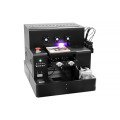 A4 Spot UV LED PrinterModel F85V4
Print area22 × 33 cmCylindersØ 2–11 cmItem height0–15 cmInksCMYK + W + V
$1,400–1,800
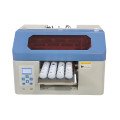 Smart A4 UV PrinterModel F23V4
Print area20 × 30 cmItem height0–75 mmPrint headTX800 / XP600InksCMYK + 2W
$1,400–1,800
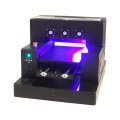 A3 Spot UV PrinterModel F85V3
Print area32 × 50 cmCylindersØ 2–11 cmItem height0–15 cmInksCMYK + W + V
$2,200–2,600
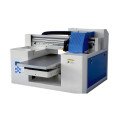 A3 Dual Head UV PrinterModel F50V3
Print area32 × 50 cmItem height0–15 cmPrint headsDual EpsonEffectsVarnish · UV DTF
$2,400–2,800
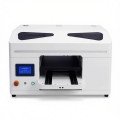 A3 Visual Positioning UV PrinterModel F32V3
Print area30 × 60 cmItem heightUp to 15 cmPrint headEpson i3200PositioningCamera-guided
$4,200–4,900
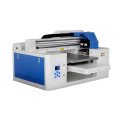 Dual Head 4060 UV PrinterModel F60V2
Print area40 × 60 cmItem heightUp to 160 mmPrint headsDual TX800 / XP600InksCMYK + 2W + V
$2,600–3,300
DTG Printers4 models
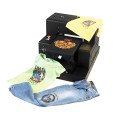 A3 DTG T-shirt PrinterModel F85G3
Print area29.7 × 42 cmItem height0–69 mmPrint headL805 / XP600InksCMYK + 2W
$1,800–2,500
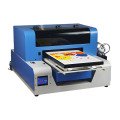 A3 T-shirt DTG PrinterModel F34G3
Print area32 × 45 cmInksCMYK + WInkDTG textileTrayElectronic height
$2,400–2,800
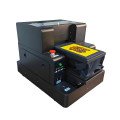 A4 Flatbed T-shirt PrinterModel F85G4
Print area21 × 30 cmPrint headEpson L805InksCMYK + 2WResolution5760 × 1440 dpi
$980–1,200
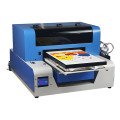 Mini A4 DTG PrinterModel F23G4
Print area21 × 32 cmInksCMYK + WCleaningAutomaticWeight28 kg
$950–1,200
DTF Printers4 models
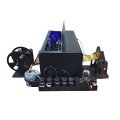 A3 UV DTF Label PrinterModel F60VF
Roll width33 cmLabel widthUp to 10.5 cmPrint headXP600 / L805InksCMYK + W + V
$1,280–1,490
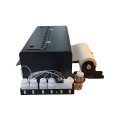 A3 Roll DTF T-shirt PrinterModel F60TF
Print width33 cmFormatA3 rollPrint headXP600 / L805Weight18 kg
$990–1,180
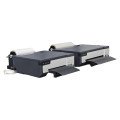 A3 Roll DTF PrinterModel F85T3
Print width32.9 cmPrint headEpson L805InksCMYK LC LM + WResolution5760 × 1440 dpi
$1,180–1,390
 A4 Roll DTF PrinterModel F60T4
Print width21 cmPrint headEpson XP600InksCMYK + 2WResolutionUp to 5760 × 1440 dpi
$750–880
Coffee & Food6 models
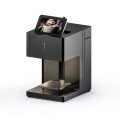 Color Latte Coffee PrinterModel F410C
Print area11 × 11 cmCup height5–18 cmSpeed10–30 s per cupInkEdible, colour
$1,080–1,400
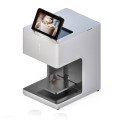 Smart Coffee PrinterModel F410S
Print area11 × 11 cmCup height5–18 cmSpeed10–30 s per cupInkEdible, coffee colour
$950–1,200
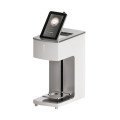 Smart Mini Selfie Coffee PrinterModel F410M
Print area11 × 11 cmCup height5–18 cmSpeed10–30 s per cupInkEdible
$950–1,200
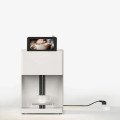 High Speed Selfie Coffee PrinterModel F410P
Speed5–15 s per printResolution600 dpiCartridge≈ 1,000 printsUploadQR code, no app
$1,100–1,300
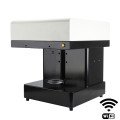 Economical Latte Coffee PrinterModel F111E
Print area11 × 11 cmCup height0–18 cmSpeed10–20 s per cupInkEdible CMYK
$550–790
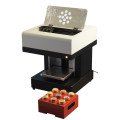 Cake & Food PrinterModel F219E
Print area19 × 21 cmItem height0–18 cmPrint headHPInkEdible CMYK
$780–990
Other Printers4 models
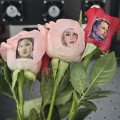 Petal Art PrinterModel F33RP
Flower print25 × 30 mmPlatform22 × 33 cmInksCMYK + W + VPrint headL805 / XP600
$1,400–1,800
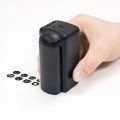 PrintInd Handheld PrinterModel F26PI
Print width26 mmResolution300 dpiConnectionBluetoothBattery1,000+ prints
$189–249
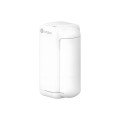 PrintPods Handheld PrinterModel F26PD
Print width26 mmResolution300 dpiConnectionWi-FiBattery1,000+ prints
$149–169
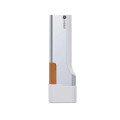 PrintPen Food & Drinks PrinterModel F26PP
Print width26 mmResolution300 dpiInkEdibleBattery1,000+ prints
$229–299
Still not sure?
Send a photo of what you want to print and your daily quantity. We'll recommend a model and send a full quote.