
News - dtg RSS Feed
30 Mar


0
31
The Industrial Reality of Using a Mini A4 DTG Multifunction PrinterThe Mini A4 DTG multifunction printer represents an intriguing technical solution for compact direct-to-garment (DTG) printing needs. However, within industrial or small-batch production environments, the lifecycle maintenance costs present a significant challenge that can undermine..
30 Mar

0
30
The Industrial Reality of Maintaining Textile Pigment Ink SystemsDirect-to-Garment (DTG) printing technologies employing textile pigment inks represent a specialized segment of industrial textile manufacturing. These inks, formulated with finely milled pigment particles suspended in proprietary binders, demand stringent maintenance regimes to susta..
29 Mar

0
36
The Industrial Reality of Lifecycle Maintenance Costs in A3 DTG PrintingIn the demanding environment of direct-to-garment (DTG) printing, particularly with compact A3 T-shirt printers, maintenance cost management is a pivotal concern. Unlike bulk industrial print systems, the smaller A3 format DTG printer targets niche production scales that emphas..
29 Mar

0
44
Understanding the Industrial Reality of Lifecycle Maintenance in A3 DTG PrintingDirect-to-Garment (DTG) printing technology, especially in A3 formats, presents an intricate blend of mechanical precision and chemical processing. For the Maintenance Lead, the crux lies not in the initial acquisition or print quality alone but in sustaining operationa..
28 Mar

0
35
The Industrial Reality of A3 DTG Printer BottlenecksThe deployment of an A3 Direct-to-Garment (DTG) printer for T-shirt printing introduces operational complexities beyond initial capital expenditure. In a mid-size print production facility, the transition from analog to digital DTG workflows unveiled unexpected throughput constraints during peak d..
28 Mar

0
38
The Industrial Reality of Scaling DTG Printing OperationsThe adoption of A3 Direct-to-Garment (DTG) printers for T-shirt production has surged among scalable business owners seeking automation and throughput improvements. However, despite the compact footprint and seemingly straightforward operation, the actual industrial environment reveals multip..
27 Mar

0
37
The Industrial Reality Of Hidden Workflow Costs In Small-Format DTG PrintingTransitioning to direct-to-garment (DTG) printing at a miniaturized scale, specifically through a Mini A4 DTG Multifunction Printer, introduces a unique suite of operational challenges that extend beyond initial purchase price. Enterprises often underestimate the cascade of..
27 Mar
0
44
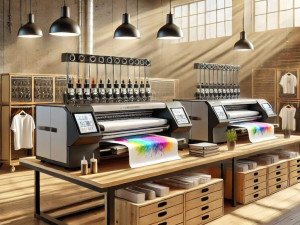
The Industrial RealityIn high-volume apparel production environments, the integration of A3 Direct-to-Garment (DTG) and Direct-to-Film (DTF) printing machines presents significant operational challenges. Scaling throughput while maintaining print consistency and minimizing downtime forms the critical axis of industrial feasibility. A medium-sized g..
23 Mar

0
60
The Industrial Reality of Maintaining A3 DTG and DTF Printing MachinesWhen integrating an A3 T-shirt printing system capable of both Direct-to-Garment (DTG) and Direct-to-Film (DTF) workflows into production environments, the lifecycle maintenance demands present a critical operational dimension beyond initial hardware costs. Unlike traditional ana..
23 Mar

0
70
The Industrial Reality of Compact Direct-to-Garment Printing Under Production StressThe adoption of Mini A4 DTG Multifunction Printers in small-scale industrial environments has introduced a paradox of compact versatility alongside significant operational constraints. Consider a scenario where a boutique print shop integrates multiple units to hand..
22 Mar

0
45
The Industrial Reality of Textile Pigment Ink DTG Ink UsageDirect-to-garment (DTG) printing using textile pigment inks introduces a multifaceted challenge in industrial applications where lifecycle maintenance costs critically impact operational budgets. Unlike traditional dye-based inks, pigment inks form a physical film atop fabric fibers, provid..
18 Mar
0
55
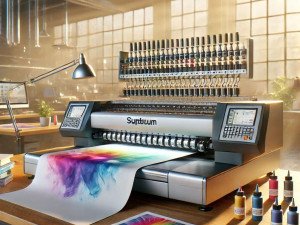
The Industrial Reality of Textile Pigment Ink in DTG PrintingDirect to Garment (DTG) printing using textile pigment inks offers distinct advantages in textile production, particularly for small batch runs and high-resolution color applications. However, industrial environments reveal numerous operational bottlenecks linked to the physical and chemi..