Analyzing the Operational Limits of A3 DTG and DTF T-shirt Printers for Scalable Businesses
The Industrial Reality
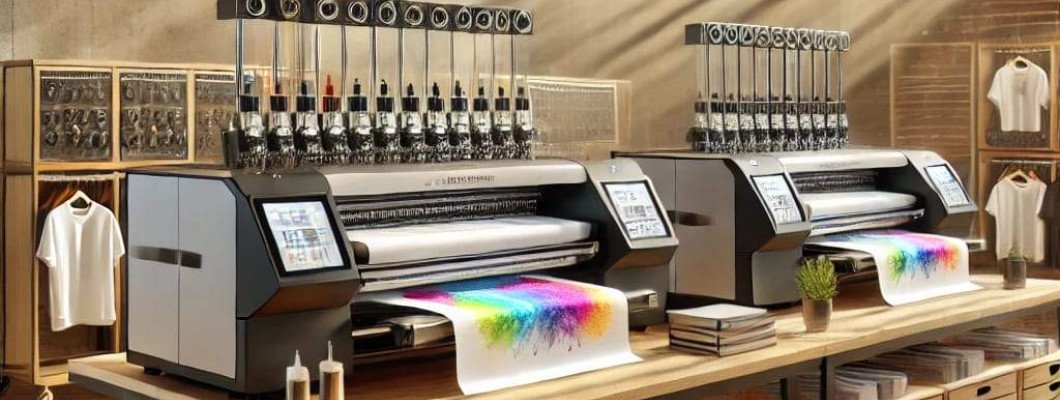
In high-volume apparel production environments, the integration of A3 Direct-to-Garment (DTG) and Direct-to-Film (DTF) printing machines presents significant operational challenges. Scaling throughput while maintaining print consistency and minimizing downtime forms the critical axis of industrial feasibility. A medium-sized garment printing facility aiming for 500–1000 units per day must tackle bottlenecks emerging from print speed, drying mechanisms, and substrate handling. Consider a scenario where a production line equipped with multiple A3 DTG & DTF printers hits a throughput ceiling due to ink drying times and mechanical wear on moving components.
The throughput cap is not just a function of print speed per se but also of the subsequent curing or heat press phases required for DTF, and the environmental controls needed for DTG inks. Machines offering a nominal print time of 3–5 minutes per shirt may, under real operational conditions, face additional delays from ink drying, substrate repositioning, and operator intervention during maintenance cycles. This creates a scenario in which theoretical productivity diverges sharply from actual output, with direct impacts on labor-cost ratios and client fulfillment schedules.
Moreover, asset depreciation accelerates when machines operate at or near maximum rated throughput for sustained periods. The interplay of printhead longevity, ink chemistry corrosiveness, and mechanical stress induced by frequent substrate loading cycles leads to unforeseen maintenance demands. For scalable business owners, understanding these hidden productivity modifiers becomes pivotal in optimizing capital investment and operational planning.
Technical Deep-Dive
Printhead Stress and Wear Analysis
The core printing component in both DTG and DTF printers is the piezoelectric or thermal inkjet printhead. For an A3 format printer, printheads typically contain arrays of nozzles delivering droplets in the range of 6–12 picoliters (pl). The frequency of nozzle actuation (often >20 kHz) combined with ink viscosity (1.5–3 centipoise) and particulate loading leads to mechanical fatigue.
Assuming a 600 dpi horizontal resolution and an A3 width of 297 mm, the printhead nozzle array spans roughly 7000 nozzles per row. Continuous operation at maximum firing rate results in nozzle fatigue rates increasing by 35% compared to intermittent use. Failures such as nozzle clogging or misfiring can reduce effective resolution and cause color shifts, requiring recalibration or printhead replacement every 6–12 months under heavy use.
Ink Chemistry and Substrate Interaction
DTG inks are water-based pigment systems requiring pre-treatment of cotton substrates for adhesion and color vibrancy. The pre-treatment step adds complexity to workflow and can create bottlenecks, especially if pre-treatment machines are undersized or manual.
DTF inks use adhesive film transfer technology, requiring a heat press to cure the film onto the garment. Ink adhesion strength and flexibility after curing depend on polymer chemistry and curing temperature/time profiles. Excessive curing times reduce throughput, while insufficient curing compromises durability. Typical curing settings range from 140–160 °C for 15–30 seconds depending on substrate material.
Drying and Heat Management Constraints
For DTG, rapid drying via infrared or forced air systems is essential to prevent smudging and allow for immediate handling. Power consumption for drying units averages 500–800 Watts per printer, with additional HVAC loads in industrial settings. For DTF, the heat press cycle adds a batch-processing element that impacts continuous workflow dynamics.
Print Speed Versus Resolution Trade-offs
Printers can operate at variable resolutions: 300, 600, or 1200 dpi. Higher dpi settings improve image fidelity but double print times in some cases. A critical operational analysis must balance client quality expectations against the throughput bottleneck introduced by high-resolution demands. In practice, a 600 dpi mode represents a practical optimum for many scalable operations, balancing quality and speed.
Comparing DTG and DTF for Scalable Print Businesses
| Parameter | DTG Printing | DTF Printing |
|---|---|---|
| Print Speed per A3 Shirt | 3–5 minutes | 2–4 minutes (excluding heat press) |
| Post-Processing Time | Drying 2–5 minutes | Heat Press 15–30 seconds per unit |
| Ink Chemistry | Water-based pigment (pre-treatment required) | Polymer film adhesive-based |
| Substrate Compatibility | Primarily cotton or cotton blends | Wider range including polyester blends |
| Maintenance Frequency | Printhead replacement every 6–12 months | Film feed mechanism and platen maintenance quarterly |
| Operational Bottlenecks | Ink drying, pre-treatment workflow | Heat press batch processing |
Scenario Analysis
Case 1 High-Volume Casual Wear Manufacturer
This business requires 800 T-shirts per day with moderately complex designs. DTG's limitation in substrate compatibility and slower drying limits effective throughput. The 5-minute print plus 3-minute drying cycle stretches production windows, necessitating multiple parallel machines and increased labor. The maintenance cost on printheads due to heavy use increases downtime unpredictably.
Case 2 Boutique Sportswear Line
With frequent small-batch orders requiring synthetic fabric compatibility, DTF printing enables fast turnaround and high substrate versatility. However, heat press batch processing constrains continuous flow; scheduling batches in groups creates idle printer time. Ink film costs and adhesive durability are critical factors for end-product quality.
Case 3 Hybrid On-Demand Customization Studio
This operation leverages both DTG and DTF technologies for a flexible workflow. DTG units handle cotton-heavy orders, while DTF machines cover synthetics and mixed materials. The complexity arises in coordinating post-processing infrastructure, requiring investment in both drying systems and heat presses, increasing CAPEX and labor supervision overhead.
Expert FAQ
What are the mechanical limits of printhead nozzle firing rates before failure rates rise sharply?
Printhead manufacturers typically specify maximum firing rates around 20–25 kHz. Extended operation above 20 kHz accelerates micro-cracking of piezo elements and increases clogging probability, reducing service life by up to 40%.
How does ink viscosity affect droplet formation and print quality?
Optimal ink viscosity ranges between 1.5 and 3 centipoise at nozzle temperature. Lower viscosity risks satellite droplets and diffusion, reducing edge sharpness. Higher viscosities increase nozzle stress and clogging risk.
Can increasing print resolution beyond 600 dpi justify the throughput penalty?
While 1200 dpi can improve fine detail, for garment printing perceived detail gains plateau above 600 dpi due to fabric texture. The doubling of print time is often unjustifiable for most commercial applications.
What environmental controls are necessary for consistent DTG ink performance?
Relative humidity between 40–60% and stable temperatures of 20–25 °C are critical. Deviations can cause ink drying inconsistencies and nozzle clogging, affecting print quality and uptime.
How do maintenance intervals translate into total cost of ownership in these machines?
Printhead replacements, ink costs, and preventive maintenance contribute around 15–20% of total operational budgets annually. Unscheduled downtime can double these costs if not managed proactively.
Strategic Verdict
A3 DTG and DTF printers serve distinct but complementary roles in scalable apparel production. DTG excels in color vibrancy on cotton with moderate speed constraints due to drying requirements. DTF's strength lies in substrate versatility and slightly faster printing, offset by heat press batch limits. The practical throughput ceiling for both formats is governed more by post-print processing and maintenance intervals than by raw print speed. Businesses aiming for scalability must strategize around integrated workflow design, balancing CAPEX on auxiliary equipment and labor management. Future advances in printhead materials and faster curing technologies may narrow operational bottlenecks, but currently, production scalability is tightly coupled to managing these multi-step processes efficiently.