
News - Industri RSS Feed
17 Mar


0
32
The Industrial Reality of Lifecycle Maintenance in Heat Press OperationsIn the operational ecosystem of precision heat press machines, the 40x60CM model embodies a critical balance between size, thermal efficiency, and mechanical endurance. Imagine a mid-sized print shop servicing textile and hard surface substrates with a daily throughput of 50-70..
17 Mar

0
26
The Industrial Impact of Women Leaders in Packaging EngineeringThe packaging industry is undergoing a pivotal transformation, with women emerging as influential leaders shaping its future. This dynamic shift is not just a social phenomenon but a deep operational evolution altering the engineering, management, and economic fabric of packaging produc..
17 Mar

0
43
The Industrial Impact of Misguided Activities by New Sales RepsOne of the most overlooked operational inefficiencies in B2B sales environments, including specialized sectors such as printing and industrial equipment sales, stems from the flawed activities of new sales representatives. These inefficiencies manifest not only in lost revenue opportuni..
17 Mar

0
37
The Industrial Reality of Roll Laminator Deployment in High-Volume SettingsIn scalable business environments, deploying roll laminator single side laminating machines presents a range of operational bottlenecks often obscured in initial planning phases. These challenges become evident when throughput demands exceed nominal machine ratings, causing ..
17 Mar

0
35
The Industrial Reality of the A3 Roll DTF Printer in Advanced Print EnvironmentsThe production environment for direct-to-film (DTF) printing, especially at the A3 roll size, reveals significant operational tensions between DIY-style desktop solutions and true industrial-grade equipment. Consider a mid-sized textile printing workshop aiming to scale..
17 Mar

0
54
The Industrial Impact on Shop Floor Operations When Specializing in RV Graphics
RV graphics printing occupies a specialized niche within the broader print industry, where the interplay of large-scale physical dimensions, material conformity, durability standards, and workflow intricacies directly challenge typical industrial print floor paradigms. ..
17 Mar

0
42
The Industrial Reality of Edible Food Printing at A4 ScaleThe niche of edible food printing presents a convergence of food science, precision engineering, and advanced materials handling. Within this domain, the transition between hobbyist DIY solutions and industrial-grade printers is fraught with significant technical divergence that influences t..
17 Mar
0
46
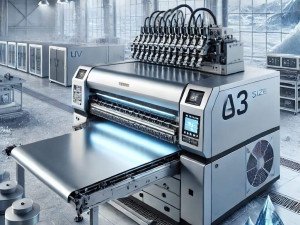
The Industrial Reality of Spot UV Printing at ScaleSpot UV printing, especially at A3 dimensions, is a critical asset for businesses seeking to add selective gloss and tactile depth to printed materials. However, when integrating an A3 Spot UV Printing Machine into scalable operations, hidden operational bottlenecks frequently surface and limit thr..
17 Mar

0
51
The Industrial Impact of G7+ Certification on Print OperationsIn the print production industry, the precision of color management translates directly into brand consistency, customer satisfaction, and cost-efficiency. The rigorous standards established by G7+ certification create an environmental shift that disrupts traditional print shop workflows..
16 Mar
0
42
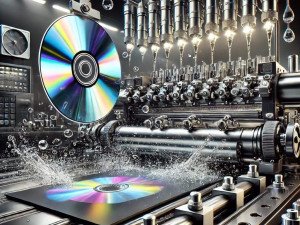
The Industrial Reality of Automatic CD and PVC ID Card Printers
In high-volume print environments, the assumption is often that automatic CD printers and PVC ID card printers deliver seamless, continuous output with minimal intervention. Yet, industrial operators encounter a series of operational bottlenecks that limit throughput and increase downt..
16 Mar
0
44
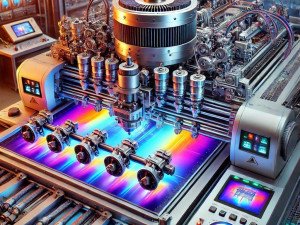
The Industrial Reality of High-Precision A3 Dual Head UV PrintingIn advanced industrial printing environments, the integration of dual head UV printers offering rotary and UV DTF (Direct to Film) printing introduces complex operational dynamics. These machines, designed for versatile substrate handling at the A3 format, address the growing demand f..
16 Mar
0
48
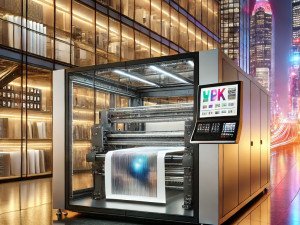
Industrial Impact on Corrugated Packaging ProductionThe integration of digital printing technologies into corrugated packaging is reshaping manufacturing workflows in remarkable ways. Unlike traditional corrugated printing that relies heavily on analog flexographic or lithographic techniques, digital printing enables rapid switching between designs..