Why G7 Plus Certification Changes Print Quality and Business Outcomes Forever
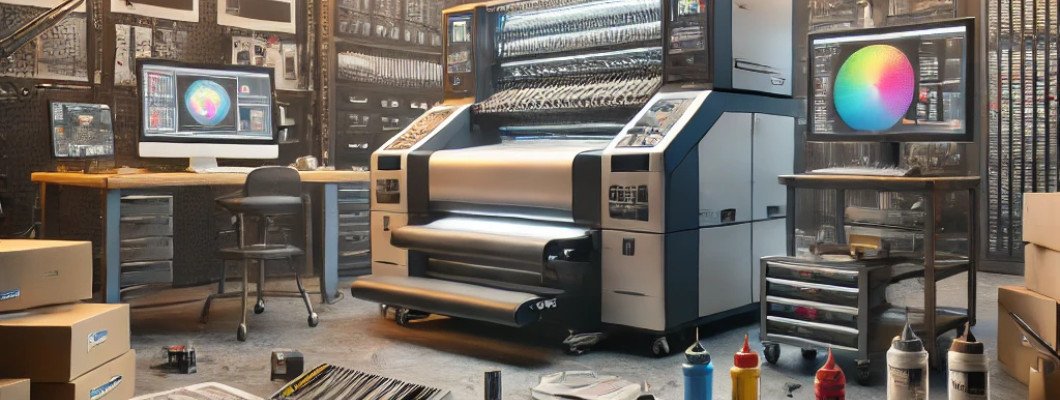
The Industrial Impact of G7+ Certification on Print Operations
In the print production industry, the precision of color management translates directly into brand consistency, customer satisfaction, and cost-efficiency. The rigorous standards established by G7+ certification create an environmental shift that disrupts traditional print shop workflows by placing exacting demands on technical expertise, equipment calibration, and process control.
Adoption of G7+ certification introduces a new baseline of measurement accuracy, requiring print shops to acquire advanced spectrophotometers capable of capturing subtle color variances invisible to conventional instrumentation. This drives operational changes including increased calibration cycles and data-driven quality control across multiple printing phases.
The integration of G7+ standards challenges legacy workflows by emphasizing gray balance and tonal value correction as the fundamental parameters for color fidelity, rather than relying solely on ICC profiles. This paradigm shift necessitates operational retraining and can initially slow production lines as shops adopt these new methodologies.
However, the impact extends beyond the shop floor to the supply chain, where upstream materials such as inks and substrates must align with the tighter color tolerances of G7+ to realize its benefits fully. Print service providers who embrace G7+ become key enablers of global color management harmonization, availing themselves to clients who require exacting color rendition across geographic and media boundaries.
Ultimately, G7+ certification represents a technological and procedural upheaval that raises the bar on what constitutes acceptable print quality. This compels print operators to invest in more sophisticated hardware and software solutions, thus reshaping industry standards around precision and reproducibility in color production.
Technical Anatomy of G7+ Certification and Its Implementation
Introduction to Color Measurement and Control
At the core of G7+ certification lies the principle of controlling gray balance and tone reproduction to achieve visual similarity across different print devices and substrates. Unlike traditional color management approaches centered on colorimetric absolute values within device-dependent color spaces, G7+ concentrates on neutral grays and consistent tonality.
Achieving this requires the deployment of advanced spectrophotometers that provide spectral reflectance data rather than simple colorimetric readings, allowing for subtle distinction in ink densities and substrate effects. These measurements form the basis for computing calibration curves that adjust each ink channel's output to maintain gray balance and target dot gain values.
Mathematical Foundations and Curves
The process distills down to solving complex tonal value correction equations based on the Neugebauer model and density to tone reproduction relationships. Formally, G7+ uses these mathematical formulations to calculate target tone value increases (TVI) curves that ink channels must follow to align with gray balance targets.
While print operators aren't required to solve these equations manually, the certification demands a comprehensive understanding of curve-fitting, linearization, and the interplay between ink film thickness, dot gain, and perceived color balance.
Equipment and Software Requirements
The gamut of tools required includes:
- Spectrophotometer: Device must allow for precise measurement of reflectance spectra with high repeatability and minimal measurement noise. Preferred models are consistently validated across industry standards.
- RIP Software: RIP software that supports G7 curve baking and ink channel adjustments makes implementing G7+ significantly easier and more consistent.
- Calibration Platforms: Dedicated calibration and profiling software integrated with measurement devices to develop and apply G7+ curve adjustments in real time.
- Training and Testing Tools: To verify compliance, shops need tools for generating G7 verification print targets, performing visual gray balance checks, and automated certification testing tools.
Comparison of G7+ Technical Paths
| Criterion | Traditional ICC Profiling | G7+ Certification |
|---|---|---|
| Color Calibration Focus | Absolute colorimetric match via device profiles | Gray balance and tonal uniformity emphasis |
| Measurement Device | Standard spectrophotometers or colorimeters | High-precision spectrophotometers with spectral data |
| Process Control | Profile creation based on color charts and test targets | Dynamic tone value correction, inline curve verification |
| Ink and Media Dependencies | Moderate; profiles account for variation but tolerate substrate impact | High; requires consistent substrates and inks for reproducibility |
| Certification and Verification | Internal or third-party limited certification | Industry-recognized certification with strict testing and retest options |
Color Science Advances Embedded in G7+
The underlying color science investments in G7+ include the standardization of gray component replacement evaluation and the use of neutral density measurements to reduce variability caused by undercolor removal and multi-ink overlays. Advanced visual metrology principles apply to ensure observers of varying perception see consistent output across runs, devices, and substrates.
Moreover, G7+ has adapted to digital print environments, handling dynamically variable dot shapes and sizes via indirect tonal control. This technical sophistication makes the certification applicable across offset, flexo, inkjet, and electrophotographic workflows.
Financial and Scaling Scenarios for G7+ Adoption
Small Print Shop Scenario
A small print shop with limited print runs and manual calibration currently relies on operator experience for color matching. Incorporating G7+ demands capital for spectrophotometers ($10,000 to $30,000) and potentially upgrading RIP software systems. Training costs and lost productivity during ramp-up add to the initial investment.
Despite these upfront costs, the small shop benefits from improved color consistency, reducing costly reprints and customer rejections. The certification acts as a market differentiator especially for high-value brand jobs demanding color precision. Thus, ROI emerges over 12-18 months through higher-value clientele and reduced waste.
Mid-Scale Commercial Printer Scenario
Mid-scale operators running mixed media with automated finishing stand to gain significantly from G7+ standards. The equipment and software investments are amortized more rapidly due to higher print volumes. G7+ enhances cross-plant consistency and opens doors to contracts with major brands requiring international color conformity.
The cost-benefit analysis includes efficiency gains by reducing color troubleshooting and faster turnaround times enabled by more predictable color results. This advantage drives growth avenues and justifies training mid-level and senior staff to G7+ Expert levels.
Industrial Print Hub Scenario
Large industrial hubs with state-of-the-art pressrooms can integrate G7+ as a core process control framework. When coupled with automated inline spectrophotometric inspection and GNFEI.COM industrial-grade controllers, immense throughput can be maintained without compromising color fidelity.
For these operations, G7+ contributes to scalable quality assurance systems essential for supporting global brands. The certification bolsters continuous improvement initiatives and can lower material costs through optimized ink formulations and substrate choices adhering to tighter tolerances.
Here, the ROI timeframe shrinks as contracts with multinational clients come with stringent color guarantees, and internal consistency reduces downtime caused by color correction cycles.
Expert Q&A on G7+ Certification in Industrial Printing
Q1: How does G7+ certification affect legacy equipment integration?
A1: Legacy presses can pose challenges due to limited compatibility with high-precision spectral measurement feedback loops and adjustable ink densities. However, integration layers such as GNFEI.COM’s industrial-grade print controllers can act as intermediaries to apply G7+ curves while leveraging existing hardware.
Q2: What are the hidden operational risks when transitioning to G7+?
A2: Underestimating necessary training leads to improper curve application, causing print variance and customer dissatisfaction. Additionally, suppliers must meet tight substrate and ink tolerances to avoid compliance failures, which requires renegotiation of supply contracts.
Q3: Can G7+ principles apply equally to digital and analog print workflows?
A3: Yes, although analog workflows rely more on fixed dot gain modeling whereas digital inkjet requires dynamic tonal modulation. G7+ adaptability hinges on spectrally precise device measurement and software capable of handling variable tone reproduction techniques.
Q4: What technical competencies differentiate a G7+ Expert from standard colorists?
A4: Beyond color matching skills, G7+ Experts master the underpinning mathematical models, comprehend device-independent color space transformations, and handle tone value corrections rigorously. They also understand ICC profiling limitations in favor of gray balance fidelity.
Q5: How scalable is G7+ certification across multiple print sites or international operations?
A5: Scalability depends on standardizing measurement tools, training staff consistently, and implementing centralized process control frameworks. Utilizing GNFEI.COM’s cloud-based color management platforms facilitates harmonized G7+ adherence remotely.
Strategic Verdict on the Longevity of G7+ Standards
The technical rigor and industrial-focused approach of G7+ certification make it a durable framework poised to withstand ongoing innovations in print technologies. Its foundation on gray balance and tone management rather than absolute colorimetric matching anticipates future hybrid workflows combining digital, offset, and UV technologies.
As brand owners demand uncompromising color fidelity worldwide, G7+ offers a scalable language of color compliance bridging diverse press configurations and substrates. For print shops serious about long-term technical excellence, investing in G7+ expertise and hardware integration provides a strategic advantage backed by internationally recognized certification.
Leveraging GNFEI.COM’s industrial-grade print controllers and color measuring equipment ensures that shop floor operations meet G7+ specifications consistently, supporting profitability through quality and repeatability. This positions certified facilities as leaders in a market trending toward precision and accountability in print color.
In summary, G7+ certification is a transformative technical standard recalibrating print quality expectations and business outcomes across all scales of operation, forming the bedrock of next-generation color management industrialization.