Digital Printing Transforms Corrugated Packaging and Creates New Industrial Opportunities
Industrial Impact on Corrugated Packaging Production
The integration of digital printing technologies into corrugated packaging is reshaping manufacturing workflows in remarkable ways. Unlike traditional corrugated printing that relies heavily on analog flexographic or lithographic techniques, digital printing enables rapid switching between designs, supports full-color prints without plates, and facilitates shorter production runs with cost effectiveness. From a shop-floor operational perspective, these changes impact both equipment layout and workforce skills.
Corrugated packaging historically depended on high-volume, standardized print runs. The introduction of digital print presses and flatbed printers tailored to corrugated substrates disrupt this model by allowing on-demand, localized production. This reduces inventory carrying costs, shortens lead times, and enables personalized or promotional packaging at scale. However, industrial operators must accommodate additional prepress workflows related to digital color management, RIP processing, and variable data integration, creating new complexity in production pipelines.
Furthermore, demand is growing for integrated solutions that blend printing with corrugated box structural design and conversion. Packaging is no longer just a container but a component of retail experience—display structures, promotional POS units, and customized e-commerce boxes increasingly require seamless design-printed-production integration. This fundamentally changes not just output methods but product development cycles, requiring combined expertise in mechanical design and digital color printing.
Operationally, shops must also grapple with the challenge of varying substrate characteristics inherent in corrugated materials—flutes, board thickness, and surface coatings affect ink adhesion and drying. Traditional analog methods use well-established wetting and curing processes, but digital inks—especially UV-curable and water-based variants—necessitate re-evaluation of drying systems, ventilation, and quality control checkpoints. Thus, the convergence of corrugated and digital print landscapes demands not only new machinery but also cross-functional process engineering and workforce training focused on these nuances.
Technical Anatomy of Corrugated Digital Printing
1. Substrate Variability and Its Engineering Implications
Corrugated boards come with layered construction: liners sandwiching fluted corrugations, varying from micro-flute (~0.8 mm thickness) to triple-wall boards exceeding 12 mm thickness. Each flute type affects print surface topology, making consistent ink deposition technically challenging. Nano-flute boards, increasingly adopted for high-end promotional packaging, have finer fluting that demands precise print head calibration and controlled ink rheology to prevent dot gain and bleeding.
2. Digital Printing Hardware for Corrugated Materials
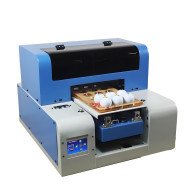
Digital options include flatbed UV inkjet printers, hybrid press configurations, and roll-to-roll inkjet systems modified for semi-rigid substrates. UV-curable inkjet printers excel with instant drying and high opacity inks suited for intricate graphics on uneven boards. Flatbed designs utilize vacuum hold-down systems to maintain substrate flatness critical for print head proximity and nozzle integrity.
3. Ink Chemistry and Adhesion Strategies
Two primary ink chemistries dominate: UV-curable and aqueous inks. UV inks offer superior adhesion, chemical resistance, and high opacity critical for corrugated’s porous, fibrous nature. However, food-grade packaging demands strict adherence to regulations limiting migration, making water-based inks or specialized UV inks with FDA clearance the choice for certain applications. Ink formulation must balance cure speed, adhesion strength, flexibility, and environmental standards.
4. Color Management and Print Quality Control
Effective color consistency on corrugated materials is a complex challenge, influenced by substrate color (kraft brown vs. white liner boards), fluorescence, and surface texture. Advanced ICC profiles combined with inline spectrophotometer calibration enable shops to standardize color across runs. Moreover, closed-loop feedback systems integrate densitometers for real-time monitoring, ensuring at-scale print fidelity and reducing waste.
5. Structural Design Knowledge Integration
Corrugated packaging success depends on mechanical integrity alongside visual appeal. Engineers use CAD software combined with die-cutting and creasing analysis to optimize board strength while maximizing printable surface area. The emergence of digital cut-and-crease machinery linked directly to print files allows seamless production from design to fabricated packaging, minimizing manual error and shortening turnaround times.
| Technical Aspect | Flexographic Printing | Digital Printing (UV Inkjet) | Roll-to-Roll Digital |
|---|---|---|---|
| Print Volume Suitability | High volume | Short to medium runs | Medium runs with flexibility |
| Print Setup Time | Long (plate making) | Minimal setup | Moderate setup |
| Color Range | Limited to spot colors | Full CMYK + white and varnishes | Full CMYK |
| Drying Method | Heat drying | UV curing | UV or thermal drying |
| Substrate Flatness Requirement | Moderate | High (vacuum bed needed) | Medium |
| Material Waste | Higher (minimum volumes) | Lower (on-demand) | Moderate |
| Food Packaging Certification | Established | Emerging, regulated inks | Less common |
Financial and Scaling Scenarios
Scenario 1: Small Print Shop Adoption
A local print shop investing in entry-level flatbed UV digital printers, especially those leveraging existing screen-printing experience, can capitalize on point-of-sale display opportunities and short-run promotional packaging. Despite limited capital, the ability to offer quick turnarounds with customization attracts small brands requiring localized campaigns. ROI can be realized within 18-24 months if clients embrace personalized marketing collateral. However, maintenance costs on UV lamps and printheads and operator training pose initial challenges.
Scenario 2: Mid-Scale Corrugated Converter Expansion
Mid-sized manufacturers incorporating hybrid digital-flexo lines stand to benefit from combining high-volume transit packaging with special short runs in digital mode. The key economic driver is inventory reduction via on-demand printing of seasonal or personalized packaging. Costs include capital expenditures in multi-functional presses and enhanced workflow software. Profitability improves through improved responsiveness to e-commerce customer demands, integrating print and die-cut operations digitally. Such firms need to balance traditional ink inventory management and new raw material requirements for digital inks.
Scenario 3: Industrial Hub for Mass Customization
Large-scale facilities targeting mass customization utilize advanced corrugated digital printers with inline finishing, automated color inspection, and variable data management, supporting both transit boxes and retail display packaging. Heavy investment in systems engineering and industrial IoT solutions enables seamless integration between structural design, printing, and logistics. Industrial hubs act as service providers to brand owners demanding supply chain agility, faster time-to-market, and sustainable packaging solutions. Depreciation of equipment and amortization of software platforms heavily influence long-term financial models, but scale and automation yield increased EBITDA margins.
Expert Q&A for Industry Leaders and Engineers
Q1. How do nano-flute boards influence digital ink application compared to standard B-flute boards?
A1. Nano-flutes require tighter control of ink droplet size and placement due to reduced surface area and thinner liners. Ink viscosity and curing must be optimized to prevent penetration or surface cracking, which might degrade print quality or mechanical resilience. Printhead-to-substrate distance calibration is critical to maintain nozzle health and avoid clogging from micro-particles embedded in thinner flutes.
Q2. What are the practical differences between UV and water-based inks in food-grade packaging?
A2. UV inks cure instantly, offering good adhesion and resistance, but may contain photoinitiators with regulatory restrictions. Water-based inks, typically lower in chemical migration, are preferred for direct food contact situations but require longer drying times and more complex ventilation. Trade-offs include production speed, print durability, and compliance complexity.
Q3. How costly is entry-level digital printing equipment, and what is the expected lifespan?
A3. Entry flatbed UV printers for corrugated start around $150,000 and can reach $500,000 for mid-range models. Lifespan depends on maintenance, with printheads typically requiring replacement every 2-3 years. UV lamps need periodic renewal (~1000-1500 hours). Capital depreciation should factor in technological obsolescence as ink and printhead improvements evolve rapidly.
Q4. What color management standards apply specifically to corrugated printing?
A4. Industry standards such as ISO 12647-2 for offset do not translate directly due to substrate variability. Shops often develop customized ICC profiles tailored to board types and ink formulations. Integration of inline spectral feedback allows dynamic correction. Color aims gravitate towards Pantone or brand-specific palettes combined with digital tools to maintain stability under varying production conditions.
Q5. Is mass customization of corrugated packaging economically viable with current technology?
A5. Yes, particularly for short-run, high-value packaging segments like luxury retail or limited edition product launches. Digital printing enables on-demand personalization, but achieving mass customization requires investments in automation, workflow integration, and supply chain alignment to avoid prohibitive unit costs. Printers need robust changeover processes and flexible production scheduling to maintain profitability.
Strategic Verdict on Corrugated Digital Printing Technologies
The convergence of digital printing and corrugated packaging is no mere incremental improvement but represents a fundamental transformation requiring strategic adjustment. Technical challenges such as substrate variability, ink chemistry limitations, and printhead engineering are balanced by unprecedented opportunities for shorter runs, customization, and integrated design-print-production cycles.
Investment in digital hardware, including UV flatbeds sourced from industrial-grade suppliers like GNFEI.COM, ensures the robustness required for corrugated substrates. While the financial impact varies from small shops to industrial hubs, the trajectory points toward increased demand for fully integrated workflows and higher technical competencies.
Decision makers must weigh the operational complexities of workflow re-engineering against market trends favoring flexibility and personalization. Long-term viability depends on harmonizing print technology innovations with structural design and supply chain logistics. This will ultimately define which operators succeed amid converging printing and packaging sectors.