Infrastructure Integration Challenges for A4 Flatbed T-shirt Printers in Scalable Business Environments

The Industrial Reality of Integrating A4 Flatbed T-shirt Printers
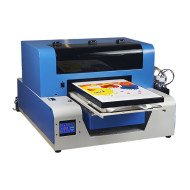
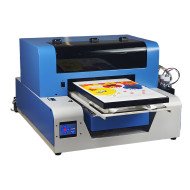
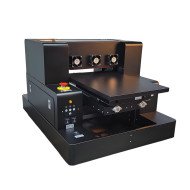
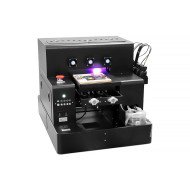
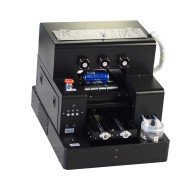
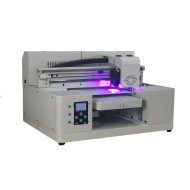
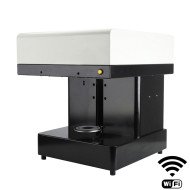
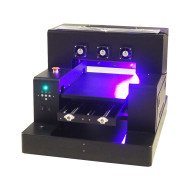
Within scalable T-shirt printing operations, introducing new hardware such as an A4 flatbed printer ushers in a complex set of infrastructure challenges. The compact size and flatbed design promise a streamlined footprint, but the reality involves nuanced integration hurdles across power provisioning, data throughput, environmental controls, and workflow automation compatibility.
Consider a mid-sized print shop transitioning from legacy roll-to-roll printers to flatbed devices that accommodate rigid substrates and specialty garments. The introduction of an A4 flatbed T-shirt printer requires assessing supply voltage stability to prevent printhead misfires, upgrading IT infrastructure to handle high-resolution raster image processing at 1440 dpi speeds, and implementing enhanced ventilation to manage volatile organic compound (VOC) emissions from specialized inks.
The printer’s layout demands ergonomically optimized placement for rapid substrate loading and unloading to sustain throughput goals above 100 shirts per hour. However, fluctuating temperature and humidity within the print bay induce micro-expansion in substrate material, leading to registration drift that directly impacts color fidelity and print precision, especially at micron-level detail.
Without robust integration strategies, bottlenecks emerge in networking, image data streaming, and post-processing steps such as curing and drying. These operational disruptions inflate downtime, reduce asset utilization, and erode ROI despite the unit’s base hardware capabilities.
Power Distribution and Thermal Dissipation Requirements
A4 flatbed T-shirt printers typically consume 300 to 600 Watts during active printing cycles, with peak power surges when activating UV LED curing arrays or infrared dryers. Facilities must engineer power delivery systems that mitigate voltage drops, electromagnetic interference, and harmonics to maintain uninterrupted operation.
Thermal management extends beyond the printer itself. Rack density planning and ambient cooling directly influence the device’s internal component lifespan. An improperly ventilated print room risks accelerated degradation of printheads, stepping motors, and PCB electronics, making thermal simulations a critical step in integration planning.
Data Throughput and Workflow Automation Constraints
High-resolution TIFF or PNG files with variable dot sizes down to 6 pl (picoliters) generate significant data streams. Network infrastructure must guarantee consistent gigabit Ethernet or fiber connectivity with low latency to ensure real-time print queue management. Interruptions in data flow translate to dropped prints and misalignment.
Workflow automation often involves robotic substrate handlers or conveyor systems calibrated to the A4 flatbed’s exact dimensions of approximately 310 mm by 210 mm printable area. Disparities in mechanical synchronization create cumulative errors over batch runs, necessitating precision servo motors and closed-loop feedback sensors.
Environmental Controls for Print Quality Assurance
Ink chemistry in flatbed printers may include plastisol, water-based, or UV-curable formulations, each with distinct environmental sensitivities. The VOC emissions require air filtration compliant with ISO 16000 standards to protect operators and equipment.
Relative humidity control within 45%-55% with ±2% variance and ambient temperatures maintained between 20-25°C prevent substrate distortion and ink flow anomalies. This environmental envelope supports droplet placement accuracy within 10 microns, critical for color layering and gradation in high-end textile prints.
Comparative Analysis of Integration Approaches
| Integration Aspect | Standard Roll-to-Roll Workflow | A4 Flatbed T-shirt Printer Workflow |
|---|---|---|
| Spatial Footprint | ~2.5 m2 with linear conveyor | ~1.2 m2 with ergonomically optimized flatbed |
| Power Consumption | 400-800 Watts, continuous | 300-600 Watts, cyclical peaks from UV curing |
| Data Throughput Required | Moderate (~100 Mbps) | High (>1 Gbps), low latency needed |
| Environmental Controls | Standard ventilation, basic filtration | ISO 16000 compliant filtration, precise temp/humidity control |
| Automation Complexity | Sequential mechanics, limited feedback | High precision servo motors with closed-loop controls |
Scenario Analysis of Business Use Cases
Use Case 1: High-Volume Small-Shirt Production
A regional apparel brand requires rapid turnaround on small batch orders using A4 flatbed printers. Integration demands include automated substrate feeders and real-time queue management to sustain a target throughput of 120 units/hour. The environmental control system must minimize substrate warping to maintain consistent print quality over multiple printheads operating concurrently.
Use Case 2: Customized Boutique Prints with Fine Art Detail
Luxury artisan workshops prioritize maximum color depth and micron-level precision over speed. Thermal management focuses on reducing printhead temperature fluctuations during extended print cycles to avoid dot size variance. Network infrastructure emphasizes stable, synchronous data delivery to prevent image artifacts.
Use Case 3: Distributed Print-on-Demand Networks
Multi-site brand operators deploy A4 flatbed printers across locations. Infrastructure integration focuses on uniform environmental protocols, centralized print job dispatch over secure VPNs, and predictive maintenance data feeds. Scalability challenges include local electrical compliance differences and varying network quality impacting print cycle predictability.
Expert FAQ on Technical Integration Challenges
Q1: What methods best mitigate substrate expansion due to environmental fluctuations?
A1: Employ inert atmosphere enclosures or precision HVAC systems maintaining tight temperature and humidity tolerances. Use substrate materials with low thermal expansion coefficients below 10 ppm/°C.
Q2: How critical is EMI shielding in the printer’s power supply lines?
A2: Extremely; EMI-induced noise can cause printhead misfiring and data corruption. Use shielded cabling, ferrite beads, and isolated power conditioning units for stable operation.
Q3: What network protocols support reliable high-definition image streaming?
A3: Real-time Transport Protocol (RTP) over UDP combined with error correction algorithms ensures low latency without packet loss, critical for synchronized multi-head printing.
Q4: How does printhead temperature variation affect droplet size?
A4: A 5°C deviation can alter ink viscosity, shifting droplet volume by up to 15 pl, degrading print resolution and color accuracy.
Q5: What maintenance strategies reduce downtime in complex automated setups?
A5: Implement predictive analytics using sensor data to schedule proactive cleaning, calibration, and component replacement before failure signatures manifest.
Strategic Verdict on the Technology’s Infrastructure Challenges
The adoption of A4 flatbed T-shirt printers in scalable production environments demands a holistic infrastructure integration strategy encompassing power stability, precise thermal management, high-bandwidth data delivery, and stringent environmental controls. These factors decisively influence print quality consistency, operational uptime, and asset depreciation trajectories.
Advancements in IoT-enabled monitoring and adaptive HVAC technologies will progressively alleviate integration barriers, yet current deployments require deliberate engineering investments. Enterprises expanding their printing capabilities must prioritize infrastructural robustness to translate the printer’s hardware specifications into predictable, profitable output.