Infrastructure Challenges in Integrating the Smart Mini Selfie Coffee Printer for Scalable Business Automation
The Industrial Reality
In modern automated hospitality environments, throughput and operational reliability are critical drivers of profitability. The Smart Mini Selfie Coffee Printer introduces a novel intersection of consumer engagement and robotic precision printing directly onto coffee beverages. However, integrating this device into existing infrastructure presents multiple technical challenges that can significantly impact throughput, labor allocation, and maintenance overhead.
Consider a mid-sized cafe chain aiming to deploy this technology across 20 sites, each processing 300 cups per day. The printer's single-cup print speed ranges between 30 to 45 seconds depending on image complexity, translating to a theoretical maximum throughput of about 80 to 120 prints per hour per unit under ideal conditions. This is orders of magnitude below typical espresso machine throughput, which routinely exceeds 200 cups per hour. Consequently, this creates a bottleneck where the printer's throughput does not align with peak demand, potentially requiring additional operator intervention or queuing systems to avoid customer dissatisfaction.
Physical integration presents another challenge. The Smart Mini Selfie Coffee Printer requires a stable, vibration-free surface with easy access to power and network connectivity. Given its miniaturized footprint, the device is often placed on or adjacent to existing espresso machines or serving counters. However, thermal management is critical since coffee machines emit heat and steam, which can affect the printer's electronic components and delicate printhead alignment. Without dedicated cooling or strategic placement, failure rates can increase, leading to higher downtime and maintenance costs.
Network integration is also nontrivial. The printer generally connects via Wi-Fi or Ethernet to a control tablet or central management system that stores image data and controls print operations. In a multi-device environment, network congestion, IP conflicts, or limited bandwidth can cause print job delays or errors. Additionally, security protocols for guest Wi-Fi versus internal operations networks must be carefully partitioned, further complicating IT infrastructure designs.
Lastly, power requirements often conflict with typical cafe layouts. The printer's power supply may necessitate additional outlets or specialized UPS systems for voltage stability, especially in regions where electrical grid inconsistencies prevail. These infrastructure constraints cumulatively impact not only initial deployment complexity but also ongoing operational efficiency and scalability.
Technical Deep-Dive
Print Speed Versus Operational Demand
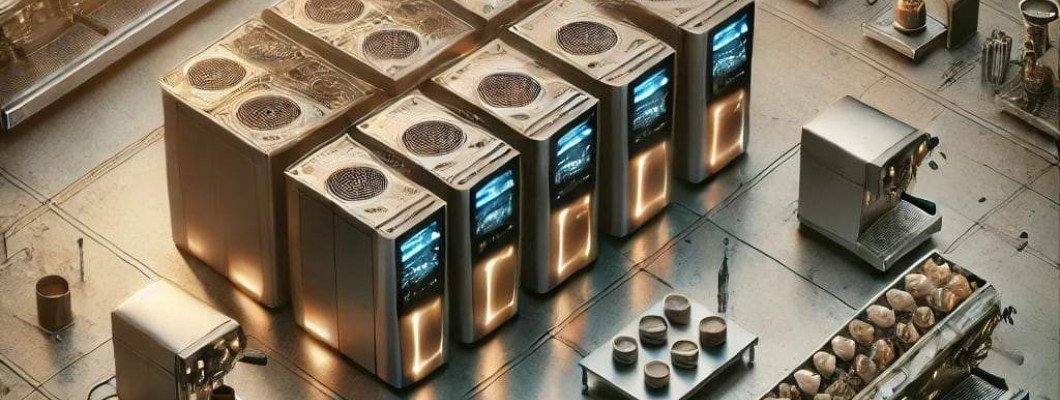
The average print time ranges from 30 to 45 seconds per beverage, dictated by high-resolution image data transfer and precision inkjet droplet placement. Assuming a 45-second cycle, maximum throughput per unit is approximately 80 prints/hour. If a high-volume cafe serves 300 cups peak hour, at least 4 printers must operate in parallel, raising space and power consumption concerns.
Power Consumption and Thermal Management
Each unit consumes roughly 15W during idle states and peaks at about 45W during active printing phases. Considering a 12-hour operational day, daily energy consumption approaches 540Wh per unit. Heat emitted by the printer and adjacent coffee machines can create hotspots exceeding 40°C, risking electronic component degradation. A dedicated cooling solution, such as a microfan or passive heat sink with thermal interface materials, is recommended to maintain operational temperatures below 35°C.
Network Architecture Considerations
Printers utilize a 2.4GHz Wi-Fi connection with average throughput of 150 Mbps. Image files typically range from 500KB to 2MB. At an average file size of 1MB and a per-print cycle of 45 seconds, network overhead and latency must be minimized. Configurations favor isolated VLANs with QoS prioritization to reduce packet loss and jitter. Ethernet connections, while more reliable, increase deployment cost and cable management complexity.
Printhead Performance and Material Compatibility
The printhead uses micro piezoelectric nozzles depositing 10 pL droplets onto milk foam surfaces. Precise droplet positioning with 300 dpi resolution allows detailed grayscale selfie renders. However, viscosity variations in milk foam and temperature fluctuations affect ink adhesion and print fidelity. A calibrated feedback loop incorporating optical sensors could optimize droplet ejection timing to maintain consistent print quality in varying conditions.
Maintenance and Component Lifecycle
Critical consumables include ink cartridges and cleaning filters. Ink cartridges have a lifespan of approximately 200 prints before requiring replacement, while printheads have a rated lifecycle of 10,000 prints. Cleaning cycles are recommended daily to prevent clogging, adding an operational time overhead of 10-15 minutes. Component replacement costs must be factored into total cost of ownership models.
| Specification | Wi-Fi Setup | Wired Ethernet Setup |
|---|---|---|
| Installation Complexity | Low | Moderate-high |
| Network Reliability | Moderate - susceptible to interference | High - minimal latency |
| Maintenance Effort | Higher troubleshooting network errors | Lower, stable connections |
| Cost Impact | No cabling cost, possible reorder | Additional cabling and infrastructure cost |
Scenario Analysis
Small Boutique Cafe
In a boutique cafe emphasizing customer experience with low throughput (<100 cups/day), the printer integrates seamlessly with minimal infrastructure upgrades. Wi-Fi connectivity suffices, and thermal management is less critical due to lower machine density. Print speed aligns with customer flow, enabling experiential marketing without operational bottlenecks.
Medium Chain Outlet
At mid-scale operations serving 200-300 cups per day, multiple printers or dedicated print stations are required. Network reliability becomes a priority; wired Ethernet may be justified despite higher upfront cost. Thermal management and power distribution upgrades mitigate failure risk. Integration necessitates workflow redesign to synchronize barista and printer tasks to sustain throughput.
High-Volume Urban Location
At peak capacities exceeding 500 cups/day, the printer's limited throughput poses a substantial bottleneck. Multiple parallel print units increase spatial and power demands significantly. Automation of print scheduling and queuing software integration become essential. Operational complexity increases, and ROI diminishes without substantial workflow optimization.
Expert FAQ
How does milk foam composition affect print quality?
Milk foam density and bubble size impact ink absorption and droplet spread. Higher fat content may increase surface tension, reducing ink diffusion but risking uneven deposition. Optimal foam formulations balance texture and hydrophilicity to preserve image fidelity.
What are the thermal limits of the printhead electronics?
Printhead components are rated for continuous operation up to 50°C. Exposure to temperatures above this accelerates piezoelectric material degradation and nozzle clogging, leading to decreased print resolution and device lifespan.
Can the printer integrate with POS systems for automated image selection?
Yes, via API endpoints or middleware, the printer can receive print commands triggered by POS transactions. However, implementation requires robust network infrastructure and custom software development to ensure synchronization and error handling.
What maintenance protocols maximize uptime?
Daily automated cleaning cycles, weekly nozzle inspections, and bi-monthly ink cartridge replacements optimize uptime. Preventative maintenance scheduling based on print count thresholds reduces unexpected downtime.
How does ink chemistry impact food safety and print durability?
Food-grade, edible ink formulations with rapid drying and high contrast are necessary. Ink stability on milk foam depends on sugar and pigment composition, affecting both print durability and flavor interaction. Regulatory compliance with FDA or equivalent food safety authorities is mandatory.
Strategic Verdict
The Smart Mini Selfie Coffee Printer embodies a technologically innovative yet infrastructure-intensive solution for consumer engagement via precise beverage surface printing. Its throughput limitations and sensitivity to environmental variables restrict scalability in high-volume contexts without substantial workflow and infrastructure adaptation. Network architecture, thermal management, and maintenance cycles emerge as critical factors shaping operational viability. Future development trajectories should emphasize enhanced print speeds, modular network integration, and robust environmental tolerance to mitigate current bottlenecks. As such, the technology is positioned as a niche automation complement rather than a primary production driver in large-scale foodservice environments.