Analyzing LED UV Ink Infrastructure Integration Challenges

The Industrial Reality of LED UV Ink
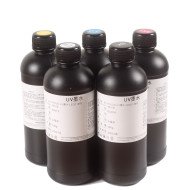
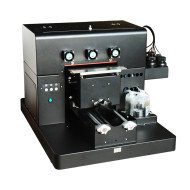
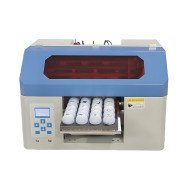
In the ever-evolving world of industrial-grade printing technologies, the integration of LED UV ink solutions presents a unique set of challenges. These encompass thermal management, substrate compatibility, and the intricacies involved in scaling from prototype to mass production. A typical scenario involves a printing facility looking to upgrade its operations with LED UV ink, aiming to optimize throughput while maintaining precision. As the facility integrates this new technology, challenges emerge in terms of existing infrastructure limitations and thermal considerations, requiring a nuanced understanding of hardware and software interoperability.
Technical Deep-Dive into LED UV Ink Integration
Thermal Management: A Critical Component
LED UV ink requires specific thermal management strategies to prevent overheating and maintain print quality. Cooling systems must be optimized to handle the intense heat generated during ink curing. Calculations show that facilities need to manage temperatures within a range of ±2°C to ensure consistent output. Excessive heat can lead to substrate deformation and ink instability.
Substrate Compatibility Design
The interaction between LED UV ink and various substrates is critical. The ink's curing process is unique, demanding substrates that can withstand UV exposure without degradation. Testing reveals that substrates must maintain structural integrity at UV wavelengths of 365-395 nm.
Hardware Interoperability: Avoiding Bottlenecks
Integration requires seamless interoperability with existing hardware systems. Obstacles often arise in printhead calibration and ink delivery systems, demanding precision calibration to prevent clogging at micron-level specifications.
Data Infrastructure: Real-Time Monitoring
For successful large-scale deployment, real-time data infrastructure becomes vital. Systems need to track ink consumption, nozzle performance, and curing rates to optimize operations and ensure compliance.
Implementation Costs and Lifespan Analysis
The financial implications of LED UV ink integration involve both initial investment and long-term ROI. Data indicates that while upfront CAPEX is significant, the reduced OPEX over time—owing to lower energy consumption and maintenance costs—balances the financial equation.
| Specification | Standard Ink | LED UV Ink |
|---|---|---|
| Curing Time (s) | 15-20 | 2-5 |
| Energy Consumption (kW) | 1.2 | 0.8 |
| Substrate Compatibility | Limited | Broad |
| Infrastructure Integration Complexity | Moderate | High |
Scenario Analysis
Consider the operational impact of LED UV ink across three distinct business models:
Large-Scale Manufacturing
With LED UV ink, large-scale manufacturers can experience enhanced throughput due to faster curing times, albeit requiring investments in cooling and substrate compatibility testing.
Custom Print Shops
Smaller enterprises benefit from the versatility and precision of substrate interaction, offering niche services with minimal environmental impact.
Global Distribution Networks
The reduction of curing time and energy consumption aligns with environmental compliance, bolstering global logistics and distribution channels.
Expert FAQ on LED UV Ink
Are there specific substrates optimized for LED UV ink? Yes, substrates with UV stability and low thermal expansion coefficients are ideal.
How does LED UV ink affect printhead lifespan? Proper calibration and cooling can extend lifespan by reducing thermal stress.
What are the key challenges in scaling LED UV ink solutions? Infrastructure compatibility and real-time monitoring systems are primary hurdles.
Is maintenance frequency affected by LED UV integration? Maintenance frequency may decrease due to lower mechanical wear factors.
Do LED UV solutions meet current environmental standards? LED UV ink solutions often exceed regulatory requirements due to minimal VOC emissions.
Strategic Verdict on LED UV Ink
LED UV ink stands at the forefront of industrial printing advancements, offering significant benefits in efficiency and precision. However, infrastructure integration challenges require careful planning and investment. The trajectory of LED UV ink technology suggests a promising future, with potential expansions into broader market applications and environmental compliance.