Lifecycle Maintenance Costs Challenge the Mini A4 DTG Multifunction Printer

The Industrial Reality of Using a Mini A4 DTG Multifunction Printer
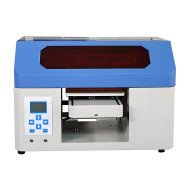
The Mini A4 DTG multifunction printer represents an intriguing technical solution for compact direct-to-garment (DTG) printing needs. However, within industrial or small-batch production environments, the lifecycle maintenance costs present a significant challenge that can undermine initial purchase advantages. Consider a scenario in a moderately sized apparel decoration workshop that integrates this compact DTG printer into its production line. The printer’s small footprint and multifunction capabilities suggest a reduction in floor space, promising streamlined workflow. Yet, under continuous operation, the rapid wear of critical consumables such as printheads, platen fixtures, and ink delivery systems substantially increases maintenance cycles.
Unlike larger industrial DTG machines designed with heavy-duty printheads calibrated for extended runtimes, the Mini A4 unit employs miniature piezoelectric or thermal inkjet heads that often require frequent recalibration and replacement. These tasks, while seemingly routine, incur unexpected downtime and labor costs, especially as supply chains for specific replacement parts are not always immediate due to the device’s niche manufacturing origin. In addition, ink chemistry poses a hidden cost vector; specialized pigment-based inks needed for direct fabric printing degrade at faster rates when subjected to inconsistent temperature and humidity levels, necessitating more frequent standby purge cycles and increasing ink waste.
This scenario highlights the complexity of lifecycle expenses beyond the initial capital expenditure. The balancing act between compact multifunctionality and long-term operational reliability is a key aspect seldom evaluated in procurement decisions. Maintenance scheduling, parts availability, and consumable lifespan create a hidden operational bottleneck that must be assessed quantitatively for accurate cost modeling.
Technical Deep-Dive into Lifecycle Maintenance Costs
Printhead Durability and Replacement Math
Assuming the Mini A4 DTG printer utilizes piezoelectric printheads rated for 500,000 pulses before degradation impacts print quality, and each A4 print requires an average of 50,000 pulses, the theoretical lifetime is 10 prints per head. However, real-world variables such as partial nozzle clogs, ink viscosity changes, and ambient contaminants accelerate wear. Estimating an operational efficiency factor of 0.6 reduces the effective prints per head to 6. This translates into frequent printhead replacements — a major cost driver given the unit cost of approximately $150 per head.
Ink Consumption and Waste Due to Maintenance Cycles
Ink consumption is affected by required purge and cleaning cycles. In a 12-hour daily operation with 20% downtime allocated to cleaning cycles, if each cycle consumes 2 mL of ink and the ink cost is $0.25 per mL, the daily maintenance ink cost is $1.20, compounding to $360 monthly. Factoring in that maintenance cycles increase with ambient instability where humidity exceeds the printer’s specifications by 10%, ink waste can increase by an additional 15%.
Platen and Substrate Handling Components Wear
The platen, responsible for substrate holding during printing, undergoes mechanical stress and occasional contamination from ink overspray. With an expected lifespan of 2,000 print cycles and costs near $75 per replacement, continuous production environments see replacement every 3 months. Substrate rollers and guides also require periodic lubrication or replacement, introducing additional maintenance downtime.
Supply Chain Impact on Maintenance Scheduling
The Mini A4 DTG printer often sources components and inks from specific manufacturers in limited regional hubs. This regional manufacturing reality elongates lead times for spare parts to 10-14 days, forcing workshops to strategically stock parts. Overstocking impacts working capital, whereas insufficient stock extends unplanned downtime, reducing throughput.
Comparative Table of Lifecycle Cost Drivers Between Mini A4 DTG and Industrial Grade DTG Printers
| Parameter | Mini A4 DTG Multifunction Printer | Industrial Grade DTG Printer |
|---|---|---|
| Printhead Lifetime (Prints) | 6-10 (real-world adjusted) | 50-100 |
| Printhead Replacement Cost | ~$150 | ~$600 |
| Platen Replacement Frequency | Every ~2,000 prints (3 months) | Every ~10,000 prints (12 months) |
| Ink Waste per Cleaning Cycle | 2 mL (~$0.50) | 5 mL (~$1.20) |
| Supply Chain Lead Time | 10-14 days | 3-5 days |
| Daily Maintenance Downtime | ~20% | < 5% |
Scenario Analysis of Lifecycle Maintenance Costs Impacting Business Use-Cases
Use-Case 1: Small-Scale Custom T-Shirt Boutique
For a boutique producing fewer than 30 prints a day, the Mini A4 printer’s quick turnaround and multifunction features can accommodate diverse substrates without the need for industrial space or high labor overhead. However, maintenance costs can consume over 20% of operational expenses, impacting profitability margins on premium-priced goods.
Use-Case 2: Mid-Sized Production Studio Scaling Volume
As print volumes reach 200 units daily, the frequency of head and platen replacements scales linearly, causing unplanned stoppages impacting delivery timelines. Strategic investment in spare part inventory and periodic printer recalibration sessions become necessary operational overhead, reducing net throughput.
Use-Case 3: Facility Integrating Multiple Mini A4 Units for Parallel Output
Facilities attempting parallelization to overcome throughput limits face compounded maintenance scheduling challenges. Synchronizing maintenance for several units strains technician availability and budgets. The diminishing returns on scale due to lifecycle costs question the appropriateness of multiple mini devices versus fewer industrial units.
Expert FAQ on Lifecycle Maintenance Costs of Mini A4 DTG Printers
What are the primary mechanisms reducing printhead lifespan in Mini A4 DTG printers?
Piezoelectric crystal fatigue, chemical erosion from aggressive ink formulations, and nozzle clogging due to particulate contaminants are key factors.
How does ink chemistry affect maintenance requirements?
Higher pigment concentrations increase viscosity and nozzle drying risks, requiring more frequent purge cycles to prevent clogging, thus consuming more ink.
Can environmental controls significantly reduce maintenance downtime?
Yes, controlling temperature and humidity within printer specs can reduce purge frequency by up to 30%, extending component lifetimes.
Are firmware updates relevant to lifecycle costs?
Firmware can optimize printhead firing sequences and maintenance routines, marginally improving component longevity and reducing ink waste.
How should spare parts inventory be managed given supply chain lead times?
Using predictive maintenance data to forecast part replacements and maintaining a rolling buffer stock of 1-2 replacement printheads and platen units aligns costs with uptime objectives.
Strategic Verdict on Maintenance Cost Trajectory for Mini A4 DTG Printers
As compact multifunction DTG printers like the Mini A4 permeate smaller production environments, lifecycle maintenance costs emerge as a critical variable. While the initial capital cost and form factor are advantageous, the ongoing expenditures related to consumable wear, cleaning cycles, and supply chain constraints accumulate rapidly. Businesses must rigorously model total cost of ownership, considering these hidden operational costs. Advances in printhead materials, ink chemistry stabilization, and localized manufacturing of spare parts hold the potential to mitigate these issues. For now, lifecycle costs remain a prominent bottleneck limiting the Mini A4 DTG printer’s suitability for continuous, high-volume commercial use.