Analyzing the Hardware Capability Versus Practical Operational Limits of the A3 Dual Head UV Printer Supporting Rotary and UV DTF Printing

The Industrial Reality
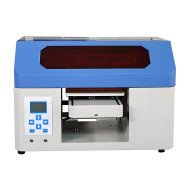
In industrial printing operations aiming for both versatility and precision, the introduction of the A3 Dual Head UV Printer supporting rotary and UV Direct-to-Film (DTF) printing surfaces a distinct technical challenge: balancing hardware capability against practical throughput and operational constraints. This printer integrates dual print heads configured for UV curing technology, promising compatibility with rotary attachments for cylindrical substrates and the emerging UV DTF process for flexible films. Yet, the physical and thermal demands imposed by dual head synchronization and UV curing kinetics can introduce operational bottlenecks. For instance, dual heads require precise alignment and synchronization to maintain micron-level registration especially on rotary-dedicated substrates which often exhibit non-planar geometry, inherently complicating print stability and image fidelity. In parallel, UV DTF printing mandates tightly controlled ink curing to preserve adhesion and substrate integrity without inducing excessive heat stress or ink bleed.
Additionally, the A3 form factor restricts the maximum printable area to 297 mm by 420 mm, limiting scalability for larger format tasks and thus necessitating frequent reloading for batch production. The integration of rotary capability expands the printer’s substrate repertoire but introduces additional mechanical complexity, such as rotational speed regulation and torque consistency, critical for maintaining uniform print density circumferentially. From a materials handling viewpoint, substrate thickness variation and surface energy significantly influence UV ink polymerization rates and curing uniformity. Consequently, the printer's hardware capacity must contend with diverse substrate properties and environmental factors like ambient temperature and humidity, affecting ink viscosity and curing kinetics.
Ultimately, operational limits such as print speed, curing dwell time, and the thermal budget per print cycle define the real-world throughput and image quality achievable with this dual-head system, requiring end users to carefully balance print job parameters against hardware endurance and maintenance intervals.
Hardware Architecture and Printhead Synchronization
The A3 Dual Head UV Printer utilizes two UV LED print heads, each likely comprising arrays of piezoelectric nozzles capable of drop volumes in the range of 6-14 pl. These print heads must synchronize jetting events precisely, particularly when printing continuous-tone images on rotary substrates where misalignment can cause noticeable banding or ghosting effects. Assuming a print resolution of 1200 dpi horizontally and 600 dpi vertically, the printer's rasterization engine must compensate for substrate rotation velocity, head acceleration/deceleration, and interhead timing offset.
Mathematically, the linear distance per printed dot at 1200 dpi equals approximately 21.17 micrometers. For rotary printing, a cylinder with a 50 mm diameter has a circumference of approximately 157 mm, corresponding to roughly 7400 dots per full rotation at 1200 dpi. The printer control system must therefore achieve rotational speed stability better than ±0.1% to avoid cumulative misregistration errors exceeding 7 micrometers, approaching the nozzle drop size.
This level of mechanical precision necessitates high-resolution rotary encoders and closed-loop motor control algorithms, which in turn increase the complexity and potential points of failure in long production runs. Thermal dissipation from dual UV LED arrays also affects printhead operating temperature, with elevated temps risking piezoelectric element drift and ink viscosity fluctuations, which compromise jetting consistency.
Ink Chemistry and UV Curing Dynamics
UV DTF printing involves jetting UV-curable inks onto PET film substrates followed by immediate UV polymerization. The dual head setup allows layering of white and color inks in sequential passes, critical for achieving opacity and vibrant color depth. UV LED wavelengths typically center around 395-405 nm, which must match the ink photoinitiator absorption peak for effective curing.
The curing energy (mJ/cm²) required depends on ink layer thickness, substrate absorption, and ambient conditions. If curing energy is insufficient, inks remain tacky or poorly adhered; excessive energy causes substrate deformation or ink yellowing. Given the A3 dual head design, typical curing dwell times per pass range from 200 to 400 milliseconds.
The printer's software manages UV LED intensity and pass count, but hardware limits on LED power (often 2-6 W/cm²) define upper bounds on curing speed. For thick ink layers or rapid print speeds (>1 m/s), this can create a bottleneck requiring slower print speeds or multiple curing passes, reducing throughput.
Thermal Management Constraints and Runtime Stability
Operating dual UV LED heads simultaneously compounds thermal load within a confined chassis space. Each UV LED array can dissipate between 20 to 40 Watts, summing to approximately 80 Watts excluding stepper motors and control electronics. Efficient heat sinks, forced airflow channels, and potentially liquid cooling loops are essential for maintaining printhead temperatures below 50°C to ensure consistent nozzle firing and prevent ink degradation.
Long production runs exceeding two hours impose cumulative thermal stress on electrical components and mechanical guides. Insufficient cooling manifests as nozzle clogging, misfires, or printhead warping, thereby increasing maintenance downtime. The compact A3 chassis presents challenges for integrating effective cooling without increasing machine footprint or acoustic noise, potentially limiting continuous operation in high-throughput industrial settings.
Comparing Dual Head UV Printing to Single Head Alternatives in Practical Operations
| Parameter | A3 Dual Head UV Printer | Single Head UV Printer |
|---|---|---|
| Maximum Print Speed | Up to 1.2 m/s (depending on curing) | Up to 0.8 m/s |
| Print Area | 297 mm x 420 mm | 297 mm x 420 mm |
| Rotary Support | Yes | No or limited |
| Ink Layering Capability | Multi-pass white + color | Single pass layering |
| Thermal Load | Higher (approx. 80 W LEDs) | Lower (approx. 40 W LEDs) |
| Maintenance Frequency | Higher due to dual heads | Lower |
This data underscores that while dual head printers enhance print speed and layering flexibility, they impose greater operational demands concerning thermal management and maintenance scheduling.
Scenario Analysis
Scenario 1: Small-Batch Custom Cylindrical Product Printing
The rotary support in the dual head system enables precise printing on cylindrical objects such as customized drinkware. Print quality depends heavily on rotational speed stability and head alignment precision. A misaligned printhead or uneven torque can cause color ghosting or inconsistent opacity. The dual head's ability to print white underlayer and color ink in one workflow decreases setup times but requires continuous calibration to prevent mechanical drift.
Scenario 2: Flexible Film Label Production Using UV DTF
In label manufacturing, the UV DTF function allows for improved durability and color vibrancy on PET films. However, the manufacturer must manage curing energy to prevent substrate deformation. The dual head system's multi-pass white ink layering enhances opacity but requires print speed reduction to ensure full curing, impacting throughput and operational costs.
Scenario 3: Prototype Artisanal Print Runs
For high-end artisan use, where color fidelity and micron-level registration are paramount, the dual head design offers superior layering control and substrate versatility. Yet, the limited A3 size necessitates multiple job setups for larger prints, increasing labor and time per batch. Moreover, maintaining environmental stability (temperature and humidity) becomes critical to prevent ink viscosity variations affecting microdroplet formation.
Expert FAQ
Q1 What are the primary failure modes for dual UV print heads in continuous operation?
Common failure modes include nozzle clogging due to ink sedimentation accelerated by elevated temperatures, piezoelectric actuator fatigue causing firing inconsistency, and electronic driver board thermal degradation.
Q2 How does rotary printing geometry affect registration accuracy?
Non-planar surfaces require precise synchronization of rotation speed with head jetting intervals. Deviations cause circumferential banding usually measured in microns, necessitating rotary encoder resolutions of at least 20,000 pulses per revolution to maintain sub-10 micrometer accuracy.
Q3 What thermal management strategies mitigate printhead degradation?
Forced airflow with directional cooling, thermoelectric coolers (Peltier devices), and active temperature feedback control integrated into the printhead PCB ensure stable operation under continuous duty cycles.
Q4 How do ink formulation variables impact curing speed?
Ink viscosity, photoinitiator concentration, and filler particle size influence flow and polymerization kinetics, affecting minimum curing energy and hence printing speed capabilities.
Q5 What maintenance scheduling optimizes uptime for a dual head UV system?
Daily nozzle checks with auto-clean cycles, bi-weekly nozzle replacement intervals, and monthly calibration of rotary encoders and head alignment optimize operational longevity and print quality.
Strategic Verdict
The A3 Dual Head UV Printer with rotary and UV DTF printing capabilities represents a technically advanced solution positioned between entry-level single head devices and larger industrial systems. While its hardware architecture enhances throughput and substrate versatility, real-world operational limits emerge from thermal management, mechanical precision, and curing energy constraints. Future iterations should prioritize integrated thermal regulation, enhanced electronics durability, and more adaptive printhead control algorithms to bridge the gap between hardware theoretical capability and sustainable field performance. These factors will define the machine’s relevance in diverse commercial workflows through 2027 and beyond without sacrificing print quality or uptime.