The Gap Between DIY and Industrial-Grade in Smart Mini A4 UV Printing Explained
The Industrial Reality of Mini UV Printer Integration
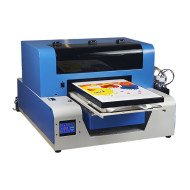
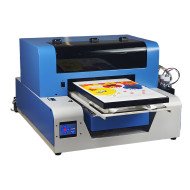
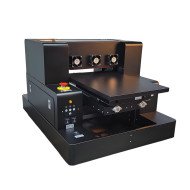
Small-scale ultraviolet (UV) printing devices like the Smart Mini A4 UV Printer have gained traction for their compactness and versatility in rapid prototyping and personalized production runs. However, the transition from a desktop-level device to an industrial-grade asset requires critical scrutiny of hardware capabilities, operational endurance, and integration within larger manufacturing workflows. An illustrative challenge is the inconsistency in print precision and throughput when scaling from one-off applications to continuous batch runs, a scenario frequently faced by businesses seeking to replace traditional screen printing or offset methods with UV digital printing.
Consider a print shop focused on short-run prototypes with highly varied substrates versus a production line handling hundreds of identical prints per shift. The former benefits from the Smart Mini A4's rapid setup and substrate diversity, but the latter exposes inherent mechanical and operational bottlenecks in maintenance cycles, printhead durability, and ink system stability. Operators routinely report a divergence in printhead performance due to thermal stress and particulate accumulation in the ink delivery channel, which amplifies downtime and quality variance.
In industrial settings, asset longevity and predictable depreciation models are crucial for capital allocation. Yet, small desktop-sized UV printers often lack modular components designed for swift replacement or upgrades, complicating lifecycle maintenance planning. These gaps manifest as hidden operational costs and unexpected asset downtime, factors that undermine the expected return on investment in high-volume environments.
Technical Deep-Dive into Smart Mini A4 UV Printer Dynamics
Printhead Technology and Failure Modes
The printer typically employs Piezoelectric drop-on-demand inkjet printheads with droplet sizes averaging 7-9 picoliters (pl), enabling nominal 1200 dpi resolution on flat substrates. However, under sustained operational load, thermal accumulation can increase nozzle temperature by up to 45°C above ambient, accelerating polymerization of UV ink residues within nozzles. This causes partial clogging, deteriorating nozzle jetting performance. Using fundamental fluid dynamic models, the ink droplet velocity (v) can be estimated via: v = (2*P/ρ)^0.5, where P is the piezoelectric actuation pressure (~3 bar) and ρ the ink density (~1.05 g/cm³). Variations in pressure due to clogged nozzles reduce droplet velocity by up to 15%, inducing print artifacts.
Ink Chemistry and Substrate Compatibility
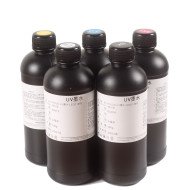
UV-curable inks in mini A4 printers typically contain acrylate oligomers and photoinitiators optimized for rapid curing under LED UV sources (~395 nm wavelength). The challenge emerges in substrate versatility: flexible polymers versus rigid composites exhibit variable surface energy, impacting ink adhesion and curing depth. For example, polypropylene films require pre-treatment for adhesion promotion, whereas coated cardstock may experience ink over-penetration causing color bleed. The curing kinetic rate constant k can be influenced by LED intensity (I), following k ∝ I^0.8, where insufficient intensity prolongs cure time and reduces print durability.
Thermal Management and Hardware Constraints
Compact printers face constrained thermal dissipation pathways. The power consumption of UV LEDs plus printhead electronics totals approximately 40 Watts, generating heat within a confined chassis volume of roughly 0.015 m³. Without active cooling, internal temperature rise (ΔT) can be estimated by ΔT = P/(h*A), where h is the convective heat transfer coefficient (~10 W/m²K) and A the effective heat dissipation surface (~0.2 m²). Calculations show ΔT may reach 20-25°C above ambient, influencing component longevity and ink viscosity. Industrial-grade units typically incorporate heat pipes or liquid cooling to maintain stable operational temperatures.
Maintenance and Lifecycle Cost Assessment
Routine maintenance frequency is a decisive factor in industrial deployment. Smart Mini A4 units generally require nozzle cleaning every 50 operational hours and printhead replacement every 2000 hours. Given a standard 8-hour shift operation, this translates to weekly cleanings and a head swap approximately every 10 months. The costs of consumables and downtime for cleaning can reduce uptime to approximately 85% in production scenarios. In comparison, industrial UV printers extend printhead lifespans to 5000 hours through advanced ink recirculation and automated cleaning, increasing uptime over 95%.
Hardware Comparison Table Between Smart Mini A4 UV Printer and Industrial UV Printer
| Specification | Smart Mini A4 UV Printer | Industrial UV Printer |
|---|---|---|
| Printhead Nozzle Size | 7-9 pl | 5-7 pl |
| Print Resolution | Up to 1200 dpi | Up to 1440 dpi |
| Ink System | Single-pass, manual cleaning | Recirculation with auto cleaning |
| Thermal Management | Passive convection | Active liquid cooling |
| Maintenance Interval | 50 hours (cleaning), 2000 hours (head) | 100 hours (auto cleaning), 5000 hours (head) |
| Maximum Substrate Size | A4 (210 mm x 297 mm) | Customizable, up to 500 mm x 700 mm |
| Operation Uptime | ~85% | >95% |
Scenario Analysis of Practical Impacts on Business Use-Cases
Case 1 – High-Mix, Low-Volume Prototype Studio
A design consultancy producing customized samples benefits from the Smart Mini A4's substrate flexibility and rapid changeover. Print precision at micron level meets their color depth requirements, and the compact footprint suits office environments. However, frequent manual maintenance interrupts workflow, and thermal stress limits continuous operation beyond a few prints per hour.
Case 2 – Small Batch Product Manufacturer
In limited series production of industrial labels, throughput demands expose mechanical wear on the printheads, increasing scrap rates. Absence of advanced thermal management leads to ink viscosity variations and color inconsistency. The unit's smaller maximum substrate size restricts label formats, forcing crop or redesign.
Case 3 – Educational and Research Facilities
Academic labs employing the printer for material science experiments prize the device’s accessibility and low capital outlay. However, lack of integrated environmental control (humidity, temperature) impacts repeatability in experimental outcomes. Maintenance workflows depend heavily on operator skill, introducing variability in printed samples.
Expert FAQ on Mini A4 UV Printing Technology
How does piezoelectric actuator pressure variability affect print quality over long runs?
Variations in piezoelectric pressure are critical; decreased pressure reduces droplet velocity and accurate placement, causing banding and color shifts. Over long runs, cumulative mechanical wear alters actuator efficiency, necessitating recalibration or replacement.
What are the long-term effects of UV LED spectral intensity drift on ink curing?
UV LED intensity drift leads to incomplete polymer cross-linking in inks, weakening surface hardness and adhesion. Real-time spectral monitoring and compensation mechanisms are typically absent in miniaturized models, increasing variability.
Can small UV printers support multilayer or textured substrate printing effectively?
Limited printhead z-axis control and curing uniformity restrict multilayer or textured printing. Surface topography variations cause inconsistent ink deposition, impacting adhesion and resolution fidelity.
How significant is ink photoinitiator degradation during storage inside the printer?
Ink photoinitiators can degrade under ambient light and temperature fluctuations, especially within exposed reservoirs. This degradation reduces curing speed and final polymer integrity, necessitating frequent ink replacement or cold storage.
What is the role of substrate surface energy in achieving consistent print adhesion?
Surface energy dictates ink wetting and spreading. Materials with low surface energy (e.g., polyethylene) resist adhesion without treatment. Variations introduce print defects such as peeling and smudging, critically impacting industrial reliability.
Strategic Verdict on the Future of Compact UV Printing
The Smart Mini A4 UV Printer embodies a nexus point between accessibility and specialized industrial printing technologies. While offering remarkable flexibility in substrate handling and footprint efficiency, it falls short in features vital for demanding industrial workflows—thermal management, printhead endurance, and automated maintenance remain constrained. The widening gap between such compact devices and full-scale industrial-grade equipment is unlikely to close without fundamental innovations in ink chemistry, cooling systems, and printhead architecture. Enterprises aiming for scalable production should consider these limitations in lifecycle costs and operational bottlenecks, while small businesses and niche applications may leverage the device’s portability and cost-effectiveness where throughput and uptime are secondary concerns.