Hard ROI Analysis of A3 DTG Printers for Custom Apparel Scaling

The Industrial Reality of Micro-Manufacturing
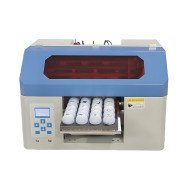
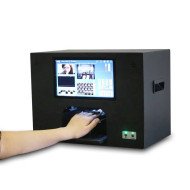
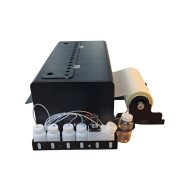
Scaling custom apparel production presents a distinct bottleneck: bridging the gap between slow, manual screen printing setups and massive, high-CAPEX industrial roll-to-roll systems. The A3 Direct-to-Garment (DTG) printer emerges as a critical intermediary asset. Operating within a standard 297 mm x 420 mm print envelope, these units are designed to handle variable data printing with zero setup time per unique garment, fundamentally altering the OPEX structure of small-batch fulfillment. Referencing the base hardware specifications reveals a shift towards automated maintenance routines.
Technical Deep-Dive: Printhead Physics and Ink Delivery
The core of any viable A3 DTG system relies on piezoelectric printhead technology. Unlike thermal inkjet systems, piezoelectric heads apply mechanical pressure via electrical charges to deform a crystal, expelling ink droplets as small as 2.5 picoliters (pl). This allows for micro-level precision when depositing heavy titanium dioxide (TiO2) white ink bases, which is notoriously difficult due to pigment settling.
| Specification | Consumer Grade | Industrial A3 DTG |
|---|---|---|
| Droplet Size | 5.0+ pl | 2.5 - 3.5 pl |
| White Ink Agitation | Manual | Automated WIMS |
Effective thermal management within the printhead carriage is also paramount. High-end units utilize active cooling to maintain a stable 25°C operating temperature, preventing nozzle clogging during continuous 8-hour production shifts and ensuring consistent color depth across dark substrates.