
News - má RSS Feed
17 Mar


0
44
The Industrial Reality of Edible Food Printers in High-Precision OperationsIndustrial-scale edible food printers such as cake printers and pizza printers represent a significant leap from conventional kitchen appliances, embedding advanced mechanical and electronic subsystems optimized for food-safe, high-resolution output. These devices operate at..
17 Mar

0
37
The Industrial Reality of Implementing Edible Food InkEdible food ink represents a niche yet rapidly evolving segment within specialized printing technologies used primarily in the food industry. While consumer-level or DIY edible ink solutions are readily available and attract hobbyist and small-scale applications, scaling such technology to indus..
17 Mar

0
41
The Industrial Reality of Cost Management in LED UV PrintingIn a mid-sized print shop transitioning from conventional solvent-based printers to LED UV technology, the Economical A4 Multifunction LED UV Printer promises operational savings and enhanced capabilities. However, beneath surface-level savings lies a complex financial matrix where invisib..
17 Mar

0
45
Redefining Industrial Printing at John E WrightJohn E Wright's recent integration of the EFI VUTEk M3h UV LED hybrid printer represents a significant transformation in its printing operations. The VUTEk M3h, a successor to the venerable EFI VUTEk GS 3250 LX Pro, enhances the firm's production quality, substrate versatility, and operational capacity..
17 Mar

0
45
Industrial Impact on Shop-Floor Production and Workflow
The introduction of Epson's T3200-U3-2 printhead in April 2026 marks a notable advancement in the industrial digital printing sector, particularly for UV-curing inkjet applications. Its enhanced ink heating capacity, reaching up to 50°C, enables it to handle higher-viscosity UV inks than previ..
17 Mar
0
43
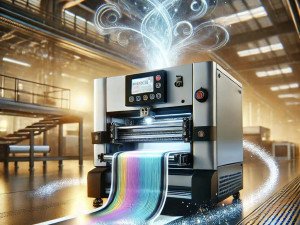
The Industrial Reality of Miniature UV Printing in High-Volume EnvironmentsIn high-throughput production settings, integrating a compact UV printer such as the Smart Mini A4 necessitates careful scrutiny against operational bottlenecks. The challenge lies in balancing the printer's miniature form factor with the rigors of continuous multi-shift use..
17 Mar
0
40
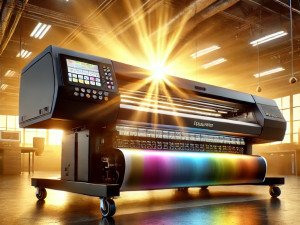
The Industrial Impact of Shifting to RGB WorkflowsThe traditional printing industry has long been dominated by the CMYK (Cyan, Magenta, Yellow, Black) colour model. This model was easy to adopt for offset printing and remains deeply embedded in legacy workflows and hardware. However, evolving hardware capabilities, especially in digital and wide-fo..
17 Mar

0
32
Industrial Impact of Colour Consistency on Manufacturing Efficiency
Colour consistency is not a mere aesthetic concern; it is a fundamental industrial challenge that impacts every facet of manufacturing across complex supply chains. In industries spanning apparel, swimwear, and interior textiles, the ability to maintain uniform colour across multip..
17 Mar

0
37
The Industrial Reality of Spot UV Printing Under Operational StressThe deployment of A3 Spot UV printing machines within industrial-grade print environments reveals significant operational complexities, frequently underestimated during initial procurement phases. The challenge emerges when integrating the UV coating process into high-throughput wor..
17 Mar

0
31
The Industrial Reality of Lifecycle Maintenance in Heat Press OperationsIn the operational ecosystem of precision heat press machines, the 40x60CM model embodies a critical balance between size, thermal efficiency, and mechanical endurance. Imagine a mid-sized print shop servicing textile and hard surface substrates with a daily throughput of 50-70..
17 Mar

0
26
The Industrial Impact of Women Leaders in Packaging EngineeringThe packaging industry is undergoing a pivotal transformation, with women emerging as influential leaders shaping its future. This dynamic shift is not just a social phenomenon but a deep operational evolution altering the engineering, management, and economic fabric of packaging produc..
17 Mar

0
43
The Industrial Impact of Misguided Activities by New Sales RepsOne of the most overlooked operational inefficiencies in B2B sales environments, including specialized sectors such as printing and industrial equipment sales, stems from the flawed activities of new sales representatives. These inefficiencies manifest not only in lost revenue opportuni..