
News - Ink Rheology RSS Feed
31 Mar


0
29
The Industrial Reality of Edible Ink Production and ApplicationEdible food ink introduces a novel complexity in the printing ecosystem that conventional inks do not encounter. Unlike traditional printing mediums, edible inks must adhere to stringent food safety standards, maintain biochemical stability under high-temperature printhead operations, a..
30 Mar

0
30
The Industrial Reality of Maintaining Textile Pigment Ink SystemsDirect-to-Garment (DTG) printing technologies employing textile pigment inks represent a specialized segment of industrial textile manufacturing. These inks, formulated with finely milled pigment particles suspended in proprietary binders, demand stringent maintenance regimes to susta..
28 Mar

0
34
The Industrial Reality of Portable Edible Ink Printing DevicesThe emergence of portable edible printing technology, such as the Portable PrintPen Edible Food & Drinks Printer, introduces a novel paradigm for on-demand customization in food and beverage environments. However, integrating such precision printing hardware into daily operational workfl..
28 Mar

0
41
The Industrial Reality of Edible Food Printing at A4 ScaleIn modern food manufacturing environments, the introduction of A4 size edible food printers presents a novel technical frontier that confronts a unique assembly of operational bottlenecks. Unlike traditional printing on inert substrates, edible food printing operates in a dynamic and highly ..
27 Mar
0
0
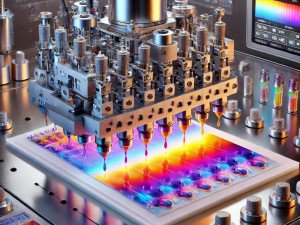
The Industrial Reality of Edible Food Ink Production and ApplicationIn high-throughput industrial environments where edible food ink is utilized, three major operational bottlenecks invariably surface: ink stability under variable thermal conditions, substrate compatibility, and printhead precision consistency. Edible food ink, by its nature, intro..
26 Mar
0
37
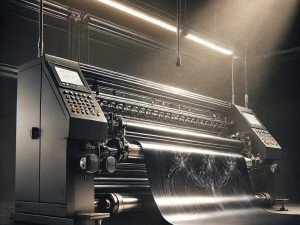
The Industrial Reality of Throughput in A3 Roll DTF PrintingThe deployment of A3 roll Direct to Film (DTF) printers in industrial print environments encounters a series of technical limitations and throughput bottlenecks that are frequently underestimated. Although manufacturers often quote theoretical print speeds in terms of square meters per hou..
25 Mar

0
39
The Industrial Reality of Edible Food Ink in High-Volume ProductionEdible food ink, formulated specifically for direct application on consumable surfaces, introduces a set of operational constraints distinct from traditional inks. In industrial environments where throughput and consistency are paramount, managing these constraints becomes critical ..
24 Mar

0
45
The Industrial Reality of Edible Food Printing in Daily OperationsThe implementation of A4 size edible food printers in commercial kitchens and specialty confectioneries introduces a unique set of operational challenges that can significantly impact uptime and output quality. Unlike conventional printers, edible food printers must manage a complex ..
23 Mar

0
53
The Industrial Reality of Portable Edible PrintingImagine a bustling high-end patisserie aiming to produce customized edible designs on pastries and cocktails rapidly during peak hours. The Portable PrintPen Edible Food & Drinks Printer promises convenience and precision, ostensibly bridging handheld operation with digital print fidelity. However, ..
22 Mar

0
66
The Industrial Reality of Edible Printing at ScaleConsider a mid-sized commercial bakery integrating an A3 edible food printer designed specifically for cakes and cookies into its production pipeline. While the concept appears straightforward — precisely depositing edible inks onto complex substrates — the operational reality reveals several non-ob..
22 Mar

0
51
The Industrial Reality of Operating the TX800 Head A3 UV Flatbed Printer Under Production StressThe TX800 Head A3 UV Flatbed Printer positions itself in the industrial printing sector with an emphasis on flatbed UV printing for medium-format applications. However, its deployment in high-demand environments reveals operational challenges that are no..
19 Mar

0
38
The Industrial RealityIn advanced production environments where multifunction artificial and natural flower printers are deployed, operators face complex challenges. These devices combine intricate mechanical precision with diverse material handling requirements, producing items that demand both aesthetic fidelity and structural integrity. The core..