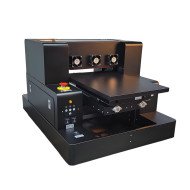
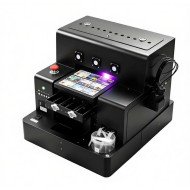
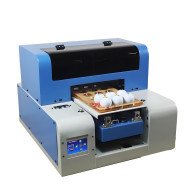
A3 Roll DTF Printer Performance Limits and Practical Throughput Realities

The Industrial Reality of Throughput in A3 Roll DTF Printing
The deployment of A3 roll Direct to Film (DTF) printers in industrial print environments encounters a series of technical limitations and throughput bottlenecks that are frequently underestimated. Although manufacturers often quote theoretical print speeds in terms of square meters per hour or linear feed rate, the operational throughput is impacted by a complex interplay of hardware constraints, ink chemistry drying times, film feeding precision, and environmental control systems. In a typical production line scenario where multiple shifts demand near-continuous operation, these factors compound to reduce effective output and increase unplanned downtime.
One critical challenge arises from the mechanical feeding system. The micro-step motors tasked with advancing the film roll must maintain registration accuracy within ±0.1 mm to prevent image distortion and misalignment, especially at resolutions exceeding 1440 dpi. Any deviation can cause cascading defects requiring reprints or manual corrections, directly impacting overall productivity. Moreover, the thermal curing units integrated into many A3 roll DTF printers impose ceiling limits on maximum feed speed due to required ink flash-off times before film take-up to ensure adhesion fidelity and color vibrancy.
In practical industrial setups, the need to balance speed with print quality and film handling precision manifests as a throughput ceiling that is sometimes 30–40% below nominal rated speeds. This gap becomes a critical factor when applying lean manufacturing principles and calculating labor cost per printed unit. Operators also face the challenge of maintenance cycles that are directly proportional to throughput stress, with printheads requiring recalibration or cleaning every 50-100 meters of film to counter nozzle clogging from pigment particles and adhesive inks.
Core Mechanical and Thermal Limits Affecting Throughput
The mechanical design of A3 roll DTF printers employs stepper or servo motors coupled with precision rollers and tension arms to transport flexible polyurethane or PET-based films. As feed speed (v) increases, so does the cumulative tension (T) on the film, which can be modeled using the equation T = μN + m(v^2/r), where μ is the friction coefficient between roller surfaces and film, N is the normal force exerted by tension arms, m is the effective mass of the film segment under acceleration, and r the roller radius. Excessive tension causes micro-tears or stretching, degrading print quality.
Thermal management introduces additional constraints. The curing temperature range for typical DTF inks lies between 70°C and 90°C to activate adhesive layers without melting the film substrate. At higher printing speeds, the film dwell time under heaters (t_d) shortens, calculated by t_d = L/v, where L is heater length. Insufficient dwell time leads to undercured inks, causing poor wash-fastness. Therefore, print speed adjustments must align with heater design and power density (W/m^2) to maintain adhesion standards.
Ink Droplet Size, Printhead Technology, and Resolution Trade-offs
Print quality directly governs operational throughput since higher resolutions require slower print passes to achieve micron-level dot placement accuracy. The A3 roll DTF printer typically uses piezoelectric printheads, capable of ejecting droplets from 6 to 12 picoliters (pl). Smaller droplets provide finer image detail but increase print time due to reduced drop volume per unit area.
An analytical comparison shows that doubling resolution from 720 dpi to 1440 dpi theoretically quadruples the number of droplets per square inch, increasing ink usage and print time substantially. Moreover, ink rheology affects nozzle firing frequency and clogging risks, with higher pigment concentration inks favoring durability but creating maintenance challenges. Effective throughput thus demands a calibrated compromise between resolution, ink chemistry optimization, and print speed.
Comparative Data on Throughput Versus Print Quality Settings
| Specification | High-Speed Mode | High-Quality Mode |
|---|---|---|
| Resolution (dpi) | 720 | 1440 |
| Print Speed (m2/h) | 8.5 | 4.2 |
| Ink Droplet Size (pl) | 12 | 6 |
| Estimated Downtime per 100m (min) | 15 | 35 |
| Film Tension Range (N) | 4-6 | 3-5 |
Environmental and Maintenance Bottlenecks
Beyond hardware, external environmental variables like ambient humidity and temperature critically influence ink curing and film elasticity. Deviations outside ideal parameters (40-60% RH, 20-25°C) increase static buildup on the film, cause premature ink drying within nozzles, and force additional maintenance interventions. Consequently, printrooms require HVAC systems capable of ±2°C and ±5% RH stability for reliable runs.
Maintenance intervals also tightly correlate with print volume and ink type. Standard cleaning cycles involve flushing solvent through nozzles and wiping wiper blades every 50-100m of printed film to prevent particulate accumulation. Industrial users report that failure to adhere to these cycles accelerates printhead degradation, leading to costly replacements that can run into thousands of USD per unit.
Scenario Analysis of Industrial Use Cases
Case 1: High-Volume Apparel Decorator
In a factory producing thousands of printed motifs daily on polyester blends, speed is paramount. The A3 roll DTF printer must operate predominantly in high-speed mode with 720 dpi to meet throughput targets. The trade-off is moderate resolution but acceptable for mass-market applications. Maintenance is scheduled twice daily with automated flushing to maintain uptime, contributing to a predictable OEE (Overall Equipment Effectiveness) of approximately 85%.
Case 2: Boutique Customizer of Premium Textile Goods
This operation prioritizes color fidelity and fine detail on mixed fabric substrates. Running the printer at 1440 dpi allows micron-level precision but reduces throughput by half. Operational scheduling incorporates planned downtime for head cleaning and environmental control, accepting a 60% OEE but demanding higher labor input per unit. This reflects a classic quality versus speed trade-off.
Case 3: Regional Print Shop with Variable Load
Here, the printer switches dynamically between fast prototyping at 720 dpi and client-specific high-resolution jobs at 1440 dpi. The printer’s infrastructure integration, including robust HVAC and power systems, allows flexibility but requires attentive maintenance scheduling. Operational bottlenecks arise mostly from manual film loading and calibration steps, highlighting the human factor in throughput realization.
Expert FAQ on Maximizing A3 Roll DTF Printer Throughput
Q1: How do environmental humidity fluctuations affect printhead nozzle clogging?
A1: Elevated humidity above 60% can cause ink aggregation at nozzle lips due to slower solvent evaporation, increasing clog risks. Conversely, too low humidity (<40%) causes rapid ink drying inside nozzles. Maintaining a mid-range humidity with active HVAC is critical.
Q2: Can ink rheology modifications improve throughput without hardware changes?
A2: Yes, optimizing ink viscosity around 12-15 cP and adjusting pigment dispersion can enhance jetting stability, allowing faster firing frequencies and reducing maintenance frequency.
Q3: What mechanical retrofits improve film tension stability at high speeds?
A3: Adding closed-loop tension sensors and servo-controlled tension arms enables dynamic tension adjustments, preserving dimensional accuracy during rapid feed.
Q4: How does printhead firing frequency relate to dwell time and cure quality?
A4: Printhead frequency inversely impacts dwell time per unit area; high frequency reduces ink deposition time, necessitating stronger curing power or slower film feed to ensure adhesion.
Q5: Are there meaningful throughput gains from switching from piezoelectric to thermal printhead technology?
A5: Thermal printheads generally have faster firing cycles but lower drop precision and higher ink temperature requirements, making them less suitable for high-fidelity DTF applications focused on durability and fine detail.
Strategic Verdict on Throughput Limits and Technology Trajectory
The A3 roll DTF printer represents a complex balance between hardware capabilities, ink chemistry, and operational environment factors that collectively define its maximum effective throughput. While hardware innovations in motor precision, printhead design, and thermal management continue incrementally, the practical ceiling remains constrained by material physics and maintenance realities. Future developments will likely focus on adaptive tension control, advanced ink formulations for faster curing, and integrated environmental conditioning systems to narrow the gap between rated and realized throughput. Industrial users must assess their operational priorities carefully to optimize these variables rather than pursue headline speeds alone.