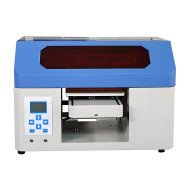
Why Flexible Cases Keep Peeling: Solving the Hard Ink Problem on Your phone case printer

Understanding the Core Cause: Why Flexible Cases Keep Peeling After Printing
Flexible phone cases are notorious for their peeling issues post-printing. Contrary to popular belief, peeling does not simply arise from low ink quality or poor print technique. The culprit often lies in the interaction between hard, inflexible inks and the flexible TPU or silicone substrates. This mismatch in mechanical properties ensures stress concentration points that lead to ink delamination, especially under bending or daily wear.
The Material-Ink Mechanical Mismatch
Flexible cases typically use thermoplastic polyurethane (TPU) or silicone blends, which are soft and stretchable. Many inks formulated for this application—UV-cured, solvent-based, or DTF pigments—tend to harden significantly once cured. The cured ink film becomes rigid and does not accommodate substrate elongation beyond 5-10% strain. When the case experiences flex during daily use, the ink film cannot follow the substrate deformation and begins to crack or peel.
GNFEI’s experience shows that standard UV inks typically have a Shore hardness between 70-80A after curing, whereas the substrate’s hardness measures closer to 20A. Such disparity creates a mechanical incompatibility. Unless a flexible ink formulation is used, this fundamental issue persists.
Surface Energy and Ink Wettability
Beyond mechanical properties, surface chemistry critically influences adhesion. Flexible TPU cases often feature low surface energy, resulting in suboptimal ink wetting. Poor wetting leads to microvoids or inconsistent ink anchoring. In UV printing systems from GNFEI, surface pre-treatment such as corona or plasma is essential to raise the surface energy above 35 dynes/cm, ensuring strong chemical bonding with the ink.
Failure to execute a sufficient surface treatment cycle—controlled parameters like ~300W corona power for 3 seconds—results in ink forming a fragile interface that readily peels off during handling or flexing.
Ink Curing Parameters and Their Effects
Ink curing intensity and uniformity directly influence cross-link density and, therefore, hardness. Over-curing UV inks increases brittleness; under-curing reduces durability and adhesion. Operators in printing shops using GNFEI UV printers must meticulously calibrate curing lamps for dose uniformity over the entire printed area. Tools like a radiometer to measure mW/cm² levels and curing time adjustments in 0.1-second increments help optimize results.
Step-by-Step Troubleshooting Guide: Fixing Peeling on Flexible Phone Cases
Diagnosing Ink and Substrate Compatibility
- Step 1: Verify the substrate type and hardness with a durometer meter. TPU cases require inks with similar or lower Shore hardness.
- Step 2: Confirm ink hardness post-curing by printing test patches and measuring Shore hardness 24 hours after curing.
- Step 3: Run bend tests: flex printed cases repeatedly and inspect peeling locations under magnification.
Optimizing Pre-Treatment Procedures
- Step 4: Check surface energy using water contact angle methods. If the contact angle is above 80°, repeat or increase corona treatment intensity.
- Step 5: Use controlled air knives or nitrogen purge before printing to remove dust and oils that interfere with adhesion.
Fine-Tuning Ink Deposition & Curing
- Step 6: Adjust printhead height and speed for consistent ink laydown; excessive print head distance causes uneven curing.
- Step 7: Reduce curing intensity incrementally to find the ‘soft spot’ where ink hardness matches substrate flexibility without compromising durability.
- Step 8: Implement periodic printhead maintenance protocols specific to GNFEI’s Epson-based heads, including regular white ink circulation and nozzle checks every 20 working hours.
ROI Breakdown: Financial Implications of Hard Ink Failures on Flexible Cases
Ink Cost vs. Waste
When prints fail due to peeling, ink and substrate costs are sunk. Flexible TPU cases typically cost $0.80 to $1.20 per piece. UV or DTF inks may range from $0.15 to $0.40 per print depending on color coverage. Failed batches increase scrap rates, sometimes reaching 15%-20% without proper control.
Labor and Time Considerations
Labor time escalates since reprints require case sorting, defect removal, cleaning of printbeds, and restarting jobs. A GNFEI printing operator spends roughly 5-10 minutes per failed batch to reboot equipment and carry out quality checks, translating roughly into $3 to $6 operational loss per failed 50-case batch.
Printhead Longevity and Maintenance Impact
Ink peeling issues often signal overexposure to curing or print parameter miscalculations, which stress the printhead. Epson printheads integrated in GNFEI printers require costly repairs or replacements after 1000-1500 liters of ink usage. Excessive ink curing intensity or repeated clip cleaning cycles (more than twice daily) reduce lifespan by up to 20%.
Accounting for a printhead replacement cost near $450 every ~18 months under average usage, we recommend tracking operational metrics alongside ink failure rates to reduce total cost of ownership and maximize ROI.
Comparative Analysis: Different Printing Technologies on Flexible Cases
UV Printing vs DTF Printing on TPU
UV printing offers high resolution and vibrant colors but often results in higher ink hardness, contributing to peeling. DTF (Direct to Film) printing transfers a flexible pigment layer, generally softer, which conforms better to flexible substrates but suffers in scratch resistance and UV stability without lamination.
GNFEI carries both solutions but recommends UV flexible ink lines with modified photoinitiators when scratch resistance is prioritized and DTF for applications prioritizing flexibility.
DTG Printing Limitations
Direct to Garment printing is optimal for textiles, not plastics. TPU cases resist DTG water-based inks without extensive surface modification and polymer coating, raising costs and complexity. Attempts at DTG without proper coating quickly result in delamination upon flex.
Solvent and Eco-Solvent Printing Considerations
Eco-solvent inks have better flexibility profiles but require prolonged drying times and often emit VOCs that limit indoor operation. Solvent inks achieve decent flexibility but struggle with adhesion on silicone-based substrates without primer layers. GNFEI’s UV solution circumvents these to a degree but necessitates perfect setup.
Advanced Fixes: Materials and Process Innovations to Eliminate Peeling
Flexible UV and Hybrid Ink Formulations
Research-driven flexible UV inks combine urethane acrylate oligomers and plasticizers to drop cured hardness below Shore 40A, much closer to TPU substrate flexibility. GNFEI offers proprietary ink blends optimized for phone cases that maintain adhesion and durability under flex testing at >1000 cycles.
Multi-Step Surface Preparation Techniques
Combining corona with chemical primers enhances adhesion by modifying surface polarity and roughness. Primers based on silane chemistry penetrate TPU pores and create covalent bonds with ink polymers. This process is included within GNFEI’s recommended startup protocols to improve print durability.
Ink Layer Structure Engineering
Layering a flexible base coat before applying color coats builds strain relief. This intermediate layer reduces stress transfer to the color ink film, minimizing cracking. GNFEI’s two-pass curing methods, where partial curing stabilizes the base coat before final curing, have enabled partners to eliminate peeling in 90%+ of flexible case jobs.
Operational Best Practices: Ensuring Long-Term Success for Flexible Phone Case Print Jobs
Regular Equipment Maintenance
Scheduled nozzle inspections and white ink recirculation every 20 working hours avoid pigment settling—a major factor influencing print quality consistency. GNFEI advises creating printhead usage logs and maintenance checklists to reduce downtime.
Environmental Controls
Maintaining humidity around 40-60% and stable room temperatures from 20-25°C prevents ink curing anomalies and substrate warping. In humid or cold environments, increased drying periods or heated ventilation may be required.
Training and Monitoring
Consistent training for operators on flexible materials handling, curing parameter adjustments, and defect identification preserves production yield. Automating key process variables with GNFEI’s smart print management software assists in spotting deviations early and prompts corrective action.
Combining these operational and technical approaches helps manufacturers move beyond recurring peeling problems, ultimately delivering premium, durable flexible phone cases that end users appreciate.