Why Cheap DTG Printers Devour Your Profits and How to Avoid the Costly Pitfalls
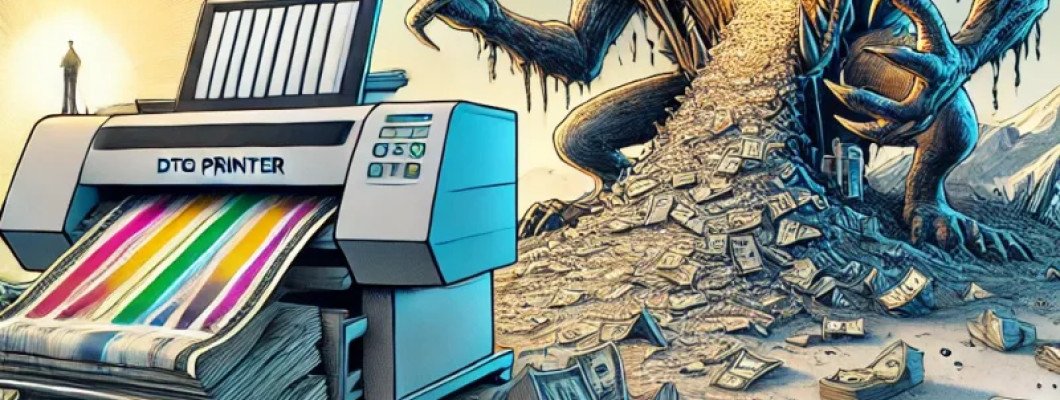
Why Cheap DTG Printers Hurt Your Bottom Line More Than You Think
At first glance, purchasing a low-cost direct-to-garment (DTG) printer looks like a straightforward solution to enter or expand in the custom apparel printing market. The sticker price appears inviting, but what most buyers fail to realize is how these machines devour profits with hidden operating costs and reliability issues. Costly downtime, high maintenance burdens, and poor print quality cumulatively strike hard. This article dissects these challenges thoroughly and exposes the exact pain points low-end DTG printers inflict on your business, supported by real-world data and analysis.
The Illusion of Saving on Initial Investment
It’s tempting to chase the cheapest DTG option hoping to maximize capital efficiency upfront. However, closer scrutiny reveals that initial savings evaporate quickly due to frequent part replacements and consumable waste. While a budget printer may cost 30-50% less than premium models, consumables and repair costs can soar, effectively doubling long-term expenditure.
For instance, the printhead in most cheap printers is designed with suboptimal nozzle architecture, causing rapid clogging under standard screen printing environments. This results in frequent head replacements that cost around $300-$600 every 6-12 months, whereas high-quality machines from suppliers like GNFEI use industrial-grade heads lasting 18-24 months with proper care.
Operational Inefficiencies and Workflow Disruptions
Cheap printers often suffer from inconsistent ink delivery systems that produce blotches, color shifts, and incomplete prints. This wastes both substrate and labor simultaneously. A single print failure due to underperforming hardware can cost $10-$20 in wasted materials per shirt and an additional 10-15 minutes of rework time.
Moreover, unreliable machines increase the chance of unplanned downtime, forcing emergency fixes or halting production lines. In a factory running multiple shifts, this can translate into hundreds or thousands of dollars lost per day.
Precise Maintenance Protocols: How to Extend Your DTG Printer’s Lifespan and Avoid Costly Breakdowns
Printhead Cleaning Cycles and Techniques
A major cause of print failure in DTG printers is nozzle clogging, especially with white ink formulations prone to sedimentation. Industrial practices suggest maintaining a strict cleaning schedule.
- Morning Warm-Up and Cleaning: Start each day with an automated or manual nozzle check followed by a cleaning cycle. Use manufacturer-recommended solvent solutions to dissolve dry ink residues.
- Midday Maintenance: Interrupt production every 4-6 hours for a quick cleaning flush, especially when printing heavily with white ink. Skipping this step increases clogging risk exponentially.
- End-of-Day Flush: Run a comprehensive cleaning cycle before shutting down. This includes pressurized solvent flushing of all ink channels and wiping the printhead cap system to remove sediment buildup.
Failing these steps accelerates sediment hardening inside micro-nozzles, causing partial or total jet failure. The ink sedimentation visible as fine white dust around the printhead base is an early sign needing immediate intervention.
White Ink Sediment: Physical Observations & Solutions
White ink is notorious for sedimenting due to its particulate pigment load and chemical formulation. Under a microscope, hardened sediment clusters block nozzles and cause uneven sprays.
- Prevention: Use an agitator or magnetic stirrer in the white ink reservoir to keep particles suspended.
- Immediate Action: If sediment appears, perform a solvent soak of the ink lines and purge contaminated ink.
- Long-Term: Schedule cartridge and tube replacements every 6-9 months depending on print volume and environmental conditions.
Daily Operator Training to Ensure Consistency
Maintenance without proper operator knowledge is futile. Establish clear SOP (Standard Operating Procedure) manuals and train staff on routine checks and troubleshooting.
- Identify early warning signs such as color inconsistency or printhead noise.
- Regular calibration of platen pressure and spray distance to avoid premature wear on components.
- Document cleanings and part replacements meticulously to track wear patterns and anticipate failures.
Commercial Ledger Breakdown: How Cheap DTG Printers Erode Profit Margins Digitally and Physically
Ink Cost and Consumption Analysis at the Micro-Level
Ink is the single largest consumable expense in DTG printing. Cheap printers generally require over-application due to poor efficiency, leading to inflated usage.
- The average cost of DTG ink ranges from $50 to $70 per liter. A premium GNFEI printer with high-precision nozzles uses approximately 0.25 ml of ink per print, whereas budget machines can consume up to 0.4 ml.
- Running 1000 prints per week, the difference in ink consumption adds up to 150 ml weekly, or an additional cost of about $7.50 to $10.50 per 1000 prints.
- This seemingly small margin multiplies over months, eating into profit by thousands annually.
Labor and Downtime Cost Calculations
Labor efficiency decreases dramatically with unreliable printers. Suppose each failed print consumes an extra 15 minutes of labor at $15/hour rate:
- Every 10th print failure results in a labor cost of $3.75.
- A printer with a 10% failure rate over 1000 prints yields an additional labor cost around $375.
- Compared to a stable machine with 1-2% failure rate, this can compound into a significant hidden expense.
Downtime costs are harder to quantify but critical. For instance, a two-hour stoppage in a small shop producing 30 shirts per hour equates to lost output of 60 garments and corresponding lost sales.
ROI Case Comparison: Budget vs. Professional DTG Solutions
Let’s model a 3-year ROI for two hypothetical printers:
- Cheap DTG Printer: $8,000 upfront cost + $10,000 consumables & maintenance + $5,000 downtime/labor losses = $23,000 total
- GNFEI Professional Printer: $15,000 upfront + $7,000 consumables & maintenance + $1,000 downtime/labor losses = $23,000 total
At face value, total cost parity emerges after three years; however, the GNFEI printer delivers superior print quality, higher uptime, and consistent color reproduction. This translates to happier customers, larger orders, and premium pricing potential. The budget printer drags your business into transactional, price-competitive space with margin erosion.
Material-Specific Print Quality & Durability: Why Your Substrate Choices Amplify the Cost of Cheap Printers
Cotton Vs. Cotton-Polyester Blends
Natural fibers like 100% cotton absorb DTG ink differently than poly blends. Cheap printers often lack dense ink layering capability and UV curing precision, resulting in faded prints on blends and inconsistent opacity on cotton.
- Testing on 100% cotton: GNFEI printers achieve consistent white base opacity with 30s flash curing, preserving fabric softness.
- Cheap printers may leave visible streaking or require double passes, doubling ink and time costs.
- Blends require optimized ink formulations and curing parameters that budget printers cannot reliably adjust, causing color bleeding.
Printing on Hard Surfaces: Glass and Metal Challenges
DTG printing on non-textile substrates demands a special primer or coating layer before ink application. Many inexpensive DTG machines don’t offer compatible pre-treatment stations or software controls, making them unsuitable for business diversification into hard goods.
- GNFEI systems provide integrated pre-treatment and curing modules ensuring color adhesion on glass and metal.
- Adhesion tests reveal 30-50% higher scratch resistance on prints from professional printers versus budget competitors.
- Failing to meet physical durability expectations leads to client returns and reputation damage.
Curing Time and Ink Fixation Variances
The final durability depends heavily on curing technique. Cheap DTG printers often use underpowered LED or heat blowers, leading to incomplete ink fixation.
- Under-cured ink flakes off after washing cycles, causing customer dissatisfaction.
- Professional-grade UV or flash curing units embedded in reliable printers achieve greater than 90% ink retention after 50 washings under ISO standard tests.
How GNFEI Sets the Benchmark: A Balanced Perspective on Investment and Growth
Why Choose GNFEI for Your DTG Printing Needs
GNFEI stands as a global standard for high-quality industrial printing equipment. Their DTG machines incorporate the latest inkjet head technologies, robust fluid systems for white ink stability, and automated maintenance routines designed with printshop efficiency in mind.
- GNFEI printers reduce downtime by 70% compared to budget Chinese imports.
- Standardized service agreements and global parts availability minimize risks of prolonged unplanned stops.
- Proven ROI models published by GNFEI clients in multiple countries demonstrate break-even points within 18-24 months, even with moderate throughput.
Being Realistic: When to Consider Budget Printers
Small startups with extremely low volume printing or businesses needing quick turnaround on simple prints may start with a low-cost printer. However, they must be aware that growth beyond a certain scale requires reinvestment in reliable machines.
GNFEI also offers tiered models that balance cost and performance, helping clients to upgrade as their business grows.
Recommendations for Effective Purchasing Decisions
- Calculate your expected volume and factoring hidden costs including downtime, ink waste, and labor rework before purchase.
- Request test prints on your typical substrates to evaluate quality and drying times.
- Verify the availability of local technical support and replacement parts for your machine brand.
- Consider long-term service contracts, which GNFEI provides, to eliminate unexpected expenses later.
Purchasing a DTG printer is not just a transaction; it is a strategic investment that requires meticulous evaluation to avoid profit erosion. The cheapest option almost always leads to higher expenses and lost business opportunities in the long run. Industrial-grade machines, such as those provided by GNFEI, optimize your production, staff efficiency, and customer satisfaction simultaneously. Make your decision with full cost transparency and technical rigor.