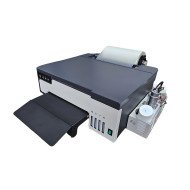
Waste Ink Tank Overflows: The Hidden Downtime of a Budget dtg printer

Understanding Waste Ink Tanks in Budget DTG Printers: The Underestimated Downtime Factor
Waste ink tanks are often an overlooked component in budget Direct-to-Garment (DTG) printers. Many B2B buyers and print shop owners believe these tanks are a low-maintenance piece of equipment, yet they can silently choke production lines. The overflow of waste ink tanks doesn't just cause a mess; it directly results in unplanned downtime, damaging not only job schedules but also overall profitability.
What Is a Waste Ink Tank and Why It Matters
A waste ink tank collects excess ink flushed during cleaning cycles and head purges, primarily to maintain printhead health. This component is especially critical in inkjet printers that use solvent or water-based pigmented inks. Ignoring the tank’s capacity leads to overflow, causing ink to pool around sensitive electronics and mechanical parts. The aftermath? Printer errors, service calls, and needless halts.
The Misconception on Maintenance Requirements
Budget DTG printers often advertise “plug and print” simplicity, giving false confidence that maintenance needs are minimal. In reality, the waste ink tank requires regular inspection, drainage, and occasional replacement. Factory defaults may set these tanks at lower capacities or inflexible sensor thresholds, triggering shutdowns prematurely or too late—both scenarios cost time and money.
Signs Your Waste Ink Tank Is About to Overflow
- Frequent print stoppages with error codes referencing the waste ink or maintenance tank.
- Visible ink leakage around the printer base or inside the access panels.
- Clogged printhead nozzles forcing excessive cleaning cycles, filling the waste tank faster.
Step-by-Step Waste Ink Tank Maintenance for Budget DTG Printers
SGNFEI, a leader in providing industrial-grade printing solutions, recommends precise maintenance workflows that extend printer uptime and head life. Here is a high-value approach tailored to budget DTG units.
Step 1: Regular Tank Capacity Monitoring
Establish a daily check routine, especially after high-volume print jobs. Open the printer’s maintenance area to visually inspect the waste ink tank fill level. If the printer has sensor alerts, set reminders to verify sensor accuracy every month as dust and ink film buildup can cause false readings.
Step 2: Safe Waste Ink Extraction
Prepare disposable gloves, lint-free rags, and a secondary container. Slowly remove the waste ink tank following the manufacturer's instructions—typically involving unclipping or unscrewing. Avoid sudden tilts to prevent spills. If the tank is non-removable, use a syringe or siphon pump designed for viscous ink extraction.
Step 3: Clean and Replace As Necessary
Remove residual ink films inside the tank with isopropyl alcohol and soft brushes. Refill the tank with clean water and agitate to break down stubborn ink residues, then drain thoroughly. For disposable or sealed units, always replace with OEM or GNFEI-certified alternatives to prevent sensor malfunction or improper fitting.
Additional Pro Tips for Longevity
- Set printer maintenance cycles to avoid excessive purging, minimizing waste ink buildup.
- Keep the printer environment dust-free to reduce clogging and sensor errors.
- Document each maintenance session in a log for operator accountability and trend analysis.
Crunching the Numbers: Real ROI Impact of Waste Ink Tank Overflow
Downtime creeps silently into your bottom line. You might not see it on the surface, but every minute lost to waste ink tank issues translates to substantial profit erosion. Here’s a breakdown of direct and indirect costs.
Ink Costs and Waste Volume
On average, a budget DTG printer can waste up to 5-8ml per cleaning cycle. At typical cleaning frequencies of 10-15 cycles daily, that’s approximately 50-120ml of ink wasted in the tank daily. Given an average ink price of $120 per liter, the daily lost ink cost ranges from $6 to $14.40. Over a 22-workday month, that climbs to $132 to $316.80.
Labor Costs and Downtime
When a waste ink tank overflows, the maintenance can take anywhere from 30 to 90 minutes, stopping production. With an operator wage of $20 per hour, that equates to $10 to $30 lost per incident, excluding downtime impact on customer deadlines.
Printhead Damage and Replacement Frequency
Excess waste ink accumulation can affect the printhead environment by causing ink backflow or corrosion. The resulting damage inflates the printhead replacement frequency. A typical printhead might cost $700-$900. Proper waste ink management can extend printhead lifespan by at least 20%, saving several hundred dollars annually.
Material Considerations: Ink Waste and Downtime Across Substrates
Different substrates influence waste ink volume and drying characteristics, which affect how quickly the waste tank fills and how often cleaning cycles trigger.
Cotton and Cotton Blends
Natural fibers like 100% cotton hold ink differently than synthetics. Absorption leads to less ink drying delays but can require longer heat curing. Purge cycles to clear pigment accumulation thus trigger more often when printing white underbases. This increases waste ink volume.
Polyester and Mixed Synthetics
Polyester fabrics demand higher heat curing and have poorer ink absorption but dry fast. This reduces printhead clogging and purge frequency but can increase ink wastage during color management calibration. Waste ink tanks fill moderately slower but still require frequent checks in production environments.
Non-Textile Substrates: Glass and Metal
Printing on rigid surfaces like glass and metal with DTG printers requires pretreatment sprays that can affect ink adhesion kinetics. The curing time on these substrates is often longer, leading to additional maintenance cycles. Because solvent migration is less, the waste ink tank may fill faster due to increased purge demands for head cleaning.
Comparing Budget DTG Printers vs. Industrial-Grade Solutions Regarding Waste Ink Management
Budget DTG printers provide entry-level access to digital textile printing but skimp on critical robustness required for high-output operations.
Tank Capacity and Sensor Reliability
Industrial DTG printers from GNFEI and similar vendors often feature larger or modular waste ink tanks with auto-drain options or external reservoirs. Their sensors are more accurate, reducing unnecessary stoppages. Budget models cut costs by using smaller tanks and lower-tier sensors prone to faster exhaustion.
Maintenance Complexity and Operator Skill
While budget printers have simplified interfaces, the lack of prompts for proactive maintenance leads to reactive troubleshooting. Industrial models provide guided diagnostics to predict waste ink threshold and recommend timely service, minimizing unexpected downtime.
Total Cost of Ownership Beyond Purchase Price
Cheaper upfront investments ironically raise operational costs due to increased downtime, higher printhead replacements, and more manual labor. GNFEI’s expertise reveals that mid-range to industrial DTG printers deliver superior ROI over their lifespan despite a higher initial price.
Final Recommendations for Managing Waste Ink Tank Overflow Without Killing Productivity
To mitigate hidden downtime from waste ink tank overflow, print shop owners and B2B buyers need a multipronged approach.
Implement Routine Preventive Maintenance
Schedule waste ink tank inspections daily or weekly depending on production volume. Train operators on quick tank emptying and cleaning to keep the printer running seamlessly.
Invest in Quality Consumables and OEM Parts
Use genuine or GNFEI-certified tanks and ink formulations to maintain compatibility with sensors and minimize clogging risks.
Consider Printer Models With Advanced Waste Ink Management
Evaluate printers offering external waste ink reservoirs or automated drainage features if production volume justifies the investment. This reduces manual intervention and extends uninterrupted print runs.
In the competitive world of DTG printing, downtime triggered by waste ink tanks is a silent profit killer. Understanding its nuances and acting decisively turns a potential bottleneck into manageable maintenance—an essential edge for any serious print business.