Unveiling Spot UV Precision in Industrial Printing

The Industrial Reality of Spot UV Printing
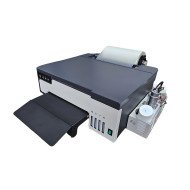
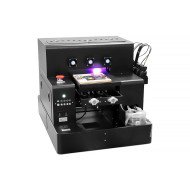
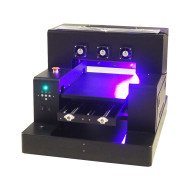
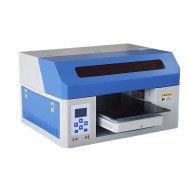
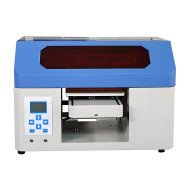
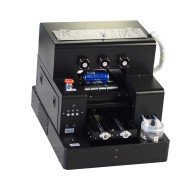
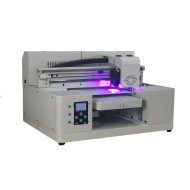
The A3 Spot UV Printing Machine offers a nuanced edge in the realm of specialized printing technologies. These machines provide a precision application of UV coating on substrates, presenting unique challenges and advantages. Within the high-speed production environment, the emphasis shifts towards understanding the operational bottlenecks, especially when achieving micron-level precision. Through my 20 years of experience in the industry, it is evident that the complexity involved in the optimal utilization of such a machine often underlies beneath the surface.
Technical Deep-Dive into Spot UV Precision
Understanding Micron-Level Precision
Achieving micron-level precision requires synchronization between the printhead and UV light arrays. The standard deviation in droplet placement must be controlled within a 10-micron tolerance. This is achievable through high-precision servo motors and feedback loops that correct in real-time, a necessity in industrial-grade machines.
Ink Chemistry and Application
The ink chemistry in spot UV printing needs to be meticulously formulated. The viscosity and curing time must align with the substrate characteristics, ensuring adhesion without surface deformation. Commonly, UV inks with viscosities ranging between 15-20 mPas are utilized.
Coating and Substrate Interface
Consistent coating thickness is fundamental. A layer variance above 5 microns can lead to uneven aesthetics and compromised durability in industrial applications. The hardware configuration typically includes double-layer applicators to maintain uniformity.
Hardware Comparisons and Thermal Management
Comparing the A3 Spot UV machine's performance metrics reveals a thermal management challenge, with peak operating temperatures reaching 85°C. Efficient cooling systems are essential to prevent thermal expansion, which could impact print precision.
Raw Data Analysis and Energy Consumption
| Metric | A3 Spot UV Machine | Competitor X |
|---|---|---|
| Energy Consumption | 1.2 kW | 1.4 kW |
| Droplet Volume | 6 pl | 8 pl |
| Precision Tolerance | ±10 microns | ±15 microns |
Scenario Analysis: Business Use-Cases
High-End Artisans and Color Depth
For artisans, the Spot UV machine provides substantial benefits in color depth enhancement. When producing limited-edition prints, the ability to control UV application at a granular level allows for unparalleled vibrancy and detail.
Scalable Business Owners and Throughput
For businesses focused on throughput, the machine's rapid cycle times enable efficient job completion. However, the operational maintenance cycle, averaging 1,000 hours, may require consideration for continuous operation scenarios.
IT Infrastructure Management
From an IT perspective, integrating the A3 Spot UV printer into existing server frameworks can present rack density challenges, given its thermal output and space requirements.
Expert FAQ
Q1: What is the role of UV wavelength in curing?
A1: Different UV wavelengths target specific inks and coatings. Typically, a 365 nm wavelength is used for rapid curing.
Q2: How do you manage substrate variability?
A2: Adjusting ink viscosity and print speed helps accommodate different substrate types.
Q3: What is the downtime percentage for maintenance?
A3: Average downtime is around 5%, largely due to printhead recalibration and cleaning processes.
Q4: Can this machine handle multi-layer coatings?
A4: Yes, provided the coating sequence is precisely controlled to prevent layer interaction.
Q5: How does temperature impact print quality?
A5: High temperatures can cause thermal expansion affecting alignment; hence cooling systems are crucial.
Strategic Verdict on Spot UV Printing
Spot UV printing machines like the A3 model are poised to remain pivotal in industries requiring high precision and quality. With evolving ink technologies and hardware enhancements, their role in specialized printing sectors will only expand. The balance between operational efficiency and precision remains crucial as businesses scale in complexity and volume.