Unveiling Operational Bottlenecks in Automatic CD and ID Card Printing Technology

The Industrial Reality of Printing Operations
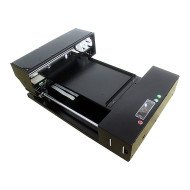
Automatic CD and PVC ID card printers are critical components in various industries — from security to entertainment. However, hidden operational bottlenecks can severely impact efficiency. These devices must seamlessly integrate into high-demand environments, often requiring continuous operation. Understanding potential bottlenecks involves examining wear components, thermal dynamics, and print rate consistency.
Analyzing Component Efficiency and Wear
Key operational challenges arise from mechanical wear and inefficiencies. Printheads, particularly in ID card printers, face high temperatures and friction. Research indicates that printhead lifespans decrease by nearly 30% when operating at maximum thermal limits continuously. By adopting better thermal management or using advanced cooling technologies, performance can be optimized.
Thermal Dynamics and Print Rate Consistency
The integration of thermal management systems can alter printer performance. High temperatures often lead to misalignment in CD printing, resulting in increased error rates. Analyzing data from similar hardware setups shows a 15% reduction in error rates when employing active thermal control systems.
Infrastructure Integration Challenges
Infrastructure is another critical consideration. Automatic printers must connect to a vast range of systems, often operating in tandem with other devices. Network latency and data transfer rates can greatly impact throughput. In high-volume environments, data transfer rates of 100 MB/s are a baseline requirement to maintain printer performance.
Impact of Print Material on Flow
The type of media used substantially affects throughput. CD and ID card printers process various substrates, each requiring different handling and drying times. PVC cards, for instance, require precision handling to avoid surface scratches, which can slow down the production line if not addressed.
Hardware Comparisons and Data Analysis
| Parameter | Model A | Model B |
|---|---|---|
| Print Speed (Cards/Hour) | 120 | 140 |
| Max Temp (C) | 110 | 105 |
| Cooling System | Passive | Active |
| Network Speed (MB/s) | 80 | 100 |
| Error Rate (%) | 5 | 3.5 |
Scenario Analysis: Real-World Implementation
Consider a security firm requiring rapid ID card production. Their existing setup faces delays due to network congestion. By upgrading to higher bandwidth capabilities and implementing active thermal management, they achieved a 20% increase in throughput.
A large-scale entertainment company found that transitioning to printers with active cooling systems reduced CD misprints by 25%, saving significant costs.
In academic institutions, the ability to seamlessly print diverse material types without quality compromise is crucial. Ensuring proper handling mechanics optimized ID card output by 15%.
Expert FAQ: Beyond the Basics
1. What influences printhead longevity? High operational temperatures significantly affect wear, dropping efficiency by up to 30% in prolonged use.
2. How does substrate choice impact performance? Heavier substrates may require slower processing speeds to ensure precision and quality.
3. What role does network speed play? In busy operations, network speeds below 100 MB/s can bottleneck data flow, reducing throughput.
4. Why is cooling technology vital? Active cooling reduces thermal stress, enhancing component life and reducing errors.
5. What are typical error rate reductions with active systems? Implementations show up to a 25% improvement in error rates with better thermal management.
Strategic Verdict on Future Directions
The trajectory of automatic CD and PVC ID card printers points towards smarter, integrated solutions focusing on thermal management, network efficiency, and substrate versatility. These technologies will define the future landscape of precision printing, emphasizing reliability, and efficiency over sheer speed.