
Understanding the Basics of what is DTG Printing and T-Shirt Screen Printing

Understanding the Basics of what is DTG Printing and T-Shirt Screen Printing
When it comes to customizing apparel, particularly t-shirts, choosing the right printing method is essential to achieving the desired quality and durability. Among the most popular techniques are Direct-to-Garment (DTG) printing and traditional screen printing. While both methods enable vibrant, professional visuals on clothing, they each have unique features, advantages, and ideal applications. In this blog, we"ll delve into the fundamental differences between DTG printing and t-shirt screen printing to help you make an informed decision for your next project.
What is DTG Printing?
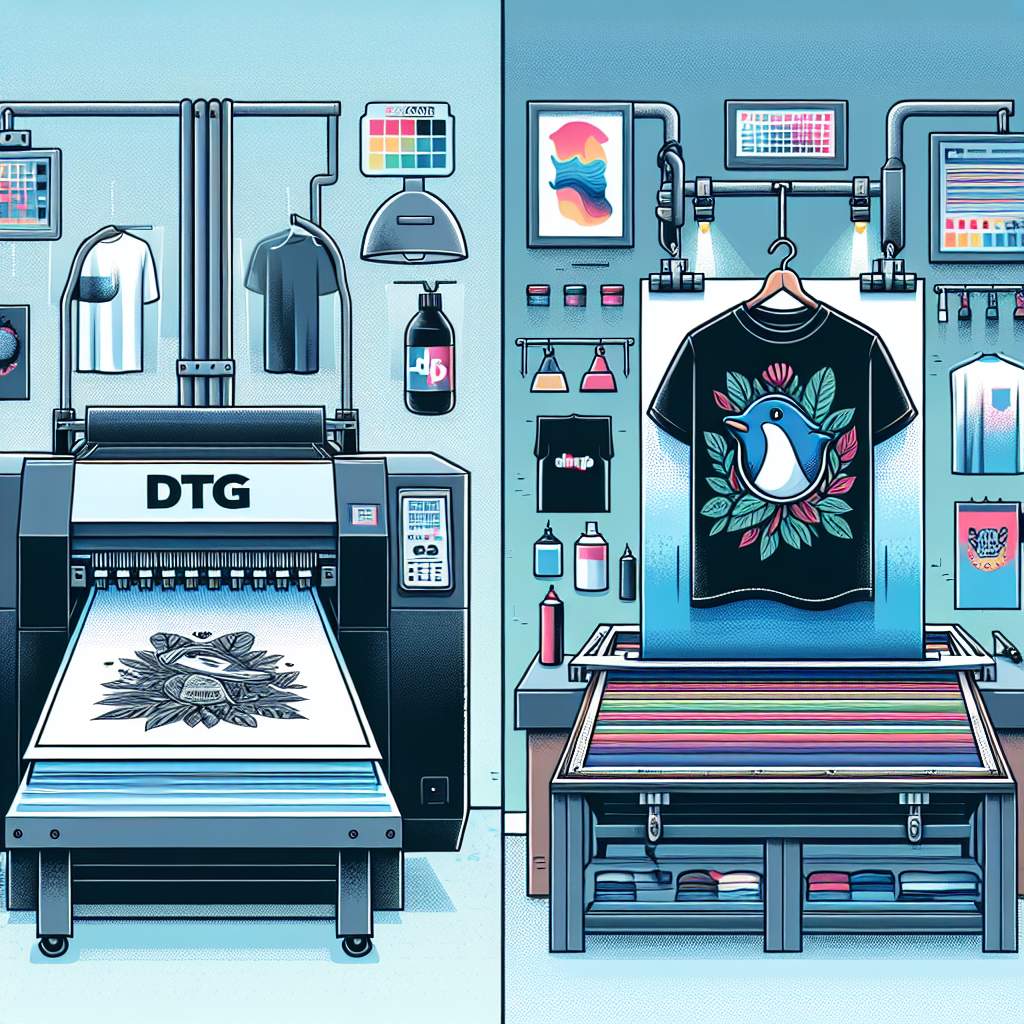
DTG printing, or Direct-to-Garment printing, is a relatively modern process that involves printing digital images directly onto fabric using specialized inkjet technology. This method operates similarly to printing on paper but with clothing materials. The process begins with a detailed digital design that is printed directly onto the t-shirt through a high-quality inkjet-style printer, which applies water-based, eco-friendly inks that bond with the fabric fibers. As a result, DTG allows for complex, multi-colored images with a smooth, photographic finish.
One of the key benefits of DTG printing is its ability to handle highly detailed designs with subtle gradients and color variations. This makes it an excellent choice for printing custom artwork, photographs, or intricate illustrations directly onto the garment. Unlike traditional screen printing, DTG does not require creating screens or stencils, which significantly reduces setup time and costs, especially for small batches or one-off designs. This method is particularly popular among small businesses and individuals who want quick turnaround times without sacrificing print quality.
What is T-Shirt Screen Printing?
Screen printing, often referred to as silkscreen printing, is one of the oldest and most widely used methods for printing on textiles. It involves creating a stencil (or screen) for each color in the design. Special emulsion is applied to a fine mesh screen, which is then exposed to light with the design overlaid onto it, hardening the emulsion in specific areas. The unexposed areas are washed away, leaving a stencil through which ink is pushed onto the fabric using a squeegee. Each color requires a separate screen, making it more labor-intensive for multi-colored designs.
This process is highly durable and produces vibrant, opaque colors that can withstand repeated washes. Because of its efficiency at large runs, screen printing is often the preferred choice for bulk production of t-shirts, promotional items, and apparel with simple or limited-color designs. While it has a higher setup cost compared to DTG, once the screens are prepared, the method allows for rapid, consistent printing at a lower per-unit cost for large quantities. Additionally, screen printing can produce thicker ink layers, giving designs a bold, textured feel.
Comparing DTG and Screen Printing
Color and Detail Capabilities
DTG excels at reproducing complex, multi-colored images with fine details, subtle gradients, and photographic quality. It"s ideal for designs that require high-resolution images, such as photos or intricate artwork. Conversely, screen printing is better suited for bold, simple designs with few colors, as each layer of ink adds to the overall texture and opacity of the print. While advanced techniques like spot-color separation can be used, achieving photographic detail is more challenging with screen printing.
Cost and Setup
For small orders or one-off prints, DTG printing is typically more cost-effective because it requires minimal setup. No need to prepare screens or stencils; just upload your design and print. However, for large quantities, screen printing becomes more economical because the cost of creating screens is spread over many units, drastically reducing the per-piece price. Large orders with fewer color variations favor screen printing due to its scalability and speed once the screens are prepared.
Durability and Washability
Screen-printed designs tend to be more durable and resistant to cracking or fading over time. The thicker inks used in screen printing create a longer-lasting design, especially for garments subjected to frequent washing. DTG prints are also durable but can sometimes fade faster if not cured properly or if low-quality inks are used. Proper garment care, such as washing inside out in cold water, can extend the lifespan of DTG prints.
Environmental Impact
Both methods have environmentally friendly options, but DTG printing often uses water-based, eco-friendly inks that produce less waste and energy consumption per print. Screen printing, depending on ink choices and disposal practices, can generate more waste during the setup process. It"s important to select sustainable inks and practices regardless of the method to minimize environmental impact.
Which Method Is Right for You?
Choosing between DTG and screen printing depends largely on your project"s specifics. If you need high-detail, full-color prints on a small scale or one-off custom orders, DTG might be your best option. It provides quick turnaround, excellent detail, and lower upfront costs for small batches. On the other hand, if you're planning a large production run with few colors, screen printing offers cost efficiency, durability, and vibrant results suitable for promotional apparel or sportswear.
For those interested in exploring advanced printing technology, consider the [A3 DTG Printer](https://www.gnfei.com/products/a3-dtg-printer.html) from GNFEI. It combines high-resolution printing with user-friendly features, making it suitable for small businesses and professional printers who want flexibility in their production line. Whether you opt for DTG or screen printing, investing in quality equipment ensures better results and customer satisfaction.
Final Thoughts
Understanding the fundamental differences between DTG printing and t-shirt screen printing empowers you to select the most appropriate method for your project. DTG offers unmatched detail and flexibility, perfect for custom, small-batch, or photo-realistic designs. Meanwhile, screen printing excels in producing durable, vibrant prints at scale, ideal for bulk orders with simple graphics. By considering factors such as design complexity, order volume, cost, and desired durability, you can confidently make an informed decision that enhances your apparel customization experience. Happy printing!














Leave a Comment