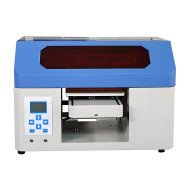
True Cost per Print: Why That Cheap dtg printer Will Bankrupt You

Understanding the Hidden Costs Behind Cheap DTG Printers
Many printing entrepreneurs fall into the trap of buying a low-cost Direct-to-Garment (DTG) printer, lured by its attractive upfront price. The initial expenditure might look minimal, but the truth is the ongoing expenses, print quality, maintenance, and downtime often exceed what the business can sustain. The 'true cost per print' is a complex, multifaceted metric that goes far beyond just the ink and the shirt. It incorporates printer wear-and-tear, consumables quality, operator labor, substrate variability, and time lost through maintenance and quality control. This article deconstructs these hidden costs step by step and helps print shop owners and custom product entrepreneurs make informed decisions based on solid financial and operational understanding.
The Illusion of Low Initial Cost
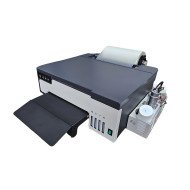
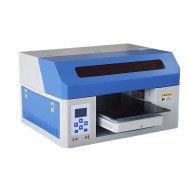
Cheap DTG printers may advertise a sub-$10,000 price tag, sometimes even less. At a glance, this can seem like an affordable entry point for anyone wanting to start or expand their apparel printing business. However, these machines often come with inferior components: lower-grade printheads, less robust frames, and suboptimal ink formulations. These weaknesses lead to more frequent failures, increased consumable consumption, and reduced print repeatability, raising the effective per print cost once operational expenses are factored in.
What Does 'True Cost per Print' Actually Include?
True cost per print includes multiple elements:
- Ink consumption per print: Including CMYK and white ink usage, and how that varies with design complexity.
- Consumable lifespan: How often printheads, ink lines, cartridges, and other parts need replacement.
- Substrate variability: Differences in ink absorption based on material type (100% cotton, blends, polyester).
- Operator time: Labor involved in print preparation, machine maintenance, and quality assurance.
- Machine downtime: Cost of lost production from failures or cleaning cycles.
- Utility costs: Electricity for running the printer and curing equipment.
Only by accounting for these can a business accurately calculate the true cost per print rather than being fooled by a low sticker price.
Dissecting Ink Costs: Why Thinner Ink Leads to Thicker Losses
Ink Formulation and Usage Rates
Cheap DTG printers often use generic or thinner inks to reduce upfront costs. While the pigment price may be low, thinner inks mean:
- More frequent cartridge replacement due to lower pigment density.
- Higher ink consumption per print for the same opacity and color vibrancy.
- Increased wear on printheads due to lower-quality ink chemistry causing clogging or corrosion.
For example, GNFEI’s data shows that a quality pigment-rich white ink can print approximately 60 shirts per liter, whereas cheaper formulations may drop this to 30-40 prints, inflating the per-print cost by up to 50%.
Accounting for White Ink Usage and Its Impact
White ink in DTG printing is often overlooked but is a major cost driver. It’s heavier, more viscous, and requires constant agitation to prevent pigment settling. Cheap DTG printers may lack reliable ink agitators and heating elements, causing white ink sedimentation that clogs print nozzles rapidly. Frequent forced cleans to unblock heads also waste significant volumes of ink. Calculations usually ignore such forced waste, leading to an underestimated true cost.
Maintenance Practices to Protect Ink Efficiency
Maintaining a consistent printhead cleaning schedule is essential to reduce wasted ink. A practical example:
- Daily automated cleaning: Essential for most DTG setups to reduce clogging and maintain nozzle integrity.
- Manual head flushing every 3-5 days: In cheap printers, this frequency can rise dramatically to every 1-2 days.
- White ink cartridge agitation: Must run continuously or at least hourly to prevent settling; absence raises ink waste dramatically.
Ignoring these steps doesn’t just affect print quality—it massively inflates ink costs.
Printhead Wear and Replacement: The Silent Money Drain
Printhead Quality Differences
Entry-level DTG printers frequently use printheads with cheaper piezoelectric elements or antiquated configurations. These parts have a shorter life expectancy and tolerate fewer cleaning cycles before degradation. GNFEI’s experience shows industrial-grade printheads maintain operational integrity for 8,000 to 12,000 cleaning cycles, whereas cheap versions may begin failing after 3,000 cycles or less.
Identifying Printhead Failure Signs
Printhead decline manifests as:
- Loss of nozzle firing leading to streaks and banding.
- Increased cleaning cycles as partial clogs build up.
- Color inconsistencies, particularly with white ink.
Ignoring these signs accelerates damage, forcing premature head replacements, which can cost upward of $1,000 per printhead on cheaper machines—turning a budget buy into a financial sinkhole.
Step-by-Step Head Maintenance for Longer Life
To extend printhead life, print shops should:
- Run daily cleaning cycles without exception.
- Maintain white ink agitators to prevent pigment sediment.
- Flush heads with manufacturer-approved cleaning fluids on a weekly basis.
- Use GNFEI’s recommended high-quality consumables to minimize head wear.
- Track print counts and cleaning cycles meticulously for predictive maintenance planning.
Substrate Variability and Its Impact on Cost and Quality
Cotton vs. Blended Fabrics: Printing Efficiency Differences
Cotton textiles absorb DTG inks more naturally, allowing for fewer passes and optimal white underbase coverage. Blended fabrics or polyester require more ink due to reduced absorption, longer curing times, or even pre-treatment process changes. For example, a 100% cotton shirt might need only one pass, whereas a 50/50 cotton-poly blend may require two passes plus an additional pre-treatment coat, increasing ink and labor costs.
Effect of Fabric Weight and Texture
Heavier garments with textured weaves demand more ink to achieve color vibrancy and evenness. Thin, smooth fabrics need less ink but are more prone to color bleed and smudging if curing isn’t optimized properly. Cheap DTG printers often lack advanced curing systems necessary to handle varied substrates, elongating curing cycles and energy expenses.
Material Adhesion and Durability Testing
Testing conducted by GNFEI on multiple substrates reveals:
- 100% cotton: Strong adhesion after heat curing, minimal cracking after 50 washes.
- Cotton-poly blends: Moderate adhesion; increased fading and cracking over time.
- Polyester: Requires inkjet ink specifically formulated for synthetics; regular DTG inks fade or peel.
Cheap printers lacking tailored ink systems tend to have higher customer complaint rates due to subpar print longevity, adding hidden costs in reworks and reputation damage.
Operational Costs and the Influence of Downtime
Labor and Time Allocation Beyond Printing
Print shops underestimate the labor hours required for pre-treatment application, machine calibration, printhead cleaning, and quality control. For cheap DTG printers, manual intervention rises due to inconsistent hardware and software reliability. Where a seasoned operator might manage 50 prints per day on a premium machine, a budget DTG setup might only achieve 30-40 consistently, decreasing productivity and driving up labor costs per shirt.
Common Breakdowns and Repair Costs
Inexpensive DTG machines have common failure points:
- Printhead clogging requiring repetitive cleaning cycles.
- Ink pump and tubing failures due to cheap materials causing airlocks.
- Software instability causing print misalignments and job restarts.
Repair parts and service calls add unplanned expenses. GNFEI’s clients often report downtime of 10-15% total operating hours during the first year for these budget machines, directly impacting revenue.
Energy Consumption and Curing Efficiency
Cheaper printers often use inefficient LED or flash curing units with limited wattage, prolonging curing cycles and increasing electricity expenses. Longer downtime per batch also ties up essential production space, compounding the financial impact.
Breaking Down the ROI: Numbers Every Business Must Know
Realistic Ink Cost per Shirt Calculation
Example for a 12" x 16" design:
- High-quality ink (GNFEI standard): $0.60 per shirt (including white ink layer).
- Cheap ink: $1.00 per shirt due to wider coverage and wastage.
- Printhead maintenance cost allocated: $0.20 vs. $0.50 per shirt.
These numbers reflect rough averages but demonstrate that cheap printers nearly double consumable costs alone.
Labor Overhead Reflected in Per Print Costs
Assuming:
- Operator wage: $15 per hour.
- Premium machine throughput: 50 shirts per hour → $0.30 labor per print.
- Cheap machine throughput: 35 shirts per hour → $0.43 labor per print.
The difference grows when factoring in additional maintenance labor for cleaning and troubleshooting.
Total Cost Comparison and Forecast
Total cost per shirt estimate:
- Premium machine: Ink ($0.60) + Labor ($0.30) + Maintenance ($0.20) = $1.10 per print.
- Cheap DTG printer: Ink ($1.00) + Labor ($0.43) + Maintenance ($0.50) = $1.93 per print.
This nearly 80% increase cuts into margins and can bankrupt smaller shops quickly.
Final Considerations: Strategic Equipment Choices Matter
Rather than chasing bargain basement DTG printers, businesses should carefully evaluate total cost of ownership with brands like GNFEI that provide global support, high-quality consumables, and proven hardware reliability. Investing upfront reduces downtime, optimizes ink usage, and extends printhead life, all of which matter in the long-term economics of a print operation. For entrepreneurs scaling from hobbyist to professional, understanding the detailed ROI, print substrate relationships, and maintenance realities proves critical in avoiding costly surprises. Wise equipment investments free businesses to focus on growth and quality rather than emergency repairs and ink overordering.