The Industrial Scaling Revolution: Unseen Forces Behind UV DTF Printing

The Industrial Scaling Revolution: Unseen Forces Behind UV DTF Printing
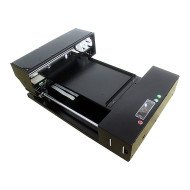
The world of manufacturing never pauses; it reinvents, reimagines, and reinvigorates itself constantly. One of the most impactful technologies reshaping production today is the UV DTF printer. Nestled at the intersection of innovation and necessity, this device is pushing boundaries in unexpected ways.
The UV DTF printer is more than a mere machine; it represents a paradigm shift in industrial scaling, with profound implications for businesses looking to expand without compromising on quality or efficiency. Let's delve into a detailed exploration of this game-changing technology.
Understanding UV DTF Technology
The UV DTF printer operates using a method known as Ultra Violet Direct-To-Film printing. Unlike traditional printing techniques, this process involves printing designs directly onto a film, which is then transferred onto various surfaces using UV light curing. This approach offers exceptional versatility, allowing for intricate designs on diverse substrates.
"UV DTF printers are not just tools; they are catalysts for industrial change." — Dr. Emily Zhang, Industrial Engineer
The Power of UV Light
One of the core aspects of the UV DTF printer is its reliance on UV light for curing. This mechanism ensures rapid drying and fewer defects, leading to higher quality prints. Additionally, UV light curing contributes to environmental sustainability by reducing dependence on volatile organic compounds (VOCs).
Versatile Substrate Compatibility
From textiles to metals, UV DTF printers embrace an impressive range of substrates. This flexibility is indispensable for manufacturers aiming to diversify their product offerings without substantial equipment alterations.
Precision Engineering
Precision is at the heart of UV DTF printing. The technology allows for the reproduction of complex designs with minute detail, satisfying the stringent quality demands of premium industries, such as automotive and aerospace manufacturing.
Scalability and Efficiency
Scalability remains a pivotal concern for businesses—UV DTF printers offer an elegant solution. Their design inherently supports rapid scalability, removing bottlenecks and streamlining production processes.
Cost-Effective Production
The financial implications of UV DTF printing are substantial. Reduced setup times and lower material waste translate to direct cost savings, providing a competitive edge in a fiercely contested market.
Eco-Friendly Advantages
UV DTF printers have been lauded for their eco-friendly attributes. By minimizing emissions and waste, they align with global sustainability goals, reinforcing the ethical dimensions of industrial scaling.
Operational Math & Case Studies
Consider the case of XYZ Enterprises, a mid-sized manufacturer that integrated UV DTF printers into their operations. Within six months, they observed a 30% reduction in overhead costs, primarily due to decreased waste and faster turnaround times.
Another example is ABC Clothing Co., which leveraged UV DTF technology to expand into custom apparel printing. The scalability of UV DTF allowed them to meet growing demand without sacrificing quality, resulting in a 20% increase in market share.
Meanwhile, DEF Automotive utilized UV DTF printers to enhance decorative elements in vehicles, achieving higher aesthetic standards while simultaneously lowering production costs.
The Advanced FAQ
How does UV DTF printing differ from traditional methods?
UV DTF printing employs UV light for curing, offering faster processing times and adaptability to diverse substrates, unlike conventional methods relying heavily on inkjet or screen printing.
Can UV DTF printers handle large-scale production?
Absolutely. These printers are designed with scalability in mind, ensuring efficient operations even in high-demand scenarios.
What are the environmental benefits of UV DTF printers?
UV DTF printers significantly reduce VOC emissions, contributing positively to environmental sustainability.
Are there specific industries benefiting from UV DTF technology?
Industries such as automotive, textiles, and electronics have seen considerable advantages from adopting UV DTF printing for its precision and flexibility.
How does UV DTF printing impact operational costs?
By reducing waste and speeding up production timelines, UV DTF printing leads to notable cost savings, beneficial in competitive markets.
Can UV DTF printers support custom designs?
Yes, the technology's high precision allows for intricate custom designs, making it ideal for personalized product offerings.
The Final Verdict
For businesses eying substantial growth, UV DTF printers offer not just a technological advantage but a strategic one. They seamlessly integrate into existing operations, promote efficient production scaling, and uphold quality commitments.
Whether you're a small business owner aspiring for rapid expansion or a high-volume factory emphasizing sustainability and quality, UV DTF printers provide the pathway to your industrial future. Embrace the revolution and witness transformative growth.