The Hidden Challenges of Mini UV Printers in Industrial Settings

The Industrial Reality
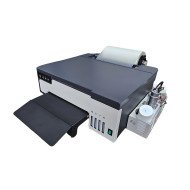
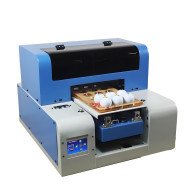
In the bustling heart of industrial printing, the Smart Mini A4 UV Printer promises a revolution with its compact design and technological sophistication. However, as with any cutting-edge technology, there are layers of complexity that industrial managers must contend with. This scenario unfolds in factories where substrates of varying textures and materials undergo transformation through UV printing. The challenge lies in maintaining precision and reliability while grappling with size limitations and operational bottlenecks.
Technical Deep-Dive
Precision Limitations
The size of the printer head in a mini A4 UV printer is inherently limited, impacting the precision of prints on larger formats. This limitation forces operators to reconsider everything from resolution (typically maxing out at 1440x1440 dpi) to printhead alignment accuracy, which can deviate by up to 0.02 mm. While suitable for small projects, larger industrial applications may see reduced fidelity.
Operational Bottlenecks
Despite its promise, mini UV printers struggle with throughput - producing approximately 50 units per hour compared to larger counterparts that push upwards of 200 units. The printer's compact nature, while advantageous for space, results in a lack of scalability that can slow operations to a crawl during peak production periods.
Ink and Substrate Compatibility
A key advantage of UV printers is their ability to print on diverse substrates. However, the mini version often battles compatibility issues, requiring careful calibration and frequent switching of ink types. This adds to the operational complexity and may increase the risk of errors.
Maintenance and Downtime
Smaller printers, with their densely packed hardware, experience more frequent downtimes due to overheating and printhead clogs. Maintenance teams must perform regular checks every 100 hours of operation to ensure optimal functionality, compared to every 300 hours for larger machines.
Energy Consumption
Energy efficiency is a concern, with mini UV printers operating at around 800 Watts. While less than industrial behemoths that can spike past 1.5 kW, mini models may still inflate utility costs if not properly managed, especially in factories running 24/7 cycles.
Scenario Analysis
Consider a mid-sized apparel company deciding between a mini UV printer and a traditional screen printer. The mini printer offers flexibility, enabling rapid prototyping on various materials without tool changes. Yet, during peak seasons, its limited speed creates bottlenecks, leading to missed deadlines and increased labor costs for night shifts.
A second scenario involves a tech company using mini UV printers for custom gadget casing designs. The versatility allows for high customization but operational issues, such as ink misalignment, necessitate rigorous quality controls, affecting productivity.
Lastly, a marketing firm leveraging mini UV printers for promotional merchandise encounters issues with color saturation on glossy substrates, leading to increased waste and reprints, impacting profit margins.
Expert FAQ
Q: How can precision be ensured on smaller prints?
A: Regularly calibrate the printhead and maintain humidity levels to prevent nozzle blockages.
Q: Are mini UV printers suitable for high-volume production?
A: They are best for low to medium volumes due to speed limitations.
Q: How do I mitigate energy costs?
A: Implement energy-saving modes and ensure optimal printer placement to reduce heating.
Q: What substrates yield the best results?
A: Rigid materials like acrylics and some plastics typically show the best outcomes.
Q: Can ink costs be minimized?
A: Optimize designs to use less ink and employ bulk purchasing strategies.
Strategic Verdict
While mini UV printers like the Smart Mini A4 present exciting possibilities for low-volume, high-customization jobs, they are fraught with operational nuances that can impact industrial efficiency. The trajectory of their adoption will depend on innovations addressing speed and substrate adaptability, potentially transforming their role in precise, specialized production environments.