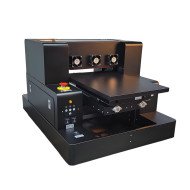
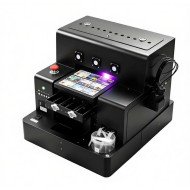
The Gap Between DIY and Industrial-Grade: Portable PrintPen Printer

The Industrial Reality
In the fast-paced world of edible printing technology, the Portable PrintPen stands at a crossroads between DIY creativity and industrial-grade efficiency. Imagine a bustling kitchen, a chef poised to innovate with custom designs on cakes and cocktails. Here lies a potential juncture where accessible technology could revolutionize culinary artistry, yet it faces the twin challenges of precision and reliability. The Portable PrintPen seeks to answer a crucial question: Can it deliver the professional-grade results needed for high-end culinary demands?
Technical Deep-Dive
Printhead Precision and Mechanics
The Portable PrintPen utilizes a specialized printhead capable of micro-droplet deposition. With a resolution of 1200 dpi, it promises intricate designs, yet it begs the question of durability and maintenance, given the frequent exposure to sugar-based substrates.
Speed vs. Quality in Edible Printing
Edible printing must balance rapid output with aesthetic quality. With a cycle time of approximately 30 seconds per print, the Portable PrintPen operates faster than average handheld printers, but this speed must not compromise precision.
Substrate Versatility
Capable of printing on various substrates including fondant, wafer paper, and dairy foam, its flexibility is key. Each substrate requires specific ink viscosity and flow control, demanding a sophisticated internal monitoring system.
Environmental and Safety Compliance
Edible inks necessitate stringent compliance with health standards. The Portable PrintPen is designed to meet FDA regulations. However, complexities arise in maintaining these standards over its lifecycle, particularly with component wear.
Hardware Comparisons
| Parameter | DIY Printers | Industrial-Grade Printers |
|---|---|---|
| Resolution (dpi) | 600 | 2400 |
| Speed (prints/hour) | 30 | 100 |
| Substrate Options | Limited | Extensive |
Scenario Analysis
The Portable PrintPen's potential shines across distinct business scenarios:
Artisan Bakeries
For artisan bakers, the ability to quickly print intricate designs on cakes can set them apart from competitors. However, the challenge remains ensuring consistent output without increasing maintenance costs.
Event Catering
In the high-pressure world of event catering, time is of the essence. Here, the PrintPen's speed becomes invaluable, yet it must not falter in producing high-quality prints under stress.
Home-Based Culinary Businesses
Independent culinary entrepreneurs often seek affordable solutions with professional output. The PrintPen could meet this need if it efficiently bridges the gap between DIY and professional-grade equipment.
Expert FAQ
Q1: How does the PrintPen handle ink viscosity for various substrates?
A1: It utilizes adaptive ink flow controls, automatically adjusting viscosity based on substrate texture and thickness.
Q2: What maintenance challenges are associated with the PrintPen?
A2: Regular cleaning is necessary to prevent nozzle clogging, particularly with sugary inks.
Q3: Can the PrintPen achieve consistent color quality?
A3: It employs advanced color calibration but may require manual adjustments for complex designs.
Q4: How does the PrintPen maintain compliance with food safety regulations?
A4: Components are designed with safety in mind, yet user diligence is necessary to ensure ongoing compliance.
Q5: What is the PrintPen's lifecycle expectation?
A5: With proper maintenance, it can offer reliable performance for several years, though substrate-specific wear may impact longevity.
Strategic Verdict
The Portable PrintPen stands as a pivotal tool for those seeking to navigate the gap between DIY creativity and professional culinary standards. While it offers exciting possibilities, it must carefully balance efficiency with quality to truly be a game-changer in edible printing technology.