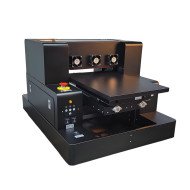
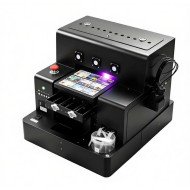
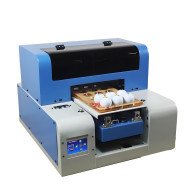
The Gap Between DIY and Industrial-Grade in Textile Pigment Ink DTG Solutions
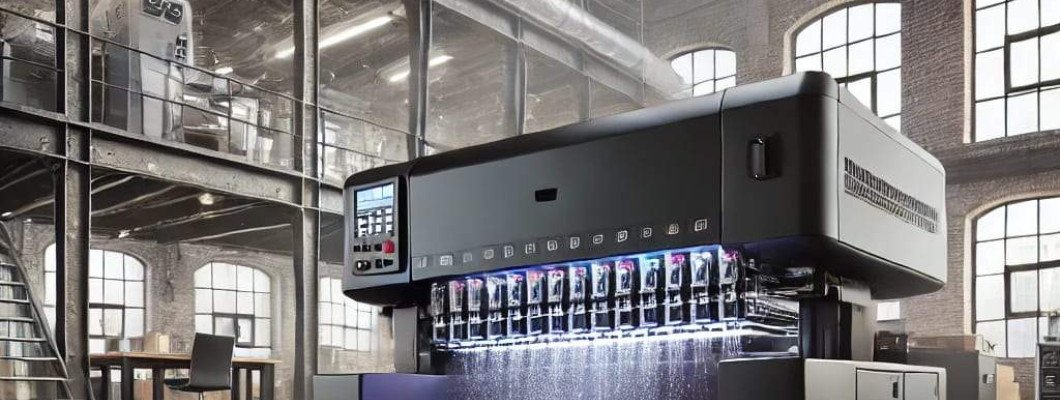
The Industrial Reality of Textile Pigment Ink in Direct-to-Garment Printing
Direct-to-garment (DTG) printing using textile pigment inks represents a pivotal technology for customized fabric decoration. However, the practical divergence between DIY-level applications and industrial-grade deployments is stark. Industrial environments face multifactorial challenges such as consistent color reproduction under high throughput, ink-substrate adhesion durability, and printhead maintenance cycles affected by pigment particle stability. These factors complicate scaling from prototype runs to mass production. The pigment particle size average around 200-400 nm, while optimal dispersion chemistry is required to prevent clogging of 20-40 picoliter drop volume printheads. Moreover, industrial printers operate at elevated humidity and temperature conditions (20-30°C, 40%-60% RH) that impact ink drying kinetics and bonding. The choice of pigment ink chemistry directly affects print longevity, wash fastness, and environmental compliance due to VOC emissions and potential heavy metal content.
In contrast, DIY or small-scale setups often rely on pigment inks with simplified formulations that can compromise long-term asset depreciation and result in higher maintenance downtime. The cost-to-benefit ratio shifts unfavorably when accounting for accelerated wear on printheads and substrate rejects caused by pigment sedimentation. This industrial reality emphasizes that the ink chemistry and formulation serve not just as color agents but as critical enablers or bottlenecks in the print lifecycle.
Technical Deep-Dive into Textile Pigment Ink Properties and DTG Printhead Compatibility
Ink Particle Size and Dispersion Stability
Typical pigment inks for textile DTG printing utilize microparticles in the range of 200-400 nm to balance chromatic intensity with nozzle compatibility. Agglomeration is prevented by surfactants and dispersants optimized to maintain zeta potential between -30 mV and -60 mV for colloidal stability. Sedimentation velocity (v) for pigment particles in an aqueous carrier can be modeled by Stokes' law:
v = (2r2(ρp - ρf)g) / (9η)
where r is particle radius (m), ρp and ρf are the densities of pigment and fluid (kg/m3), g is gravitational acceleration (9.81 m/s2), and η is the dynamic viscosity (Pa · s). Minimizing sedimentation reduces printhead clog frequency, improving uptime.
Printhead Nozzle Diameter and Drop Volume Correlation
Industrial DTG printheads generally feature nozzle diameters of 20-40 μm and produce drop volumes from 20 to 40 picoliters (pl). The ink must maintain a viscosity between 10-15 mPa·s at 25°C to ensure stable jetting without satellite drop formation or nozzle attrition. Pigment ink viscosity is modulated via additives but constrained by particle loading percentage—typically max 5-7% w/w—to avoid clogging while delivering sufficient color density.
Substrate Interaction and Pigment Fixation
Textile pigment inks rely on post-print heat fixation (typically 150-180°C for 90-120 seconds) to embed pigments into fabric fibers. The binder polymer within the ink formulation ensures pigment adhesion, abrasion resistance, and wash fastness. A higher binder concentration improves durability but risks increased hand stiffness and print opacity issues. Optimization requires a trade-off between print longevity and garment feel.
Environmental Compliance and VOC Emission Metrics
Unlike solvent-based inks, pigment inks for textiles primarily use aqueous carriers, significantly lowering volatile organic compounds (VOC) emissions. However, residual organic dispersants and binders contribute to an estimated VOC output of 10-30 g/L during drying phases. Regulatory frameworks in Europe (REACH) and North America (EPA) dictate maximum permissible levels for hazardous heavy metals (<10 ppm Pb, Cd, Cr), which must be verified through periodic ink batch testing.
Hardware Comparison Between DIY and Industrial-Grade DTG Systems
| Feature | DIY DTG Setup | Industrial-Grade DTG System |
|---|---|---|
| Printhead Model | Piezoelectric 50 nozzle arrays | Advanced Piezoelectric 1280 nozzle arrays |
| Nozzle Diameter (μm) | 30-50 | 20-40 |
| Drop Volume (picoliters) | 35-50 | 20-40 |
| Ink Viscosity (mPa·s) | 12-18 | 10-15 |
| Maintenance Interval (Print Hours) | 50-80 | 150-250 |
| Throughput (Garments/Hour) | 5-10 | 30-60+ |
| Substrate Range | Limited (Cotton only) | Broad (Cotton, Polyester blends, Modal) |
Scenario Analysis Covering Diverse Business Use Cases
Small-Scale Custom Apparel Startup
A startup focusing on customized cotton T-shirts often employs DIY pigment inks in a low-cost DTG printer. The limited substrate compatibility and frequent nozzle clogging slow throughput to under 10 garments per hour. Ink maintenance demands increase downtime. While initial CAPEX is low, accelerated asset depreciation and batch reject rates lead to hidden financial stresses.
Mid-Size Print Shop Scaling Production
A mid-scale print operation upgrading to industrial-grade pigment inks and printheads achieves throughput of 40 garments per hour using optimized ink formulations with precise pigment dispersion. Binder concentration adjustments maintain fabric hand feel while ensuring wash durability. Environmental compliance reporting becomes mandated, requiring ink batch traceability and VOC emission monitoring. Maintenance cycles extend to 200 print hours, reducing labor costs related to downtime.
Enterprise-Level Textile Decorator with Multi-Substrate Portfolio
Large textile decorators demand pigment inks with versatile substrate adhesion properties to print on cotton-poly blends and technical fabrics. Industrial DTG systems integrate heated platen controls and humidity regulation to optimize pigment fixation. Ink chemistry is tailored per substrate through automated dispensing systems, minimizing waste. Throughput reaches 60+ garments per hour with minimal printhead wear and tight color consistency.
Expert FAQ Addressing High-Level Technical Concerns
Q1. How does pigment particle zeta potential influence printhead clogging frequency?
A1. Higher absolute zeta potential values (above 30 mV) enhance pigment particle electrostatic repulsion, reducing agglomeration and sedimentation. This lowers the incidence of nozzle blockages, directly impacting maintenance intervals and uptime.
Q2. What are the thermal degradation thresholds for typical pigment ink binders during fixation?
A2. Most polymer binders used degrade above 220°C, but fixation temperatures are optimized between 150-180°C to maximize pigment adhesion while preserving binder integrity and substrate dimensional stability.
Q3. Can VOC emissions from pigment inks be further reduced without compromising print quality?
A3. Formulating with low-VOC additives and increasing water content reduces emissions, but excessively dilute inks lower color density and drying speed. Photoinitiated crosslinking binders are under research to allow ambient curing, reducing thermal VOC output.
Q4. How does printhead nozzle geometry impact the satellite drop phenomenon in pigment DTG inks?
A4. Smaller nozzle diameters with optimized shape reduce fluid instability during jetting, minimizing satellite droplets. Achieving a balance between nozzle size and drop volume is critical to preserve edge sharpness and color saturation.
Q5. What is the role of environmental controls in extending pigment ink printhead lifespan?
A5. Maintaining stable temperature and humidity limits pigment drying inside nozzles, which can cause clogging. Environments controlled at 22°C ± 2°C and 50% ± 5% RH significantly improve printhead longevity and reduce maintenance frequency.
Strategic Verdict on Textile Pigment Ink and DTG Printing Development
Textile pigment inks for DTG printing are a nexus of material science and precision hardware engineering. Bridging the gap between DIY and industrial-grade requires stringent control over particle dispersion, binder chemistry, and environmental parameters. Industrial-grade systems afford higher throughput, substrate versatility, and longer asset lifespan at the expense of upfront complexity and cost. The trajectory points toward further refinement in ink formulations—potentially integrating ambient curing chemistries—and enhanced printer environmental controls to push performance beyond current thermal fixation limits. Regulatory pressures on emissions and heavy metal content will continue to shape formulation development. Without significant material science breakthroughs, pigment ink DTG technology will maintain a performance ceiling governed by particle physics and fluid dynamics within increasingly sophisticated printhead architectures.