The Gap Between DIY and Industrial-Grade: A Critical Look at Nail Printing Technology
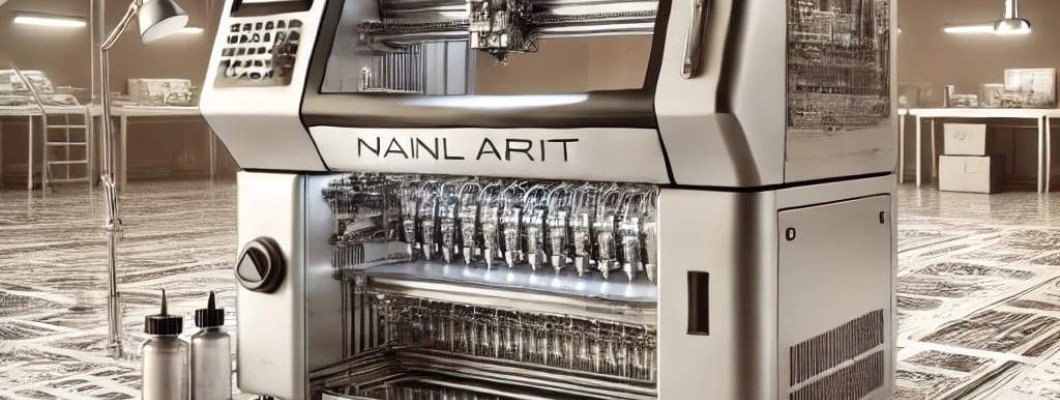
The Industrial Reality
The realm of nail art printing presents a juxtaposition between DIY setups and industrial-grade machines, revealing a gulf in precision, scalability, and functionality. While DIY nail printers offer accessibility, their limitations become apparent in high-demand scenarios. Consider a bustling salon where precise application and rapid turnover are essential. DIY setups often falter with limited substrate versatility, leading to increased downtime due to manual adjustments. Unlike robust industrial machines, which can handle varied materials and intricate designs with ease, DIY alternatives may struggle to meet professional standards, affecting both client satisfaction and operational efficiency.
Technical Deep-Dive
Precision and Accuracy
Industrial nail printers operate with micron-level precision, typically achieving resolutions of up to 1200 dpi, far surpassing DIY models that max out at around 600 dpi. The discrepancy lies in the printhead technology, with industrial setups utilizing advanced piezoelectric heads capable of dispensing ink droplets as small as 1 pl, whereas DIY models often rely on less sophisticated thermal heads with droplet sizes of 5 pl.
Substrate Versatility
Industrial-grade machines can print on a wide array of substrates, including natural and artificial nails, while DIY models are constrained to specific nail types due to limited adjustment features. This versatility is vital for salons aiming to offer diverse services with varied design complexities.
Operational Speed
Industrial machines are designed for speed, completing complex nail designs in under 30 seconds per nail, whereas DIY models may take over a minute, doubling the time needed for completing intricate nail art. This difference is critical in high-volume settings.
Maintenance Challenges
DIY nail printers often require frequent manual cleaning due to ink clogging and substrate misalignment. Conversely, industrial printers are equipped with automatic cleaning cycles, reducing downtime and ensuring consistent output quality. These features not only enhance efficiency but also extend the equipment's lifespan.
Cost Implications
While upfront costs for industrial-grade machines are higher (potentially exceeding $5,000 compared to $500 for DIY models), their return on investment is clearer when considering operational efficiency, reduced manual intervention, and lower maintenance costs long-term.
Scenario Analysis
Scenario 1: Boutique Nail Salon
In a boutique setting, where unique and intricate designs are the norm, the precision and versatility of industrial machines outshine DIY alternatives. The ability to switch substrates seamlessly and produce high-fidelity designs enhances client satisfaction.
Scenario 2: High-Volume Nail Bar
Here, speed and reliability are paramount. Industrial printers offer rapid turnover without sacrificing quality, allowing for a streamlined workflow that DIY models cannot match due to their slower operational speed.
Scenario 3: Mobile Nail Art Service
DIY nail printers might seem advantageous for mobile services due to their portability, but the frequent need for recalibration and maintenance poses challenges. Industrial models, despite their size, offer reliability that ensures consistent service quality in different environments.
Expert FAQ
Q1: What is the impact of printhead technology on nail art quality?
A1: Printhead technology directly affects the resolution and droplet size. Piezoelectric heads, found in industrial models, offer superior precision and droplet control compared to thermal heads in DIY printers.
Q2: How does substrate versatility affect salon operations?
A2: Greater substrate versatility allows salons to offer a wider range of services and designs, enhancing customer satisfaction and operational efficiency.
Q3: Are there hidden maintenance costs associated with DIY nail printers?
A3: Yes, frequent manual cleaning and recalibration can lead to increased labor costs and downtime, which may not be immediately apparent.
Q4: Why is operational speed crucial in high-volume settings?
A4: Faster machines allow for more clients per hour, directly impacting revenue and client turnover rates.
Q5: What are the long-term cost benefits of industrial-grade machines?
A5: Despite higher initial costs, industrial machines offer better ROI through enhanced efficiency, reduced maintenance needs, and longer lifespans.
Strategic Verdict
The trajectory of nail printing technology indicates a shift towards industrial-grade solutions for professional environments where precision, speed, and reliability are indispensable. DIY nail printers serve niche markets but remain limited by technological constraints that do not align with the demands of high-volume and high-quality settings.