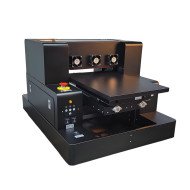
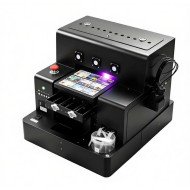
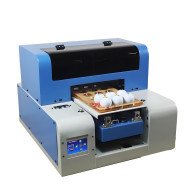
The Financial Impact of Color Version Latte Coffee Printer on Enterprise Operations

The Industrial Reality of Deploying Color Latte Printers
Within the domain of specialty beverage service, the integration of advanced printing technology such as the Color Version Latte Coffee Printer introduces multifaceted financial and operational complexities. Consider a medium-sized café chain aiming to enhance customer experience by incorporating color printing on latte surfaces. Initial acquisition costs, coupled with hidden operational expenditures, create a significant variable in the overall return on investment (ROI). These printers employ precision inkjet technology adapted for edible inks, demanding rigorous calibration to maintain consistent output quality under fluctuating environmental conditions like humidity and temperature fluctuations common in commercial kitchens.
Moreover, the printhead, optimized for high-density color application on microfoam substrates, experiences accelerated wear due to the abrasive nature of milk froth and the chemical properties of food-grade inks. This dynamic results in an increased frequency of printhead replacements and maintenance cycles, directly impacting uptime and operational throughput. Given a high-volume scenario where the printer operates for 8 hours daily with an average print job cycle of 40 seconds, unplanned downtime due to component fatigue could reduce effective throughput by up to 15%, causing ripple effects in labor scheduling and customer wait times.
Technical Deep-Dive into Printhead and Ink System Performance
Printhead Architecture and Micron-Level Precision
The Color Version Latte Coffee Printer utilizes a piezoelectric drop-on-demand printhead array featuring nozzles with diameters approximately 18 micrometers. The precision required for color layering on a dynamic substrate such as microfoam demands ejection volumes in the range of 5-12 picoliters (pl) per droplet to maintain accurate color saturation and edge definition at a nominal 600 dpi resolution.
Ink Chemistry and Drying Dynamics
Edible inks formulated from water-based dyes and food-safe additives exhibit viscosity parameters between 2-6 centipoise at 25°C, optimized for stable jetting without satellite drop formation. Drying kinetics are influenced by temperature control within the print chamber, typically maintained around 40°C to expedite water evaporation without destabilizing foam integrity. Mathematical modeling of drying time (t) vs ambient humidity (H%) can be approximated by t = k * (H%)^1.3, where k is a constant derived from empirical testing. At 50% humidity, drying times average near 3 seconds, necessitating synchronized multi-pass printing strategies to prevent color bleed.
Comparative Analysis of Printhead Longevity
Relative to conventional industrial inkjet printers used in packaging, which average printhead lifespans of 2000 operating hours, the latte printer’s printheads average around 900 hours owing to the interaction with milk proteins and sugars. This discrepancy mandates a maintenance schedule with near-daily cleaning cycles utilizing ultrasonic methods and chemical purging to extend component durability.
Power and Thermal Management
The thermal load of the printing assembly, including piezo actuators and control circuitry, averages 120 Watts under continuous operation. Effective heat dissipation is managed through integrated heat sinks and forced airflow systems, maintaining internal temperatures below 50°C to avoid ink degradation and electronics failure.
Hardware Comparisons Between Edible Inkjet and Laser-Based Alternatives
| Specification | Color Version Latte Coffee Printer (Inkjet) | Hypothetical Laser-Based Edible Printing |
|---|---|---|
| Print Resolution | 600 dpi | 800 dpi |
| Print Speed | 1.5 cups/min | 2 cups/min |
| Printhead Lifespan | 900 hours | 1500 hours (less mechanical wear) |
| Consumable Costs | Moderate (ink cartridges) | High (laser maintenance and safety) |
| Thermal Output | 120 Watts | 250 Watts |
Scenario Analysis of Diverse Business Models
Scenario 1: Boutique Artisan Café
The lower throughput requirements (approx. 50 cups/day) align well with the Color Version Latte Coffee Printer’s operational profile. The emphasis on color depth and visual complexity supports premium pricing strategies. Frequent printhead maintenance remains manageable due to lower daily usage.
Scenario 2: High-Volume Urban Chain
With throughput demands exceeding 300 cups/day, the printer’s 1.5 cups per minute speed introduces queue bottlenecks. Increased printhead replacement costs and frequent downtime pose risks to labor scheduling and overall operational efficiency. Supplementary maintenance staff or redundant printing units may be necessary, increasing CAPEX and OPEX.
Scenario 3: Event-Based Catering Services
Intermittent high-volume bursts (e.g., 100 cups/hour during events) stress the printer’s thermal management systems and ink reservoir capacities. The limited print speed requires additional units or hybrid workflows incorporating pre-printed disposable latte art sheets. The operational cost structure depends heavily on printhead longevity and rapid maintenance turnaround capability.
Expert FAQ Addressing Advanced Implementation Challenges
Q1 What are the primary causes of printhead failure from a physics standpoint?
Printhead failure predominantly arises from physical abrasion by milk fat globules and chemical degradation by lactose sugars leading to nozzle clogging and piezo actuator fatigue. The mechanical stress from rapid droplet ejection at micron scales also induces microfractures over extended operation.
Q2 How does environmental humidity impact print quality on latte foam?
Elevated humidity prolongs ink drying times causing droplet coalescence and color bleeding. Controlled environmental conditions maintaining relative humidity below 50% optimize sharpness and color fidelity in multi-pass printing.
Q3 Can alternative print substrates reduce maintenance frequency?
Potentially, synthetic or stabilized foams with uniform surface tension could mitigate protein buildup; however, these substrates diverge from traditional milk foam properties and may alter sensory or aesthetic characteristics, limiting applicability.
Q4 What redundancy architectures are advisable for enterprise deployment?
Implementing printhead arrays with hot-swappable modules and parallel printing paths enables continuous operation during maintenance cycles, critical in high-throughput contexts exceeding 250 cups/day.
Q5 How do ink formulations affect long-term equipment reliability?
Ink formulations with balanced pH and low particulate content reduce printhead clogging and corrosion. Additives that optimize surface tension enhance drop formation consistency but may accelerate chemical stress on piezo components if not carefully engineered.
Strategic Verdict on the Sustainability of Edible Color Printing Technology
The Color Version Latte Coffee Printer occupies a niche intersection between aesthetic innovation and operational complexity. Its technical specifications reveal inherent trade-offs in throughput speed, printhead durability, and maintenance intensity that constrain scalability. Industrial adoption must weigh the marginal gains in customer engagement against elevated lifecycle costs and infrastructure demands. Future iterations could benefit from advancements in non-contact printhead cleaning, hybrid printing modalities, and adaptive ink chemistry to broaden applicability without compromising reliability or ROI.