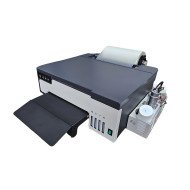
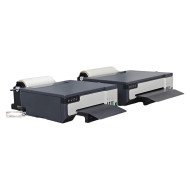
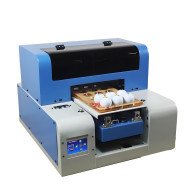
The Financial Audit Exposing Hidden Costs of Portable PrintPen Edible Printers for Scalable Businesses
The Industrial Reality of Portable Edible Printing in Scalable Operations
The Portable PrintPen Edible Food & Drinks Printer represents a novel approach to personalized edible decoration on demand, targeting fast-paced environments such as event catering, gourmet quick-service restaurants, and experiential retail. While the promise of instant edible printing appears attractive, this technology introduces several hidden financial and operational costs that scalable businesses must scrutinize beyond initial CAPEX. Industrial printing typically involves controlled environments, validated consumables, and rigorous maintenance schedules. However, integrating a portable, handheld device into high-throughput workflows reveals complications in asset depreciation, uptime variability, and consumable management. The pen format reduces infrastructure footprint but increases the risk of printhead damage due to physical handling. Manufacturing variability in edible inks, combined with the sensitivity of food safety standards, may lead to frequent quality control rejections unnoticed until late in the production cycle, inflating hidden operational costs. This scenario sets the stage for a granular financial audit that scales beyond the base sticker price, emphasizing true cost per print and equipment longevity in enterprise contexts.
Technical Deep-Dive Into Financial Operational Parameters
Asset Depreciation and Durability Under Daily Stress
The PrintPen incorporates microfluidic printhead technology adapted for edible inks, implying intricate nozzle arrays vulnerable to clogging and abrasion. Assuming a mean time between failure (MTBF) of 250 operational hours under ideal conditions, realistic use in mobile, variable-temperature settings often reduces this to approximately 150 hours. Given a purchase price of $1,200 and a projected residual value of 10% after 1 year of intensive use, the linear depreciation model results in a monthly asset depreciation of approximately $90. However, accelerated failure rates driven by harsher operational conditions push effective depreciation beyond $120 monthly considering premature replacements.
Ink Chemistry Cost and Shelf-life Constraints
Edible inks typically rely on water-based, food-grade colorants with limited microbial stability. Assuming ink cartridge capacity of 10 ml and a per-ml cost of $2.50, a full cartridge costs $25, sufficient for roughly 200 prints at 300 dpi with 5 ml average ink consumption per print. Shelf life for opened cartridges rarely exceeds 72 hours due to microbial contamination risks, necessitating frequent replacements and increasing waste. The ongoing ink cost per 1000 prints can be modeled as follows:
Ink Cost per 1000 Prints = (1000 prints / 200 prints per cartridge) * $25 = $125
Factoring in spoilage and disposal, actual consumable expense inflates by an estimated 15%, raising effective cost per 1000 prints close to $145.
Operational Bottlenecks and Labor Overhead
The manual handling factor inherent to the PrintPen design introduces variable operator-dependent throughput. Assuming average print time per item of 90 seconds including setup and cleanup, a single operator can only process about 40 items per hour, significantly lower than automated edible printing systems capable of 200+ items per hour. Labor cost per print thus rises in direct proportion to print duration and operator wages. With an assumed labor rate of $25/hour, the labor cost adds $0.625 per print, which becomes significant when scaled.
Maintenance Cycles and Unplanned Downtime
Frequent cleaning cycles to avoid printhead clogging are required every 20 prints, taking approximately 5 minutes. Operational disruption contributes to an effective downtime of 25% during peak production. This results in additional indirect costs due to lost output capacity and potential overtime requirements. The downtime impact can be modeled as:
Effective Prints per Hour = 40 prints * 0.75 = 30 prints/hour
Comparative Table of Cost Factors Against Industrial Edible Printers
| Cost/Metric | Portable PrintPen | Industrial Edible Printer |
|---|---|---|
| Initial Cost | $1,200 per unit | $40,000 per unit |
| Print Throughput | 30 - 40 prints/hour | 200+ prints/hour |
| Labor Cost per Print | $0.625 | $0.10 |
| Ink Cost per 1000 Prints | ~$145 (including spoilage) | ~$110 |
| Maintenance Downtime | 25% operational time loss | 5% operational time loss |
| Asset Depreciation (Monthly) | ≈ $90 - $120 | $1,200 - $1,500 |
Scenario Analysis of Business Use-Cases
Case 1: Event Catering with Short-Run Custom Prints
Small-scale caterers delivering bespoke edible decorations for 100-200 guest events benefit from PrintPen portability and flexible setup. The lower throughput is acceptable, but operational bottlenecks appear during peak rushes. Printhead maintenance and ink spoilage require vigilant workflow planning to avoid print delays and waste, impacting tight event schedules.
Case 2: Gourmet Quick-Service Restaurant Seeking Menu Differentiation
In high-volume quick-service venues aiming for product differentiation, the PrintPen’s throughput fails to meet demand, leading to increased labor costs and longer customer wait times. The device suits occasional premium orders but cannot sustain continuous high-output printing. Operational inefficiencies erode profit margins in this context.
Case 3: Experiential Retail with On-Demand Customized Food Printing
Retail environments focused on customer engagement through personalized food items leverage PrintPen’s mobility effectively. The small batch runs and sporadic printing allow cost containment despite elevated per-print labor input. In this controlled scenario, maintenance cycles are manageable, and ink waste minimized, improving overall economics.
Expert-Level FAQ on Financial Audit Aspects
1 What are the hidden depreciation risks linked to printhead damage?
Frequent manual handling exposes the printhead to mechanical stress causing nozzle misalignment or clogging, reducing effective MTBF and increasing unplanned replacement costs beyond vendor estimates.
2 How does ink microbiological stability impact operational expenses?
Edible inks’ limited microbial shelf life compels frequent cartridge replacements, elevating consumable waste and cost, especially in high-humidity or warm environments exacerbating ink spoilage.
3 Can labor cost be optimized without sacrificing print quality?
Automation of peripheral tasks like setup and cleaning can marginally reduce labor pressure, but the pen’s manual usage inherently limits throughput requiring increased staffing for volume scaling.
4 How significant is downtime from maintenance when calculating OPEX?
Maintenance downtime can account for up to 25% of operational capacity in portable devices, inflating indirect costs and necessitating contingency planning in workflow management to maintain throughput.
5 What factors influence asset resale value and lifecycle extension?
Factors include frequency of printhead replacements, visible wear from handling, firmware compatibility with evolving edible ink formulations, and production environment controls minimizing damage risks.
Strategic Verdict on the Financial Viability of Portable Edible Printers
Portable edible printing pens provide compelling functional flexibility but impose complex, layered costs that scale non-linearly with usage intensity. For scalable business owners, the allure of low upfront investment is overshadowed by inflated consumable waste, elevated labor overheads, and increased downtime relative to industrial-grade alternatives. Lifecycle costs, driven by asset depreciation and operational bottlenecks, necessitate detailed financial modeling before adoption into enterprise workflows. Current technology favors niche, low-volume applications with strict operational discipline rather than mass production. Long-term viability depends on advancements in ink stability, automated maintenance, and printhead durability to close cost-performance gaps.