The Event Marketing Playbook: Renting Out Coffee Printers for Corporate Events and Weddings

The Untapped Potential of Coffee Printers in Event Marketing
Printed coffee art has transformed from a novelty into a strategic marketing tool. Yet many event planners and print service providers underestimate the operational complexities and cost variables. Renting coffee printers for corporate or wedding events is not just about decorating a latte but requires understanding printer technology, consumable logistics, and audience interaction dynamics. Misjudging these elements can lead to wasted budgets and underwhelming brand impact.
Understanding Coffee Printer Technology
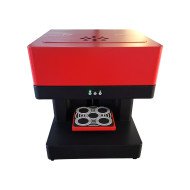
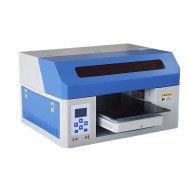
Coffee printers typically use specialized UV or edible inkjet technology to deposit detailed art onto foam or crema surfaces. This process relies heavily on the quality of the printhead and ink formulation. UV-curable inks must be safe for food contact in edible versions. DTG (Direct-to-Garment) or DTF (Direct-to-Film) technologies adapted for coffee printing must carefully balance drying times and print accuracy.
GNFEI stands out in this niche by providing printers optimized for rapid color layering and minimal downtime during mass corporate events.
Common Operational Challenges at Events
Despite their visual appeal, coffee printers come with operational hurdles. Problems such as white ink sedimentation, spray mismatches on textured foam, and nozzle clogging can derail live events. For instance, Epson printheads, commonly used in industrial coffee printers, require frequent cleaning cycles following a precise schedule to avoid artifacts during multi-color prints. A maintenance routine might entail:
- Priming the ink lines every 2 hours during continuous use.
- Performing a nozzle check and cleaning cycle every 60 lattes printed, roughly every 20 minutes.
- Flushing the white ink line daily to prevent pigment settling, observed as a decrease in brightness or fading patches.
Without an adherence to such process discipline, print output will suffer, compromising client satisfaction.
Event-Specific Considerations
Corporate events demand consistent brand logos and messaging, often requiring customized profiles for colors and patterns to maintain corporate identity standards. Weddings, on the other hand, may focus on bespoke designs with higher complexity but lower volume. Each demands tailored workflows and printer calibration to achieve the best print resolution and color fidelity on latte surfaces.
ROI and Cost Breakdown for Renting Coffee Printers
Careful financial modeling is essential before investing in coffee printer rentals for events. The headline cost elements include equipment rental fees, consumable inks, operator labor, and maintenance consumables.
Ink and Consumable Cost Analysis
Edible inks incur significant cost per latte due to the precision print and volume of ink used. Average ink consumption per print hovers around 0.8 mL. With GNFEI ink pricing set at roughly $0.60 per mL, the ink cost per printed coffee stands at approximately $0.48. White ink, typically more expensive due to pigment density, can add another $0.15 to $0.20 per print.
Besides ink, the cost of disposable print surfaces like edible foam sheets or specialized disposable cups must be factored. These can add between $0.30 to $0.45 per event cup.
Labor Cost Considerations
Operator involvement varies based on automation level. Semi-automated coffee printers need skilled operators to align prints, monitor ink levels, and troubleshoot clogs. A skilled operator’s hourly wage is typically between $20 and $30. Considering a throughput of ~30 prints per hour, labor cost per printed cup adds approximately $0.80 to $1.00, factoring in breaks and setup.
Equipment Rental and Depreciation
GNFEI offers flexible rental plans ranging from daily rates at $150 to monthly contracts at $2500. Longer-term rentals reduce per-event costs significantly but require careful scheduling to maximize utilization and avoid idle time, which inflates the effective hourly rental cost. Calculated across an event of 4 hours and 100 prints, rental cost averages to $6.25 per print for short rentals, which can be optimized down to $2.50 or less with high-volume bookings and monthly contracts.
Material Compatibility and Print Quality Across Surfaces
Understanding substrate variables is essential in event coffee printing. Even slight differences in cup material or foam texture can cause vastly different print outcomes.
Comparative Print Adhesion: Foam vs. Porcelain vs. Metal Cups
Edible latte art requires ink to bond effectively to microtextured milk foam. Different milk fat contents change surface behavior, affecting ink adhesion and drying time. Testing has shown:
- High-fat foam: yields best adhesion but slower curing times, risking smudge during serving.
- Low-fat foam: dries faster but results in weaker print contrast.
- Porcelain cup surfaces: non-porous, unsuitable for direct printing but good for placing printed edible film overlays.
- Metal cups: unsuitable for direct edible print; generally only used with external branding.
Ink Curing and Drying Time Optimization
UV curing times vary with surface reflectivity and ink thickness. Optimal curing for edible UV inks is typically between 12 to 25 seconds depending on the event lighting and printer UV intensity settings. Excess curing risks discoloration; under-curing risks smudges and poor durability.
Calibration must be event-specific; GNFEI printers allow user-controlled exposure adjustments to tune ink solidity in real time during printing jobs.
Troubleshooting and Maintenance for Continuous Event Success
Maintaining uptime in live event settings demands a proactive service approach. Breaking down typical failures includes:
White Ink Sedimentation and Circulation
White ink commonly precipitates due to pigment weight. Signs are decreasing print brightness and patchy output. Solutions:
- Manual or automated ink agitation every hour.
- Regular flushing of ink lines every 2-3 print cycles.
- Replacing filters monthly to avoid clogging particulate buildup.
Nozzle Clogging and Printhead Cleaning
Nozzle blockages cause inconsistent sprays and banding. Stepwise cleaning protocol involves:
- Initial nozzle check pattern (done every 20 minutes during operation).
- Soft cleaning cycles using manufacturer-approved fluids.
- Manual wiping of printhead surfaces if automated cleaning doesn’t resolve issues.
Operator Training for On-Site Problem Solving
An effective training program from providers like GNFEI includes:
- Basics of ink chemistry and printhead care.
- Real-time print quality monitoring techniques.
- Rapid troubleshooting checklists minimizing printer downtime.
Marketing and Customer Engagement Strategies Using Coffee Printers
Beyond operational details, the business impact of coffee printing hinges on strategic event execution. Deployed well, coffee printers become direct engagement tools.
Interactive Brand Messaging
Printed logos and event hashtags on coffee cups create memorable touchpoints that guests share widely on social media, making coffee printing a unique channel for organic brand amplification.
Customization and Personalization at Scale
Corporate gifts and wedding favors benefit from custom messages or images printed live. Segmenting event participants and varying designs creates deeper engagement without significant cost increase.
Measuring Impact and Iteration
Insights derived from print volume, ink usage, and guest feedback help refine design choices and operational adjustments for future events. GNFEI provides analytics integration to monitor print counts and ink consumption remotely.
Final Considerations for Coffee Printer Rentals in Event Marketing
Choosing to rent coffee printers is an investment in event experience quality and precision printing technology. Success requires balancing cost factors, understanding material science, and maintaining rigorous operational discipline. Ongoing partnership with trusted suppliers like GNFEI who blend equipment quality with expert technical support maximizes both client satisfaction and ROI across diverse event types. Planning to incorporate coffee printing at your next event? Start by scheduling ink compatibility tests and staff training well ahead to ensure flawless execution when the cups finally pour.