The Complex Truth of Industrial-Grade Embossed Printing Challenges
The Industrial Reality
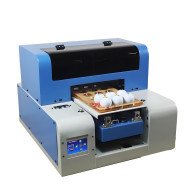
Industrial printing with A2 size UV printers demands attention to intricate operational details. Embossed glossy printing promises impressive visual depth, but it introduces unique challenges in terms of precision and resource allocation. Operators often face issues with substrate compatibility and depth calibration. The intricate technology requires skilled personnel to mitigate human error, especially in high-precision contexts. Moreover, the operational bottlenecks associated with maintaining continuous production workflows cannot be ignored.
Technical Deep-Dive
Substrate Compatibility
When choosing substrates for embossed glossy printing, factors like surface tension and polymer compatibility play crucial roles. The surface tension affects ink adhesion, leading to potential imperfections in glossy finishes. Calculating compatibility requires understanding the substrate's molecular structure and thermal expansion coefficients.
Printhead Mechanism
Embossed printing relies heavily on the precision of piezoelectric printheads. These heads must maintain accuracy within microns during repeated cycles. The physics of piezoelectric materials involves the conversion of electrical energy to mechanical motion, demanding fine-tuned calibration for uniform ink distribution.
Ink Chemistry
UV inks for embossing contain photoinitiators triggered by UV light exposure. The ink’s viscosity and polymer content need careful balancing to ensure texture consistency. Evaluating ink chemistry involves analyzing its reaction times under varying wavelengths and temperatures.
Environmental Factors
The workspace environment affects the printer's operation, especially in terms of humidity and temperature control. Variations can lead to ink curing disparities, potentially affecting print quality. Real-time monitoring systems are essential for mitigating these environmental impacts.
Maintenance Protocols
Regular maintenance involves cleaning printheads and recalibrating pressure settings to maintain the embossed texture. Lifecycle maintenance must address wear and tear on mechanical components to prevent downtime.
| Aspect | DIY Setup | Industrial-Grade Printer |
|---|---|---|
| Precision (Microns) | ±5 mm | ±0.5 mm |
| Substrate Versatility | Limited | Wide Range |
| Ink Efficiency | Low | High |
| Operational Downtime | Frequent | Minimal |
Scenario Analysis
High-Volume Production
For enterprises requiring bulk production, the adaptation to industrial-grade printers reduces per-unit costs and increases throughput. The efficiency in ink usage and substrate flexibility allows for a quicker turnaround.
Artisanal Quality Printing
Artisans seeking bespoke prints find value in the micron-level precision offered by industrial printers. The detailed embossing enhances artistic expressions, providing a competitive edge in the market.
Prototyping and Development
During prototyping phases, the precision and versatility of these printers allow for rapid iterations without sacrificing quality. This capability proves invaluable in industries that value speed and adaptability.
Expert FAQ
How does humidity affect UV printing?
Humidity can alter the curing process of UV inks, affecting texture and adhesion. Maintaining controlled environments mitigates these risks.
What are the common maintenance issues?
Printhead clogging and mechanical misalignment are frequent issues. Regular cleaning and calibration reduce downtime.
How important is substrate selection?
Substrate selection determines ink adhesion and durability. It affects print quality and long-term reliability.
Can these printers handle mixed media?
Yes, industrial-grade printers can adapt to various substrates, offering flexibility in design and output.
What are the environmental impacts?
UV curing releases minimal volatile organic compounds, making it an environmentally preferable choice.
Strategic Verdict
The technology behind A2 size UV printers for embossed glossy printing continues to evolve, emphasizing precision, efficiency, and versatility. However, industrial-grade equipment demands rigorous maintenance and skilled operation to achieve optimal results. As market demands grow, the gap between DIY setups and professional-grade systems widens, highlighting the importance of investing in higher-end technology for sustainable growth.