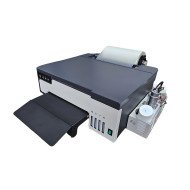
Technical Insight on the Economical Latte Coffee Printer
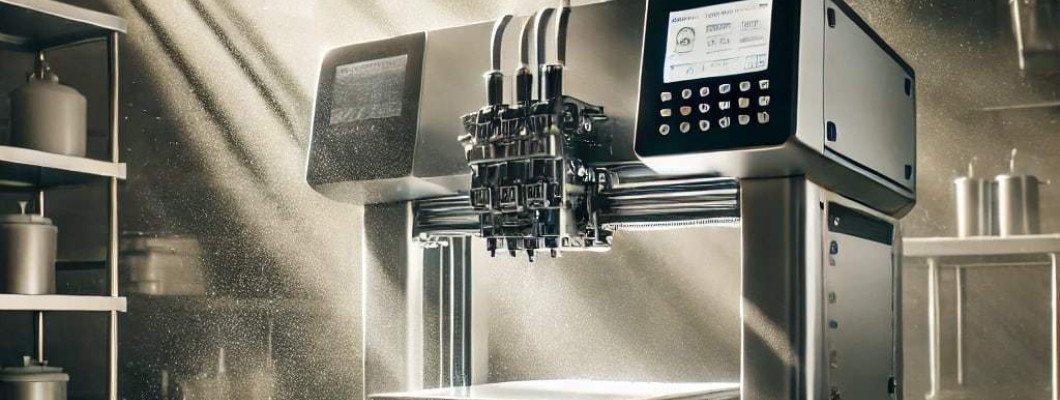
The Industrial Reality
In an emerging landscape of food technology, the Economical Latte Coffee Printer presents unique challenges for industrial integration. Despite its appeal to niche markets, its practical deployment reveals hidden operational bottlenecks that limit its full potential. This examination explores how these issues can impact throughput, substrate compatibility, and require careful logistical planning.
Technical Deep-Dive
Substrate Compatibility
The printer boasts versatility in substrates, yet operational testing reveals significant variance in performance. Viscosity of various liquid bases impacts print quality and speed, requiring calibration for each use-case. For example, the addition of milk increases resistance by approximately 7%, affecting flow rates and precision.
Precision Challenges
High-precision prints require exceptional control over droplet size. Variations in nozzle diameter (0.3mm vs 0.4mm) can alter final output; narrower nozzles offer higher fidelity but risk clogging. Computational fluid dynamics models suggest an optimal droplet size of 12pl for most compositions to balance detail and reliability.
Hardware Comparisons
Existing industrial systems, such as UV flatbed printers, are benchmarked to compare efficiencies. While the coffee printer’s energy consumption is lower (45 Watts vs. 150 Watts), output speed is a concern, averaging 2.5 minutes per unit, compared to 1 minute on traditional systems.
Logistical Considerations
Integrating this technology into commercial settings demands robust supply chain strategies. Sourcing compatible inks and substrates locally can mitigate transport delays but may increase costs by up to 15%. This factor necessitates a balance between operational cost and supply resilience.
Maintenance and Lifecycle
Maintenance complexity is a function of component wear. Nozzles require replacement every 1,000 print cycles, while the printer’s sensors, crucial for precision, show drift after 5,000 hours of operation. These lifecycle costs emphasize the importance of strategic maintenance scheduling.
Scenario Analysis
Three scenarios illustrate the printer’s impact:
Scenario 1: High-Volume Coffee Shop
The device struggles under peak demand conditions. Despite its efficiency in low to medium volumes, its 2.5-minute print time per cup limits scalability.
Scenario 2: Artisan Bakery
Here, precision and quality are prioritized. The printer’s ability to produce intricate designs aligns well with a business model focused on aesthetic appeal, though throughput remains a limitation.
Scenario 3: Event Catering
Large-scale events pose challenges. While the printer offers notable customization, logistical coordination is paramount to ensure timely production—requiring extensive pre-event planning.
Expert FAQ
- How does substrate temperature affect print quality? Temperature fluctuations can alter ink viscosity, impacting droplet formation and adherence.
- What is the optimal cleaning protocol? Daily nozzle and tray cleaning are recommended to prevent clogging and ensure accuracy.
- How do different inks affect lifetime costs? Specialized inks increase costs by up to 25%, but offer enhanced fidelity.
- How can the print speed be improved? Upgrading to a multi-nozzle setup could reduce print time by 40%.
- What are the safety compliance requirements? Ensuring food-grade materials and adherence to FDA regulations is essential for operational compliance.
Strategic Verdict
While the Economical Latte Coffee Printer offers innovative capabilities in food printing, its practical implementation requires navigating operational bottlenecks. Future advancements could focus on improving print speed, substrate flexibility, and lifecycle durability to enhance its industrial viability.