Technical Challenges in Infrastructure Integration for Heat Press Machines
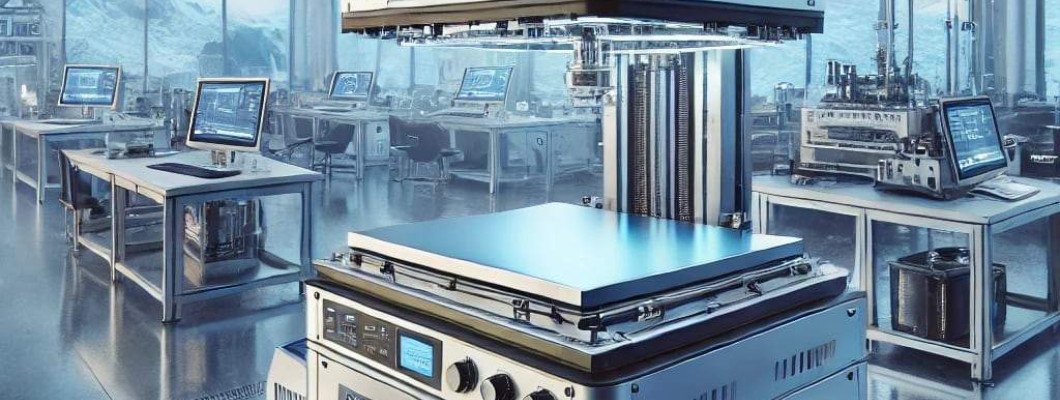
The Industrial Reality of Infrastructure Integration
In the world of industrial printing, the integration of machinery such as the 40*60CM Heat Press Machine into existing infrastructure presents unique challenges. This scenario explores how businesses face the technical complexities inherent in embedding such equipment seamlessly into their operations.
Technical Deep-Dive
Mechanical Precision and Calibration
Precision in heat distribution is critical. The machine's platen must maintain uniformity within ±2°C across its surface area to avoid defects. This necessitates advanced calibration techniques and sensor integration to ensure consistent thermal output.
Thermal Load Management
Effective thermal management is essential. With operational temperatures reaching 200°C, infrastructure must be adapted to handle this heat. This includes enhanced ventilation systems and thermal-resistant materials surrounding the machine.
Electrical Supply Compatibility
Electrical integration requires understanding voltage requirements and ensuring stable supply. The 40*60CM Heat Press Machine generally requires a 220-240V single-phase connection with appropriate circuit protection.
Spatial Configuration and Workflow
Whether fitting into a tight workspace or an expansive production floor, spatial planning is crucial. The machine's footprint impacts workflow, necessitating careful positioning to optimize material handling and operator efficiency.
Hardware Resilience in Long-Term Use
Long-term reliability hinges on robust components. Wear and tear from repeated press cycles demands durable construction and periodic maintenance hotspots.
Scenario Analysis
Consider three distinct business contexts: a small artisan shop integrating the heat press for bespoke products, a mid-size enterprise upgrading infrastructure with multiple units, and a large-scale operation seeking maximum throughput. Each faces unique technical hurdles.
Artisan Shop
For the small artisan, spatial constraints and power supply limitations require creative solutions for effective integration.
Mid-Size Enterprise
The medium-sized business must tackle operational efficiency and hardware synchronization with existing tech.
Large-Scale Operation
Here, optimizing throughput and minimizing downtime through strategic placement and maintenance cycles is key.
Expert FAQ
Q1: How do industry standards impact integration? A1: Compliance with regulations such as CE marking ensures electrical safety and usability.
Q2: What are the implications of heat press misalignment? A2: Misalignment can result in uneven pressure distribution, affecting product quality.
Q3: What role does software play in integration? A3: Control software provides fine-tuned adjustment capabilities for thermal and pressure settings.
Q4: How is environmental impact minimized? A4: Utilizing eco-friendly materials and efficient energy consumption methods mitigates ecological footprint.
Q5: What advancements can be expected? A5: Future innovations may enhance sensor sensitivity and automation capabilities for improved reliability.
Strategic Verdict
Heat press technology offers substantial benefits but demands careful infrastructure planning to fully realize its potential. Organizations must weigh integration costs against long-term productivity gains.
| Specification | Industrial Requirement |
|---|---|
| Heat Resistance | ±2°C Distribution |
| Electrical Compatibility | 220-240V Connection |
| Dimensional Footprint | Optimized Spatial Layout |