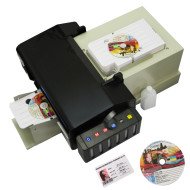
Stop Overpaying for Prints: The Hidden Costs of A4 UV Printers

Imagine you're about to launch a custom printing business. Your eyes are set on the glorious potential of an A4 UV printer. But wait, before you swipe that card, there’s a reality check lurking under the hood of these shiny machines.
The True Cost of Running an A4 UV Printer
First off, the initial purchase price is just the tip of the iceberg. A4 UV printers might seem cost-effective upfront, but their operational expenses quickly add up, often surpassing expectations. Consider the energy consumption: many models draw significant power, driving up electricity bills. Then there's maintenance—a cost many suppliers conveniently downplay during the sales pitch. Consumables like inks and cleaning solutions are ongoing expenditures that aren't always top-of-mind.
Ink: The Unseen Drain on Resources
Let's talk ink. It's the lifeblood of your printer, but it's also a money pit. A4 UV printers use special inks that are more expensive than standard options. Over time, the costs accumulate, potentially eating into profits. If you're not running high-volume orders, these printer-specific inks can be more of a burden than an asset.
Scaling Bottlenecks: Growing Pains for Your Business
What happens when your business takes off and orders start pouring in? A4 UV printers, especially entry-level models, may not meet the throughput needs of a fast-growing enterprise. The time taken for each print and the limited capacity can create bottlenecks, leading to delays and customer dissatisfaction. Investing in multiple units might seem necessary, but it further complicates cost management and workspace allocation.
Why User Errors Cost More Than You Think
User error is an overlooked aspect that can wreck havoc on your printing business. From incorrect settings to incompatible substrates, human mistakes can lead to costly reprints and wasted materials. Training operators might mitigate these issues, but it’s another expense that needs consideration. Meanwhile, every mistake translates to delayed deadlines and unhappy clients.
The Inevitable Cycle of Upgrades
Technology evolves, and so do printers. Manufacturers release newer models frequently, each promising better efficiency or new features. This cycle pressures businesses to upgrade, keeping up with advancements and perceived consumer expectations. What was state-of-the-art yesterday becomes obsolete today, forcing businesses into additional investment cycles.
Persona #1: The Small Business Optimist
Meet John, a budding entrepreneur eager to explore custom phone case printing. He invests in an A4 UV printer, imagining high margins. However, operational costs soon bite into profits. The initial excitement fades as financial pressures mount, stressing his business's early growth.
Persona #2: The Scaling Enterprise
Sara's mid-sized company is booming, with demand outstripping capacity. Her A4 UV printer becomes a bottleneck rather than a boon. Instead of expansion, Sara finds herself grappling with production constraints. Not the dream she envisioned when optimistic about scaling.
Persona #3: The Hobbyist’s Dilemma
Jane loves her side project of custom phone cases. The A4 UV printer was supposed to make it seamless. But frequent technical glitches mean more time fixing than creating. Her passion wavers as frustrations and costs pile up, leading her to reconsider whether it's all worth it.
Expert Q&A
What maintenance is required for an A4 UV printer?
Regular cleaning and recalibration are essential to avoid costly errors.
Are ink costs likely to decrease?
Sadly, specialized UV inks remain expensive due to their specific chemistry.
Can A4 UV printers handle large volumes efficiently?
Typically not; they are better suited for small to medium batches.
Are there eco-friendly options?
While some models claim to be greener, UV printing is resource-intensive.
Is professional installation necessary?
Yes, to ensure proper setup and avoid user-induced mishaps from the start.
The Verdict: Weigh Your Options Carefully
Before committing to an A4 UV printer, thoroughly assess all related costs—from ink to potential scaling issues. Evaluate whether the investment aligns with your long-term business objectives. If you’re prepared for the commitment, visit GNFEI to explore options that might suit your needs better.