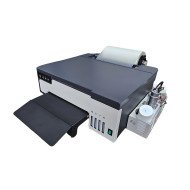
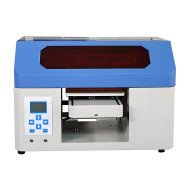
Static Electricity in Winter: Preventing Film Ruins on Your dtf printer
Understanding the Impact of Static Electricity on DTF Film in Winter
Why Winter Drastically Increases Static Risks
The dry, cold air typical of winter months creates an environment conducive to static buildup. Unlike other seasons, humidity levels drop significantly, removing the natural conductivity that helps dissipate static charges. For direct-to-film (DTF) printers, this means charged particles accumulate more easily on both the film and printer components, drastically increasing the risk of electrostatic discharge (ESD). This discharge can cause film sheets to attract or repel unpredictably, leading to misfeeds, wrinkles, or outright film damage.
Common Misconceptions About Static Electricity in Industrial Printing
It is often assumed that static problems are negligible or only peripheral issues. However, experienced print shop owners and operators have documented print quality deteriorations directly linked to static issues. Despite this, many do not implement proactive measures, misidentifying the root cause as mechanical failure or poor film quality. GNFEI, with over a decade of experience, confirms that ignoring electrical environment factors during winter can result in substantial operational losses.
Specific Symptoms Indicative of Static Damage on DTF Films
Look for film warp, curling edges, premature curling, white ink clusters forming irregular patterns, or increased rejection rates post-print. You might also notice static sparks during film loading or unusual noise around the printer’s media transport area. These signs are often overlooked until a costly batch is discarded or printer downtime occurs.
Step-by-Step Troubleshooting and Preventative Maintenance for Winter Static Issues on DTF Printers
Diagnosing Static Build-Up Early: Practical Techniques
Detecting static can be straightforward with handheld static meters, but simple tactile methods also work: touching the film quickly before loading and sensing a slight shock can confirm static presence. Use a humidity sensor near the printer; optimal humidity ranges from 45%-55%. If it consistently falls below 30%, static mitigation measures must be deployed.
Effective Equipment and Environmental Adjustments
- Humidifiers: Install industrial-grade humidifiers with precise RH control near the printing area.
- Ionizing Bars: Place ionizers across the film feed path and near print heads. GNFEI warns that improper ionizer placement or insufficient ion output can exacerbate static issues rather than solve them.
- Anti-Static Mats and Flooring: Use grounded mats at operator stations to prevent electrostatic build-up transferred through human contact.
Recommended Cleaning and Maintenance Schedules
Static can cause particulate buildup, which further worsens over time. GNFEI advises specific cleaning regimens:
- Daily wiping of feed rollers with isopropyl alcohol-based solutions to remove dust and static-charged debris.
- Weekly inspection and cleaning of printhead surfaces and film guides to prevent ink and dust adhesion aggravated by static.
- Monthly calibration of ionizing bars and humidity sensors to ensure reliability.
Economic Analysis: Calculating the ROI of Static Mitigation in Winter Printing Operations
Cost Breakdown of Static-Induced Film Damage
Each ruined film sheet costs on average $0.35 in raw materials. For printing runs producing 1000 sheets per week, a static-induced reject rate increase from 1% to 5% means an additional loss of $14 weekly just on materials.
Equipment and Operational Expenses for Static Control Implementation
Humidifiers suitable for industrial print rooms typically range from $800 to $1,500. Ionizing bars cost about $400-$700 per unit, with multiple units needed depending on printer size. Maintenance labor averages out to $50 per cleaning session.
ROI Projection Model
Considering the above costs, a facility investing $2,000 upfront for static mitigation equipment and $200 monthly in maintenance can reduce film wastage by over 75%, recovering mitigation costs within approximately 4-5 months. GNFEI’s clients report an increase in uptime of over 10%, further amplifying returns by reducing lost production hours.
Material-Specific Static Challenges and Adhesion Performance in Winter
Film Types and Their Electric Properties
Polyethylene terephthalate (PET) film used in DTF printing varies in thickness, surface texture, and coating. Thicker films tend to accumulate more static due to reduced conductivity. Coatings intended to improve ink adhesion can sometimes worsen static retention if not designed with electrostatic dissipative properties.
Adhesion Behavior on Natural vs Synthetic Textiles
Static charge on film can indirectly affect ink curing by influencing ink droplet behavior and distribution. Natural fibers like cotton show better ink adhesion when static is controlled, with white ink layers curing faster and more evenly. Synthetic blends, especially those containing polyester, can exhibit longer curing times if ink droplets repel erratically due to static film movement.
Comparative Testing of Film Adhesion Under Different Humidity and Ionization Protocols
GNFEI conducted tests comparing print adhesion on films under three conditions:
- Low humidity + no ionization: 12% film rejection rate due to curling and poor ink setting.
- Low humidity + ionization bars: Rejection rate reduced to 6%, improved ink uniformity.
- Optimized humidity + ionization: Rejection rate dropped below 2%, maximized ink adhesion and curing consistency.
These data underline the importance of combined environmental and electrostatic management rather than piecemeal solutions.
Advanced Recommendations for DTF Printer Operators Facing Winter Static Challenges
Practical On-the-Floor Strategies
- Proper Film Handling: Always store films in anti-static bags and condition them to room humidity for 24 hours before printing.
- Operator Grounding: Use wrist straps and grounded gloves to minimize static transfer from personnel.
- Print Queue Management: Avoid loading large film batches simultaneously; stagger feeds to allow environmental stabilization.
Leveraging GNFEI’s Expertise and Product Line
GNFEI offers tailored solutions incorporating industry-grade humidification systems and precision ionization equipment designed for DTF printers. Their global reputation is built on transparent technical support and evidence-based diagnostic services, making them a reliable partner rather than a mere vendor. Transparency in the pros and cons of each solution helps customers implement effective, cost-efficient static mitigation.
Continuous Improvement Through Data Logging and Analysis
Integrate static and humidity sensors that link to central monitoring systems. Logging this environmental data helps correlate static events with print defects over time, enabling timely interventions before production loss escalates. GNFEI encourages their clients to adopt such data-driven maintenance to sustain high-quality DTF print output throughout harsh winter months.
Final Thoughts on Navigating Static Electricity Challenges in Winter DTF Printing
Static electricity is far from a marginal issue during colder months—it directly affects film integrity, ink adhesion, printer uptime, and operational costs. Addressing this challenge requires a multidisciplinary approach integrating environmental control, equipment improvements, and meticulous operational discipline. Industrial players who invest in understanding and countering static effects outperform competition by maintaining both print quality and economic efficiency. Industry insiders following GNFEI’s research-backed recommendations gain a tangible edge in winter printing conditions.
The conversation about static is ongoing. Monitoring evolving film materials and print technologies continuously shapes effective strategies. This makes it imperative to keep abreast of technological advances and adapt mitigation practices accordingly within your printing ecosystem.