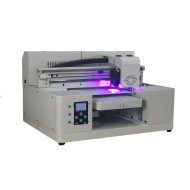
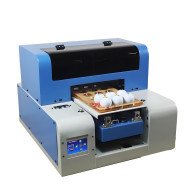
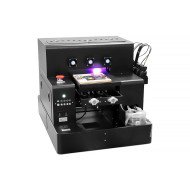
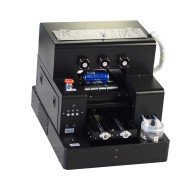
Spot A4 LED UV Printer Cylinder Printing Challenges in Scaling Mass Production for Scalable Business Owners

The Industrial Reality of Scaling Cylinder Printing in Spot A4 LED UV Printers
In industrial-scale printing operations, the integration of Spot A4 LED UV printer technology for cylinder printing introduces unique technical challenges, especially when throughput demands escalate. Unlike flatbed or planar systems, cylinder printing requires precise synchronization between rotational mechanics and LED UV curing to maintain registration and adhesion on the cylindrical substrate surface. For scalable business owners focused on maximizing output and reducing labor intensity, the transition from prototyping to mass production exposes bottlenecks embedded in the printer’s mechanical, electronic, and software control systems.
One core obstacle lies in the dynamic interaction of the LED UV light source with the moving cylindrical substrate. The rapid rotation necessary for industrial throughput subjects the printer head assembly and substrate to continuous concentric acceleration forces. These forces can induce minute deviations in printhead-to-substrate distance, causing non-uniform ink deposition and curing variations. The operational challenge is compounded by the thermal output of LED arrays, which must be balanced carefully to prevent excessive heat buildup affecting both ink chemistry and mechanical tolerances.
Another complexity arises from material handling. Cylinders vary in diameter, surface texture, and coating compatibility, requiring rapid adjustment of print parameters and jaw holding pressure to avoid slippage or deformation. Without automation capable of dynamic feedback, operators often need to intervene frequently to recalibrate or reload substrates, eroding line speed and increasing labor costs.
Consequently, understanding hidden operational bottlenecks in the Spot A4 system is essential for scalable businesses looking to leverage its capabilities without sacrificing uptime or print quality.
Technical Deep-Dive Into Scaling Cylinder Printing Hardware and Workflow
Mechanical Synchronization and Kinematic Stability
The rotational axis of cylinders in the Spot A4 printer must maintain stability within a tolerance of ±0.05 mm radial runout to ensure consistent printhead clearance. Angular velocity is typically constrained to below 60 RPM to prevent centrifugal forces exceeding mechanical design limits, which would otherwise induce vibrations detrimental to micron-level printhead positioning (with nozzle size around 10 pl volume and 600 dpi resolution).
Mathematically, the centripetal acceleration (a_c) at the substrate surface (r = 50 mm for A4-compatible cylinders) at 60 RPM is:
a_c = r * \omega^2 = 0.05 m * (2 * \pi * 60 / 60)^2 ≈ 0.05 * (6.283)^2 = 0.05 * 39.48 = 1.97 m/s2
Though moderate, this acceleration noticeably stresses the bearing and chuck systems, requiring precision-engineered components rated for continuous operation under these cyclical loads.
LED UV Curing Thermal Management
The LED UV arrays produce an optical power density of approximately 150 mW/cm2 necessary for rapid ink polymerization. The resultant thermal dissipation in the printhead assembly reaches close to 20 W per linear cm of LED strip length. Sustained operation generates localized heating leading to thermal expansion of the printhead substrate, shifting nozzle alignment. Cooling solutions incorporating micro-finned heat sinks and forced air ventilation maintain printhead temperature below 45°C, minimizing thermal drift.
Ink Chemistry and Drying Kinetics
UV-curable inks are sensitized to specific wavelengths emitted at 395 nm. The cure time is inversely proportional to UV dose. However, ink viscosity, substrate reflectivity, and cylinder rotation speed interplay to affect the final cure depth and adhesion. Ink jets eject droplets averaging 6-10 pl, requiring precise synchronization with curing to prevent coalescence or smearing.
Automation and Process Control Software
Spot A4 printers employ sensor arrays monitoring cylinder diameter and rotational speed in real time. Advanced firmware algorithms modulate jaw pressure and adjust head distance dynamically to compensate for mechanical tolerances and material inconsistencies. Networked control systems can integrate with factory MES (Manufacturing Execution Systems) for throughput monitoring, but require robust API compatibility and rapid data processing to avoid latency-induced print errors.
Comparative Analysis of Print Speed Versus Quality Settings
| Parameter | High-Speed Mode | High-Quality Mode |
|---|---|---|
| Print Speed (cylinders/hr) | 30 | 12 |
| Resolution (dpi) | 300 | 600 |
| Ink Layer Thickness (microns) | 10 | 5 |
| UV Dose (mJ/cm2) | 50 | 120 |
| Energy Consumption (W) | 200 | 350 |
| Failure Rate (%) | 3.7 | 1.2 |
Scenario Analysis for Business Use-Cases in Cylinder Printing
High-Throughput Packaging Line
A scalable packaging manufacturer relies on continuous cylinder printing to decorate batches of 1000+ small-diameter containers per hour. In this scenario, high-speed mode with lower resolution is prioritized, enabling 30 cylinders/hr throughput. The tradeoff is increased ink layer thickness which affects drying time and potential adhesion issues requiring downstream curing verification steps, adding complexity and labor costs.
Premium Cosmetic Cylinder Branding
Luxury brands demand exceptional print quality with subtle color gradations on cylindrical cosmetic bottles. Here, the Spot A4 system runs in high-quality mode with 600 dpi resolution and thinner ink layers. Though throughput drops to 12 cylinders/hr, the reduced failure rate and superior surface finish justify higher operational expense and manual quality inspection.
Rapid Prototyping and Short Run Customization
Small design studios utilize the printer for rapid iterative prototyping. The versatility of the system to adjust jaw pressure and print parameters on-the-fly supports diverse substrate diameters and materials. Despite low throughput, flexible process control enables quick turnaround without extensive operator intervention.
Expert FAQ on Spot A4 LED UV Cylinder Printing Challenges
How does slight radial runout affect print quality?
Radial runout exceeding ±0.05 mm causes nozzle misalignment leading to banding artifacts or incomplete ink deposition due to printhead distance variation beyond optimal jetting range.
What are the consequences of UV LED thermal expansion?
Thermal expansion shifts the relative position of nozzles by up to 15 microns, degrading print sharpness. Active cooling is necessary to maintain dimensional stability.
Can dynamic jaw pressure adjustment compensate for substrate inconsistencies?
Yes, but only within mechanical design limits. Excessive pressure risks substrate deformation; insufficient pressure causes slippage, both negatively impacting registration.
How does ink viscosity variation impact curing?
Viscosity changes alter droplet size and spread, which affects UV light penetration and polymerization depth, potentially causing adhesion weaknesses or gloss variations.
What integration challenges exist for factory MES systems?
Inconsistent API standards, data format mismatches, and latency in sensor data streams may result in synchronization delays, leading to print anomalies or downtime if unaddressed.
Strategic Verdict on Cylinder Printing with Spot A4 LED UV Systems
The Spot A4 LED UV printer embodies a technically advanced approach to cylinder printing, blending precise mechanical control with LED curing innovations. For scalable business owners, the technology presents clear opportunities in throughput enhancement but also exposes fundamental operational bottlenecks—particularly in thermal management, mechanical synchronization, and process automation. While the hardware's modularity and rapid parameter adjustment capabilities afford versatility across production modes, the balance between speed and quality remains a critical decision factor. Future iterations must prioritize integrated sensor-feedback loops and enhanced MES compatibility to further reduce downtime and failure rates under industrial mass production demands.