Scaling with Precision Transforming Growth Through Sublimation Printing

Amid the relentless pursuit of operational efficiency and market expansion, the sublimation printer has emerged as a pivotal asset redefining industrial-scale printing. This technology is no mere curiosity; it sits at the confluence of precision, speed, and scalability. For the high-volume factory aiming to push output thresholds without sacrificing quality, understanding the sublimation printer's nuanced mechanics and its direct impact on scaling operations is now indispensable.
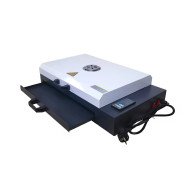
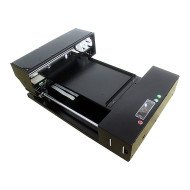
At its core, the sublimation printer is a specialized device designed to transfer dye-based inks onto substrates like polyester fabrics and coated materials using heat and pressure. Unlike traditional printing, it converts solid dye into gas without passing through a liquid phase, resulting in vibrant, durable, and high-resolution images that meld permanently with the substrate. This process, while complex, offers unparalleled benefits when integrated into a factory’s scaling strategy, enabling massive production runs with consistent quality and minimal waste.
But scaling is more than just increasing output; it demands scrutinizing every facet of production — from throughput to maintenance cycles, to material utilization and workforce efficiency. The sublimation printer, when deployed strategically, acts as an engine not just of volume but of sustainable economic growth. This piece explores the technological underpinnings, operational advantages, and the bottom-line impact of sublimation printing. To those steering high-volume factories, the question is no longer if sublimation printing should be adopted, but how to optimize its force multiplier effect.
Technical Deep Dives
1. Ink Chemistry and Sublimation Dynamics
The sublimation process relies heavily on unique dye formulations optimized for vaporization under heat. Unlike conventional pigment inks that sit atop surfaces, sublimation inks infiltrate substrates during gas phase transition. This molecular integration creates permanence and resistance to fading or cracking. Technical mastery over ink viscosity, temperature calibration, and substrate compatibility is essential for factories scaling operations.
"Consistent ink chemistry calibration is foundational to maintaining color fidelity across long production runs," explains Dr. Lina Carpenter, industrial print chemist. "Any deviation can cascade into costly rejects at scale."
2. Heat Press Technology and Thermal Engineering
The heart of sublimation printing involves precise thermal management. Heat presses must deliver stable, uniform temperatures and pressure across large surface areas. Advanced platen designs utilize multiple zones with real-time sensor feedback to prevent hotspots and ensure consistent dye activation. In high-volume contexts, this engineering sophistication directly correlates with throughput rates and product quality.
3. Substrate Selection and Surface Preparation
Scaling output also means scaling substrate sourcing and preparation. Polyester blends dominate because their molecular structure bonds optimally with sublimation dyes. However, slight variations in weave density, coatings, or fabric stretch can affect print outcomes. Automated substrate pre-treatment and quality control systems integrated with sublimation printers reduce variability and improve the yield percentage in mass production.
4. Print Resolution, Speed, and Head Technology
Modern sublimation printers employ piezoelectric printheads capable of firing microscopic droplets with high precision. Balancing resolution and print speed is a critical lever in scaling. Factories use adaptive print modes that switch dynamically between draft and high-detail settings depending on end-product requirements, thereby optimizing production schedules without compromising customer expectations.
5. Workflow Integration and Automation
The sublimation printer does not operate in isolation. Seamless integration with factory automation — including robotic material handlers, conveyor systems, and digital job routing — is crucial. End-to-end software suites manage inventory, schedule print jobs, and monitor real-time printer status. This orchestrated approach minimizes downtime and maximizes utilization rates, a core metric for scalable industrial setups.
6. Maintenance Protocols and Downtime Minimization
Scaling hinges on uptime. Sublimation printers demand routine but precise maintenance involving printhead cleaning, ink system flushing, and calibration checks. Advanced predictive maintenance technologies leveraging sensor data can forecast wear and preempt failures, allowing high-volume factories to schedule interventions during off-peak times rather than endure unexpected shutdowns.
Operational Math & Case Studies
Scenario 1: Incremental Throughput Gains
A textile factory using conventional heat transfer methods produces 10,000 garments weekly at a per-piece cost of $3.50. Switching to sublimation printing raises throughput by 30% and reduces material waste by 15%. The new per-piece cost drops to $2.85. Over a year, this translates into $43,800 in savings and enables meeting higher demand without adding shifts.
Scenario 2: Quality-Driven Premium Pricing
An apparel manufacturer adopts sublimation printing to produce sportswear with vibrant, fade-resistant graphics. This differentiation supports a 20% price premium. Despite a 10% increase in unit production cost due to ink expenses, the factory's profit margin expands by 12%, validating the investment in specialized sublimation technology.
Scenario 3: Maintenance Cost Optimization
Implementing sensor-based predictive maintenance on sublimation printers reduced unexpected downtime by 40%. In a high-volume setting, this improved annual machine availability from 88% to 95%, resulting in an additional 5,000 units produced, worth $25,000 in incremental revenue. Labor hours for service technicians also dropped by 18%, cutting operational expense further.
The Advanced FAQ
- Q1: How do sublimation ink formulations vary for different substrate coatings?
A: Ink chemistry must be tailored for substrate surfaces; coatings with high polymer content require inks with enhanced dispersion agents to promote gas infiltration and adhesion. - Q2: What are best practices for calibrating heat press zones?
A: Use multi-point infrared sensors and iterative test prints to map temperature uniformity, adjusting platen pressure and heat distribution mechanisms accordingly for consistent sublimation. - Q3: How does fabric stretch affect sublimation print fidelity during scaling?
A: Stretch introduces distortion; controlling fabric tension during printing and post-process curing is vital to maintain image alignment and sharpness. - Q4: What integration challenges arise when deploying sublimation printers in legacy manufacturing lines?
A: Synchronizing print job data with existing ERP systems and reconfiguring material handling to handle different substrate dimensions can require custom middleware and robotics adaptation. - Q5: How often should printheads be serviced in a high-volume sublimation setup?
A: Typically, printheads need cleaning every 250-500 hours depending on ink type and duty cycle, but predictive maintenance can extend intervals by monitoring nozzle health in real time. - Q6: What environmental factors most impact sublimation printing consistency at scale?
A: Ambient humidity and temperature shifts can change dye vaporization thresholds and substrate interaction, necessitating controlled environments or dynamic process adjustments.
The Final Verdict
For high-volume factories committed to scaling production with uncompromised quality, the sublimation printer is a transformative instrument that transcends traditional printing methods. Its ability to embed colors directly into substrates ensures durability and vibrancy essential for premium product lines. When integrated thoughtfully with automation and predictive maintenance, it delivers consistent throughput gains and cost efficiencies, unlocking substantial profit margin enhancements.
Adopting sublimation printing technology requires reimagining workflows and embracing data-driven precision in every step — from ink chemistry to thermal management and substrate handling. The resulting scalability is not merely quantitative but qualitative, enabling factories to meet growing market demands with speed, flexibility, and technical confidence.
Ultimately, the sublimation printer stands as a cornerstone technology for factories aspiring to elevate industrial printing beyond volume metrics toward a future defined by smart, profitable scaling.