Scaling Precision That Transforms Production Floors

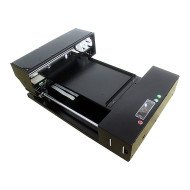
The label printer has quietly emerged as a cornerstone technology in industrial scaling strategies. It is not merely a peripheral asset but a crucial linchpin in managing the mounting complexities of product identification, tracking, and compliance as operations grow. From small workshops to expansive manufacturing plants, mastering the dynamics of label printing can spell the difference between chaotic inventory management and streamlined workflows. This technology’s evolution promises to recalibrate how scale is achieved and sustained across increasingly demanding production environments.
Every scaling strategy must grapple with the operational challenges of maintaining accuracy and consistency under volume pressure. The label printer meets these challenges head-on by advancing print quality, speed, and integration capabilities that keep pace with explosive growth. Understanding the nuances of label printer technology at a deep technical level empowers decision-makers to deploy these systems as engines of efficiency rather than sources of bottlenecks.
Beyond mere automation, label printers enable comprehensive data capture and traceability crucial for scaling compliance within regulated industries. When scaling, the smallest labeling inconsistencies can cascade into massive logistical headaches and costly recalls. A robust label printer system acts as a force multiplier to safeguard brand reliability and operational integrity.
Analyzing label printers through a scaling lens opens a window to the careful alignment required between technology specs and production objectives. This exploration unpacks critical design elements—from print mechanisms to material compatibility—that dictate whether a label printer can truly scale alongside a burgeoning workforce and product roster.
Industries that have adopted the label printer as a scaling cornerstone include food and beverage, pharmaceuticals, electronics, and logistics—each sector demanding distinct performance metrics. Navigating these requirements means embracing label printer innovations that push limits on speed, durability, and connectivity while upholding precision.
As companies invest in scaling, the label printer evolves from a cost center to a strategic asset driving operational agility and competitive advantage. The following sections offer an unvarnished, technically rich examination of how label printers function at scale, backed by real-world operational math and case studies. For scaling enterprises, gaining mastery over this technology is not optional but essential.
Print Technology Types and Their Scaling Impact
Label printers mainly operate using thermal transfer and direct thermal technologies, with some high-volume setups leveraging inkjet or laser-based systems. Thermal transfer printers use a ribbon to transfer ink onto labels, producing durable and smudge-resistant prints ideal for products exposed to harsh conditions. Direct thermal printers omit the ribbon and rely on heat-sensitive paper, offering faster turnaround and reduced consumable complexity but lower longevity.
In scaling environments, thermal transfer is generally preferred for its durability, especially in industrial, chemical, or outdoor settings where label integrity is critical over time. Direct thermal models may suit short-lived goods or where speed outweighs durability. Inkjet and laser technologies, though less common, provide high resolution and color capabilities useful for premium or specialized labels but coming with higher operational complexity.
"Selecting the right print technology directly influences throughput and maintenance overhead at scale. It’s a foundational decision that affects everything downstream," notes industrial labeling consultant Dr. S. Kline.
Label Material Compatibility for Diverse Scaling Needs
Scaling production means dealing with a broad spectrum of label substrates—from paper and synthetic films to metalized foils. The label printer must accommodate this diversity without sacrificing print quality or speed. Synthetic labels like polypropylene and polyester are favored for liquid resistance and tear durability, essential in pharmaceuticals and heavy manufacturing.
Material compatibility is tightly coupled with print technology; thermal transfer printers pair well with synthetic films, while direct thermal labels tend to be paper-based. Advanced printers provide adjustable printhead pressure and temperature settings, accommodating thicker or specialty materials as the product lines diversify.
"When scaling across product categories, flexibility in label material compatibility helps avoid multiple printer models and reduces capital expenditure," explains Tara Nguyen, packaging engineer.
Integration with Scalable Workflow Systems
Label printers do not operate in isolation. At scale, seamless integration with ERP (Enterprise Resource Planning), WMS (Warehouse Management Systems), and MES (Manufacturing Execution Systems) is vital. This enables automatic label generation triggered by production milestones, minimizing manual input errors and speeding up throughput.
Modern label printers support numerous communication protocols (Ethernet, Wi-Fi, Bluetooth) and industry-standard label languages (ZPL, EPL, XML). This interoperability facilitates centralized control over labeling assets, enabling IT to deploy firmware updates, monitor consumable levels, and track printer health remotely—crucial for high-availability operations.
"Integration capability can transform a label printer from a standalone tool to a strategic node within a digitized production ecosystem," states IoT systems architect Miguel Fernandez.
Print Speed and Resolution: Balancing Quantity and Quality
Scaling demands often force a trade-off between print speed and label resolution. High print speeds reduce cycle times but can degrade label legibility and barcode scanability if resolution suffers. Conversely, very high resolution print jobs slow down output and might become a bottleneck at mass volume.
Leading label printers optimize this balance by offering variable print speeds and multi-resolution options selectable by application. For example, barcode-rich pharmaceutical labels may print slower at 600 dpi for maximum clarity, whereas shipping labels could run faster at 203 dpi.
"Adjustable print parameters enable adaptation to evolving scale demands without wholesale hardware replacement," comments manufacturing operations specialist Linda Chen.
Maintenance and Consumable Management at Scale
Operating hundreds of label printers across production lines or warehouses requires rigorous maintenance protocols and consumable inventory management. Printheads, ribbons, and label rolls face wear, risking downtime if unexpectedly depleted or malfunctioning. Predictive maintenance leveraging printer sensors and IoT connectivity is emerging as a best practice, allowing preemptive interventions before failures.
Consumable standardization across sites reduces complexity but must be balanced against application-specific needs. Centralized dashboards monitoring consumable status, error logs, and print counts enable supply chain teams to synchronize ordering and reduce emergency procurement costs.
"Scalable label printing operations hinge on proactive maintenance and consumable insights rather than reactive fixes," advises Peter Dawson, industrial reliability engineer.
Environmental and Regulatory Compliance Through Labeling
Labels often carry compliance-critical data including batch numbers, production dates, hazard warnings, and certifications. The printer’s ability to produce accurate, durable labels resistant to industrial chemicals, abrasion, and temperature extremes is indispensable when scaling regulated product lines.
In sectors like food, pharmaceuticals, and chemicals, regulatory bodies mandate traceability and legible labeling. Failure risks product recalls and fines, undermining scaling efforts. Label printers supporting variable data printing and serialization help companies meet these stringent standards while scaling volume and variety.
"Without robust labeling processes, scaling production is a regulatory minefield," warns compliance auditor Anjali Rao.
Operational Math and Case Studies
Scenario 1: Medium-Sized Beverage Manufacturer
A beverage company scales from producing 10,000 to 50,000 units monthly. By switching from direct thermal desktop label printers to industrial thermal transfer models with 300 mm/second print speed, they reduce labeling time by 65%. Faster print speed saves 120 labor hours per month, valued at $3,600. Consumable costs rise by $500 monthly due to higher-quality ribbons but offset by $4,500 labor savings.
Scenario 2: Pharmaceutical Contract Manufacturer
A contract manufacturer expands product lines requiring complex serialization. Deployment of integrated label printers communicating directly with ERP systems automates variable data printing, eliminating manual entry errors. Error reduction from 5% to under 0.1% cuts rework costs by $10,000 per batch. Initial investment of $50,000 pays off within six months.
Scenario 3: Electronics Assembly Facility
Facing frequent printhead failures due to ragged ribbon usage, the facility invests in predictive maintenance-enabled label printers that monitor printhead condition. Printer uptime improves from 85% to 98%, increasing output by 12%. Maintenance labor drops by 30%. Cost-benefit analysis shows payback on investment in under a year.
Advanced FAQ for Label Printer Scalability
1. What factors determine the ideal print resolution for scaled operations?
Label content complexity, barcode density, and regulatory requirements guide resolution choice. Scaled operations must balance clarity with print speed and consumable costs.
2. How can label printers integrate securely with existing production networks?
Using encrypted communication protocols and secure firmware updates prevents compromise. VLAN segmentation isolates printer traffic from core networks.
3. What strategies reduce consumable waste in high-volume label printing?
Implementing print preview tools, optimizing label layouts, and tracking ribbon usage via software minimize overruns and scrap.
4. How does temperature and humidity affect label printer performance?
Environmental extremes can warp labels or degrade ribbon adhesion. Printers with internal climate control and humidity-tolerant materials improve consistency.
5. Can label printers support multi-language and international character sets?
Modern printers support Unicode and multiple font libraries, enabling multilingual labels essential for global scaling.
6. What role does variable data printing play in scaling?
Variable data printing enables individualized product identification, batch tracking, and personalized marketing at scale, crucial for flexibility.
The Final Verdict
For enterprises committed to scaling operations, the label printer is not an afterthought but a fundamental enabler of growth and efficiency. Its ability to deliver consistent, high-quality, and compliant labels at increasing volumes underpins vital workflows in inventory management, quality assurance, and regulatory adherence. The technical considerations surrounding print technology, material compatibility, integration, speed, and maintenance are complex but mastering them yields significant operational dividends.
Beyond mechanical performance, the label printer’s role as an integrated node within digitized production systems elevates its strategic value. It transforms from a basic output device into a critical communicator of product identity and traceability. Companies that invest thoughtfully in scalable label printer solutions position themselves to avoid costly disruptions, quality lapses, and compliance failures that plague rapid growth.
Ultimately, the label printer represents a smart scaling investment. It reconciles the pressures of expanding product variety and volume with the uncompromising need for precision and reliability. For scaling industrial operations, the label printer is an indispensable ally driving efficiency, agility, and competitive advantage.