Scaling Precision Printing Into Industrial Powerhouses
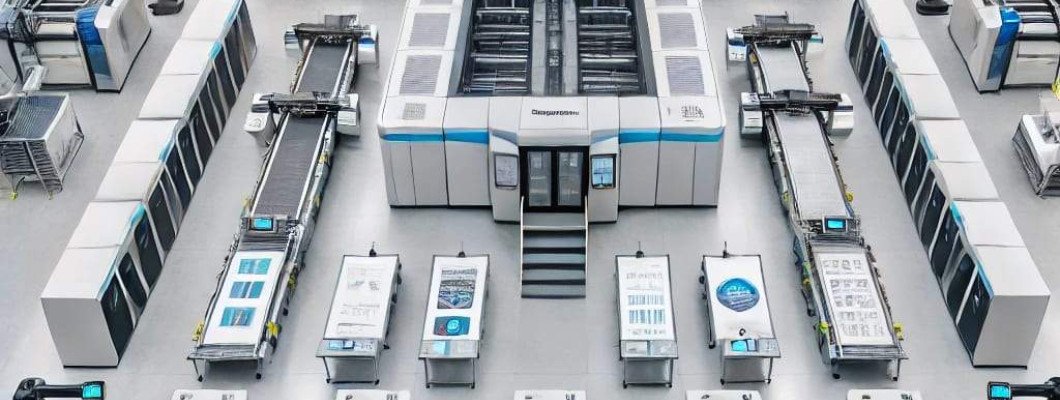
The inkjet printer has undergone a seismic evolution far beyond its humble desktop origins. Today, it's a pivotal force driving the scalability of manufacturing processes across sectors. While once relegated to simple document output, the inkjet printer now forms an industrial backbone, underpinning rapid production lines and complex workflows. Its integration into high-volume environments - from packaging to textiles to electronics - represents a fundamental shift in how companies scale their operations efficiently without sacrificing quality or speed.
At the heart of this transformation lies the relentless push to leverage inkjet printing technology as a strategic asset for scaling. Every decision to adopt and expand inkjet printer usage carries significant implications. These include how to optimize throughput, manage costs, maintain operational consistency, and ultimately squeeze maximum ROI as production demands escalate. The scalability challenge requires balancing technical innovation with shrewd operational strategy.
This comprehensive analysis examines the inkjet printer not as a mere tool but as a scalable industrial engine. For high-volume factories aiming to outpace competitors, understanding the nuances of inkjet technology integration is non-negotiable. From the technical specs that dictate print speed to the maintenance protocols that ensure uptime, this article cuts through the noise to present a clear-eyed view of scaling inkjet printing at industrial levels.
Printhead Technology and Scalability
At the core of any inkjet printer lies its printhead, responsible for propelling ink onto substrates with precision. When scaling operations, speed and reliability of the printhead become paramount. Industrial inkjet printers deploy advanced piezoelectric or thermal printheads capable of firing millions of droplets per second, ensuring rapid throughput without sacrificing resolution.
"Printhead robustness directly correlates with operational scalability. Frequent clogging or misfires not only reduce output but increase maintenance downtime significantly."
High-volume factories often prefer piezoelectric printheads for their durability and ability to handle diverse inks, including UV-cure and solvent-based formulations. The scalability factor involves selecting printheads designed for continuous operation over extended periods, minimizing downtime and maximizing print quality consistency.
Ink Formulations Optimized for Production Velocity
Ink is not a static component in scaling inkjet printing; its chemistry influences drying speed, adhesion, and substrate compatibility. Industrial applications demand inks that dry instantly or cure rapidly under UV light, enabling conveyors to move at high speeds without smudging.
"Tailoring ink chemistry to substrate and printer capabilities is critical to achieving high-speed, scalable production without quality drops."
Specialized inks also play a role in extending printhead lifespan. Formulations that minimize clogging and residue buildup reduce maintenance frequency, boosting uptime. Factories scaling operations must consider ink supply chain stability and costs, as large-scale ink consumption can become a major expense.
Print Resolution and Throughput Trade-Offs
High-resolution prints are often demanded for fine details, branding, or regulatory compliance markings. However, increasing resolution typically slows printing speed. Scaling production requires balancing these conflicting requirements.
"The operational secret lies in optimizing resolution settings per product specifications rather than defaulting to maximum quality for every print."
Adaptive workflows that adjust print resolution dynamically based on product lines can unlock throughput gains while maintaining acceptable quality. Investing in multi-head configurations or staggered print arrays also enables factories to maintain resolution standards without sacrificing speed, crucial for scaling.
Integration with Automation and Workflow Systems
Scaling inkjet printing demands seamless integration with factory automation and data management systems. Printers are increasingly embedded within robotic arms, conveyors, and quality control scanners to form tightly coupled production cells.
"Automation integration reduces manual intervention, slashing error rates and accelerating cycle times—vital factors for scaling output."
Advanced software platforms manage print job queuing, ink usage monitoring, and predictive maintenance alerts. Such intelligence prevents bottlenecks and enables operators to plan production shifts efficiently. Factories scaling inkjet use must prioritize interoperability and real-time monitoring capabilities to avoid operational blind spots.
Maintenance Strategies for Maximum Uptime
Scaling printing volumes amplify the consequences of unplanned downtime. Industrial inkjet printers require proactive maintenance regimes, including scheduled cleaning cycles, printhead inspections, and ink system calibrations.
"Preventive maintenance tailored to production schedules is indispensable for sustaining continuous high-volume printing."
Many factories employ condition-based maintenance using sensor data to predict when components will fail before breakdowns occur. This approach is costly upfront but delivers payback by minimizing interruptions. Scalable inkjet printer ecosystems also incorporate redundant printheads and modular components to allow quick swaps during peak production.
Environmental and Waste Considerations in Scaling
Scaling operations increase material consumption and waste generation. Eco-conscious factories must address the environmental footprint of inkjet printing at scale. This includes optimizing ink chemistries for low volatile organic compounds (VOCs), implementing ink reclaim systems, and selecting recyclable substrates.
"Sustainable scaling requires balancing production goals with regulatory compliance and corporate responsibility mandates."
Water-based and UV-curable inks reduce harmful emissions, while advanced filtration systems capture airborne particulates. Factories planning to scale must incorporate environmental controls to avoid costly fines and maintain brand reputation.
Operational Math and Case Studies
Understanding the financial implications of scaling inkjet printing is critical. Here are three scenarios demonstrating impact:
- Scenario 1: Packaging Line Expansion
A food manufacturer implementing high-speed inkjet printers on packaging lines increased throughput by 40%. Investment in piezoelectric printheads and quick-drying inks led to a 25% reduction in changeover downtime. Resulting sales growth yielded a 1.8x ROI within 9 months. - Scenario 2: Textile Factory Print Capacity
A garment producer adopted multi-head inkjet printers with integrated automation, cutting print cycle times by 30%. Although upfront costs rose 20%, savings in labor and improved quality control produced net annual savings exceeding $400,000. - Scenario 3: Electronics Traceability Marking
An electronics manufacturer replaced legacy marking systems with UV-cure inkjet printers to meet new compliance codes. Faster print speeds allowed doubling output. Maintenance automation cut downtime, improving profitability by 15% despite modest ink cost increases.
Advanced FAQ
- Q: How do different printhead technologies affect scaling?
A: Piezoelectric printheads excel in robustness and ink variety, ideal for continuous industrial use. Thermal printheads provide sharp quality but may experience higher wear at scale. - Q: What are key ink properties for high-volume industrial printing?
A: Rapid curing/drying times, substrate adhesion, chemical stability, and low residue formation are vital to maintain speed and quality. - Q: How can factories mitigate downtime from printhead failures?
A: Implementing predictive maintenance, using modular printheads for quick swaps, and automating cleaning cycles reduces downtime impact. - Q: What integration challenges exist with legacy factory automation?
A: Compatibility with existing data protocols and conveyor/sensor synchronization often requires middleware or custom software development. - Q: How does scaling impact ink supply chain management?
A: Bulk purchasing reduces per-unit cost but necessitates robust storage conditions and inventory control to prevent waste. - Q: What environmental regulations influence scaled inkjet deployment?
A: VOC emission limits, waste disposal regulations, and energy consumption standards vary by region and must be closely monitored.
The Final Verdict
For high-volume factories, the inkjet printer transcends its traditional role to become a cornerstone of scalable, precision manufacturing. Its flexibility across substrates, rapid print speeds, and integration capacity empower factories to push production limits without degradation in quality. However, realizing this potential demands strategic investment in robust printhead technology, specialized inks, seamless automation integration, and maintenance frameworks designed for uninterrupted operation.
Scaling inkjet printing is not simply about adding more printers; it is an orchestrated approach that harmonizes technology, workflow, and cost management. Factories that master this balancing act gain competitive agility and operational resilience. Inkjet printers are no longer optional peripherals—they are essential industrial engines driving growth and innovation at scale.
The choice to elevate inkjet printing from a support function to a production linchpin will define which factories lead in output, profitability, and quality. For the high-volume factory aiming to scale intelligently and sustainably, the inkjet printer is a critical piece in the industrial puzzle.