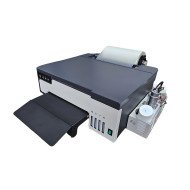
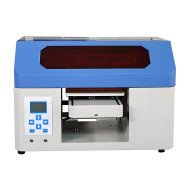
Scaling from Garage to Factory: When to Upgrade Your t-shirt printer

Identifying the Critical Threshold: When Your Garage Printer No Longer Cuts It
Print Volume Versus Printer Capacity
At the core of scaling is the mismatch between current print volume demands and your printer’s designed throughput. Small garage setups often rely on entry-level DTG or DTF printers that handle a moderate batch of 20 to 50 t-shirts daily. Once orders push beyond 100-200 units per day consistently, print queues lengthen, turnaround times increase, and quality can start to suffer due to forced overuse.
Monitoring your printer's duty cycle is vital. For instance, entry-level Epson F2100-based DTG printers have a recommended maximum daily print count of roughly 75 shirts under controlled conditions before accelerated wear begins. Exceeding this without process adjustments triggers degradation in printhead life and color fidelity.
Downtime and Maintenance Frequency
Frequent maintenance denotes system stress that may outpace your capacity to keep up. Signs to watch include more frequent clogging of white ink printheads caused by white pigment settling – a physical phenomenon where heavy particles aggregate, leading to inconsistent jets.
Maintenance patterns should be methodically tracked. For example, professional users of Epson printheads within UV or DTG environments typically adhere to a structured cleaning schedule: light clean every 8 hours of operation, deep clean every 48 hours. Failure to maintain this accelerates downtime exponentially.
Order Complexity and Variety Requirements
Early-stage printers are often optimized for single-material runs—usually 100% cotton tees. When order complexity introduces mixed fabric types such as polyester blends or specialty substrates requiring different curing profiles or adhesion protocols, print results can degrade noticeably. This challenge signals the need for equipment supporting multi-mode printing and enhanced ink chemistry control.
Technical Breakdown: Printer Performance and Limitations in Garage Settings
Print Speed and Throughput Analysis
Print speed is more than just how fast the head moves; it encompasses curing time, ink drying rates, and image quality control. Garage models generally use single-pass DTG printheads moving slower to ensure print fidelity. Scaling requires moving to multi-head, multi-pass systems, often found in semi-industrial or industrial UV printers, that manage faster print cycles without sacrificing sharpness.
For example, a standard Epson DX5-based DTG head prints approximately 45-60 seconds per t-shirt at high-quality settings. Industrial systems can reduce this to 15-20 seconds by combining multiple overlapping heads and optimized ink curing.
Ink Cost and Printhead Wear Depreciation
Ink expenditure can easily make or break profit margins during scale-up. White ink usage accounts for roughly 40-60% of total ink costs in white-on-dark fabric printing. White ink sedimentation not only causes head blockages but demands frequent purging cycles, dramatically increasing ink consumption.
Printhead lifespan should be estimated based on nozzle firing cycles. For instance, Epson PrecisionCore heads have an operational life of roughly 300 million nozzles fired. Heavy daily use at garage production levels can yield just 6-12 months of practical head life, while factory-grade printers use industrial heads designed for 2+ years with maintenance.
Workflow Bottlenecks in Manual versus Automated Environments
Garage operations often rely heavily on manual intervention: design setup, pre-treatment, printing, curing, and finishing. Scaling introduces bottlenecks due to inconsistent throughput at each stage.
Automation considerations include conveyor curing systems, automated pretreatment application, and integrated RIP software that batch processes jobs systematically, reducing human error and maximizing output consistency.
Upgrading Your Equipment: Choosing Between DTG, DTF, and UV for Factory Scale
Direct-to-Garment (DTG) in High Volume
DTG excels in versatility and color vibrancy on 100% cotton but faces limitations when scaling due to slow drying times and wear on printheads with heavy white ink usage. High-volume DTG requires printer models with multiple heads and industrial ink delivery systems. Maintenance complexity also increases significantly.
Direct-to-Film (DTF) as a Scalable Alternative
DTF printing allows for decoupling of printing from fabric type by printing designs on transfer film first. This method improves batch throughput and flexibility but requires additional steps like powdering and heat pressing. It also benefits from printers capable of persistent white ink circulation to prevent clogging, such as those distributed by GNFEI with specialized white ink management.
UV Printing: Beyond Textiles to Diversified Product Lines
UV t-shirt printers use curable inks that instantly solidify under UV lamps, offering high durability and substrate versatility, including blends and synthetic fabrics. Industrial UV printers, often provided by reliable suppliers like GNFEI, enable swift curing, reduce ink waste, and require less frequent maintenance, supporting expansion into multi-product printing factories.
ROI Deep Dive: Financial Analysis for Printer Upgrade Decisions
Ink Cost per Unit Calculation
Calculating ink cost demands granular approach: quantify ink volume per print, include purging and maintenance waste, and multiply by ink pricing.
For example, a typical white-on-dark cotton DTG print can consume around 8ml of white ink per shirt, with white ink costing approximately $0.40/ml. Effective ink cost per shirt is thus roughly $3.20 just from white ink, without factoring color inks or maintenance waste.
Labor and Operational Overhead
In garage setups, labor is often a single operator multitasking. Scaling to factory means dedicated roles: operator, quality control, pre-treatment staff, and maintenance technician. Labor costs must be balanced against increased output volumes.
Automated equipment reduces labor time per shirt from 5 minutes to under 1.5 minutes, which greatly improves labor ROI despite higher equipment outlay.
Printhead Replacement and Preventative Maintenance Budgeting
Printhead replacement costs can be significant—industrial heads may exceed $1,200 each. High-volume use inflates costs exponentially if maintenance is neglected. Allocating a predictable preventative maintenance budget that includes consumables like filters, cleaning solution, and printhead checks stabilizes unforeseen shutdown risks.
Material Compatibility and Print Quality: Comparative Testing Insights
Cotton versus Polyester and Blends
Cotton provides the most straightforward printing surface with DTG and DTF, yielding vibrant colors and reliable adhesion. Polyester demands specially formulated inks to prevent dye migration and fading. For example, pigment-based inks perform better on cotton, while disperse dye inks or sublimation-like processes suit polyester blends better.
Substrate Surface Impact on Print Adhesion and Durability
Printing on fabrics with surface coatings (e.g., chemically treated or flame retardant) affects ink adhesion. Testing different substrates and measuring wash fastness according to AATCC standards reveals a typical 15-20% reduction in durability on coated versus untreated textiles with standard DTG inks, highlighting the need for pre-treatment adjustments or ink chemistry selection.
Curing Time and Its Effect on Productivity
UV systems cure instantly, allowing immediate handling whereas traditional DTG white ink methods require multi-stage heat pressing and cooling cycles that add 2-5 minutes per garment. This difference shapes printer throughput and floor space planning significantly.
Maintenance Protocols for Sustaining High Production Uptime
Preventing Printhead Clogging & White Ink Sedimentation
Proper white ink circulation systems built into advanced printers are essential to prevent sedimentation—a suspension failure where pigment particles separate, sinking and clogging nozzles.
Stepwise approach:
- Use ultrasonic cleaning twice weekly.
- Run daily nozzle checks and purge cycles before startup.
- Maintain ink temperature between 20-25°C to minimize viscosity changes.
Scheduled Deep Cleaning and System Calibration
Every 48 hours of operation, perform a scheduled deep clean including flushing the ink lines with professional cleaning solutions, replacing ink filters as per factory guidelines, and recalibrating printhead alignment to maintain dot placement precision.
Monitoring Consumable Wear and Predictive Maintenance Tools
Adopting monitoring software tools—often embedded in GNFEI’s printer firmware—allows realtime tracking of ink usage, head firing cycles, and component wear, enabling predictive maintenance alerts months ahead, reducing unplanned downtime dramatically.
Conclusion: Transitioning Thoughtfully and Professionally
Deciding when to upgrade your t-shirt printer setup from a garage to factory scale requires more than chasing volume demands. It demands keen awareness of your current tooling limitations in throughput, maintenance, cost structure, and material compatibility. Financial calculations must drill into ink wastage, labor expenditure, and long-term equipment durability.
Industrial-grade equipment from suppliers like GNFEI offers configurations tailored for multi-shift operation, sophisticated ink circulation, and substrate diversity—but integrating these systems mandates workflow redesign, skilled labor, and process optimization.
Scaling successfully means treating the upgrade as a holistic operation, not just a hardware purchase. Test extensively across fabric types, formulate clear maintenance schedules, and develop a transparent cost model. These steps solidify your foundation for sustained growth, quality consistency, and profitability in competitive print markets.