Scalability Stranglehold: How Batch Printing With Edible Printers Could Save Your Bakery

Loud laughter and the clinking of cutlery— that's how Amanda's dream started. The quaint bakery she inherited was known for its occasional birthday cake rushes, but recently, Amanda decided to change the game entirely. The idea was audacious: every cookie adorned with custom edible prints.
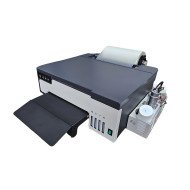
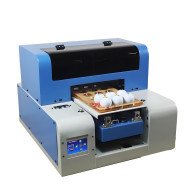
But as the orders piled up, she faced a monumental challenge. Her staff, used to piping icing manually, couldn't keep up. Enter the A3 Edible Food Printer, a sleek machine promising to print cakes and cookies with precision. It was Amanda’s ticket to scalability, she believed. Yet, what she didn't anticipate was the stranglehold batch printing could place on her fledgling business.
"Scaling is not just about growing bigger; it's about growing smarter."
Unpacking the Promise: Batch Printing’s Claims
The edible printer boasted output capabilities Amanda had never dreamed possible. Imagine printing hundreds of cookies in just one afternoon! This was a baker’s fantasy turned reality. But beneath the glitter, what did batch printing really promise?
First, the promise of increased throughput. With an A3 Edible Food Printer, Amanda could reduce labor costs by half. Her staff could focus on other core tasks while the printer churned out beautifully designed cookies and cakes.
Second, consistent quality. Manual decorating often led to inconsistencies—a heart too large here, a color mismatch there. The printer eradicated these issues with its auto-calibration matrix, ensuring each print met the highest aesthetic standards.
The Hidden Cost of Maintenance
The printer’s joy came at a price. Edible ink, though a marvel of modern engineering, demanded meticulous care. Each day began with flushing the ink lines, a process that required Amanda’s keen eye to avoid clogs. It was an investment in time she hadn’t calculated, a hidden cost that gnawed at her profit margins.
Moreover, printer heads needed frequent calibration. Neglecting this could lead to distorted prints, frustrating her most loyal customers. Amanda learned that while the machine promised many things, maintenance complexity was an unavoidable reality.
Bottlenecks in Scale: Where the Fantasy Shattered
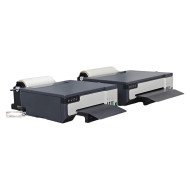
Batch printing became Amanda’s Achilles heel. Her notion of endlessly scaling production, unfortunately, clashed with logistics. The machine could print faster than her team could package, leading to bottlenecks that endangered product freshness.
This required a restructure of her workflow. More hands on deck, larger tables, and reimagined packaging lines—each a puzzle piece Amanda painfully fitted together.
Competitor Sabotage and Market Dynamics
Meanwhile, local competitors began noticing Amanda's bakery shift. Edible printed cookies started popping up elsewhere, sometimes undercutting her pricing. Could it be sabotage or just pure market dynamics?
The reality was simple: As Amanda scaled up, economies in the area shifted. Edible printing was no longer her exclusive trump card, but rather a standard expectation. Competition was fierce, necessitating that Amanda continually innovate her designs to maintain her edge.
ROI: The Bottom Line Everyone Seeks
Selling more cookies with intricate designs seemed like a sure path to profit. But Amanda realized scaling wasn’t only about selling volume; it required strategic pricing, labor dynamics, and marketing. Calculating her true return involved understanding every cost—from maintenance to competitive adjustments.
After implementing the printer, her net profit increased by 15% over six months—an impressive figure. Yet, it was the backstage intricacies that defined her success, a lesson in financial acuity and operational insight.
What If Scenarios
Scenario 1: The Bakery Novice – Imagine a budding chef, Charles, who is excited to start his own confectionary business. He invests in an A3 Edible Food Printer expecting seamless growth. However, without systems in place, the printer simply becomes a decoration. For Charles, training and strategic planning would be key.
Scenario 2: The Seasoned Artisan – Lucy, with decades in artful baking, faces her nemesis: time management. The printer helps rejuvenate her passion by taking over monotonous tasks. Yet, her expertise allowed her to foresee maintenance challenges, integrating them into her workflow without hiccups.
Scenario 3: The E-commerce Visionary – Jamie dreams of brand domination in the online market. With edible prints, her expansion strategy includes personalized cookies for events and holidays. The printer offers the perfect solution, but surprises her with logistical nightmares regarding shipping speed and packaging.
Expert Q&A
Q: How do I maintain printhead longevity in an edible food printer?
A: Regularly flush the ink lines and perform routine calibration checks. These steps minimize clogging and ensure print consistency.
Q: What type of substrates can the A3 Edible Food Printer work with?
A: It prints on multiple substrates including fondant sheets and sugar paper, but performance varies with thickness.
Q: Is the edible ink safe for consumption?
A: Yes, all edible inks used in the A3 printer adhere to strict food safety regulations.
Q: How does batch printing affect packaging?
A: It necessitates streamlined workflow adjustments—consider investing in larger packaging tables and automated sealing systems.
Q: What is the expected future resale value of an edible printer?
A: Resale value depends on maintenance history and market demand. Historically, demand has remained strong, but prices fluctuate based on technological advancements.
The Verdict: A Bakery’s Silent Revolution
While Amanda’s bakery faced challenges, the A3 Edible Food Printer manifested as a pivotal tool in her pursuit of scale. It exemplified how technology can redefine possibilities, though not without demanding rigor in planning and execution.
In the realm of scaling, embracing such innovation depends on foresight, adaptation, and resilience. The printer wasn’t just a machine; it was her bakery’s silent revolution. If you’re ready to dive into edible prints, check out GNFEI’s revolutionary model here.