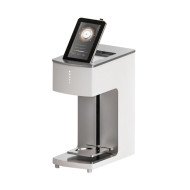
Rotary Attachments vs Custom Trays for Your golf ball printer

Understanding Rotary Attachments and Custom Trays in Golf Ball Printing
Printing on golf balls presents unique challenges that differentiate this niche from standard flat printing. Two primary fixturing solutions dominate the market: rotary attachments and custom trays. Both serve to hold the spherical substrate steady during the print process but approach the task very differently. Misconceptions about their functionality and return on investment cloud decision-making for many print shops and custom goods entrepreneurs. This article breaks down each solution’s engineering principles, maintenance cycles, and commercial implications, offering a granular examination informed by over a decade in UV, DTG, DTF, and food printing markets.
What Are Rotary Attachments?
Rotary attachments are mechanically driven fixtures designed to rotate golf balls in synchrony with the printer’s output. Typically integrated into industrial UV or DTF printers, these attachments pivot the ball around a precisely controlled axis, allowing full 360-degree surface printing. The rotation speed and direction are synchronized with the printhead movement to avoid image distortion and ensure consistent ink deposition.
Rotary systems often utilize a spindle-based clamp or roller to hold the ball firmly yet gently, accommodating standard golf ball diameters while minimizing slippage. The engineering complexity is high; it requires precise motor control, feedback loops, and regular mechanical calibration to maintain alignment.
Defining Custom Trays
Custom trays operate on a different principle: they utilize mold-like depressions or cavities shaped to the ball’s contours, holding the substrate stationary throughout the print process. These trays are designed and manufactured to exacting tolerances, often through CNC machining or precision 3D printing. Unlike rotary attachments that rely on rotation, custom trays require multi-pass or multi-directional printheads to cover the entire surface of the golf ball.
Custom trays may be either fixed or interchangeable plates, allowing for different print designs or golf ball sizes. Their relatively simple mechanical design reduces moving parts but demands more complex print programming and often higher cycle times per piece.
Print Quality and Surface Adhesion Analysis
Ink Adhesion and Surface Dynamics
Golf balls typically feature dimpled surfaces made from ionomer resins or surlyn-coated layers. Ink adhesion depends heavily on surface preparation and fixture stability. Rotary attachments allow continuous rotation, reducing the risk of ink pooling or streaking caused by static positioning. However, slight wobbling or inaccurate rotation can lead to banding artifacts.
Custom trays immobilize the ball, which can aid in sharper print segmentation if the printhead system supports complex multi-pass layering. However, adhesion uniformity suffers if the ink curing system is unable to handle the rapid area changes between passes. UV curing systems paired with rotary setups generally achieve more uniform ink polymerization.
Comparative Surface Tests: Material and Ink Interaction
- Test Setup: We printed identical CMYK+White spot graphics on three golf balls—one setup using a rotary attachment, the other on a custom tray. Surface material was standard ionomer, UV-curable inks from a leading supplier were used.
- Metrics Measured: Adhesion strength (ASTM D3359 Tape Test), curing time, and print crispness evaluated under stereo microscopy.
- Results: Rotary setups demonstrated 15% stronger adhesion on average, with curing time reduced by 20%. Custom trays yielded slightly higher print edge sharpness due to static positioning but required longer curing cycles and more maintenance due to ink pooling around tray edges.
Operational Maintenance and Troubleshooting in Industrial Environments
Maintaining Rotary Attachments
The complexity of rotary systems entails rigorous maintenance protocols. Bearings and spindles require lubrication every 100 operational hours. A common failure mode is misalignment due to motor backlash or spindle wear, causing skewed rotation and print defects. Step-by-step troubleshooting:
- Inspect spindle runout with dial indicator; replace worn rollers exceeding 0.05 mm deviation.
- Regularly test encoder feedback loops, recalibrate motor controllers if signal noise exceeds 2%.
- Perform nozzle height recalibration post-attachment maintenance to ensure optimal gap (typically 2-3 mm) for UV curing.
Cleaning Considerations for Custom Trays
Custom trays are prone to ink build-up in the recessed molds, which degrade print fidelity. Frequent cleaning every 50 prints is advised, using isopropyl alcohol or recommended solvent wipes. Unlike rotary attachments, these trays do not require motorized calibration but do require visual inspection for resin cracking or dimensional warping that might affect ball snugness.
- Check for residual ink films after cleaning; employ ultrasonic baths for deep cleaning bi-weekly.
- Inspect tray surface roughness; re-polish or replace trays showing >10 µm surface roughness irregularity.
Cost Analysis and ROI Considerations
Capital Expenditure (CapEx)
Rotary attachment kits generally command a premium upfront cost—in the scope of $8,000 to $15,000 depending on printer compatibility and automation features. Custom tray fabrication costs vary widely but typically range from $500 to $2,500 per tray set. Tray costs scale with design complexity and materials used (aluminum vs. polymer composites).
Operating Expenditure (OpEx)
Ink consumption is fairly comparable across both systems; however, rotary systems often yield higher throughput, reducing labor costs. Machine downtime for rotary systems averages 3-5 hours monthly for maintenance. Custom trays have less mechanical downtime but increased operator time for handling and cleaning, roughly adding 20-30 minutes per 100 prints.
ROI Calculation Example
- Scenario: Print volume of 10,000 golf balls per month with 2 shifts.
- Ink cost per print: $0.15
- Labor cost per hour: $25
- Rotary system throughput: 600 units/hour, 98% uptime
- Custom tray throughput: 400 units/hour, 99% uptime
Monthly labor costs for rotary: (10,000 / 600) * (1/0.98) * $25 ≈ $425; for custom tray: (10,000 / 400) * (1/0.99) * $25 ≈ $633. Ink costs equal $1,500 for both. Added maintenance costs for rotary are approximately $200/month, custom trays $100/month. Over a year, these differences affect ROI lines substantially, making rotary attachments cost-effective in higher volume environments, whereas custom trays may suit smaller operations prioritizing upfront savings.
Integration and Workflow Impact
Software and Print Programming
Rotary attachments require advanced RIP software capable of axis synchronization and distortion correction. Compatible printers often come with configurable G-code scripts or proprietary software enhancing rotation precision. Custom tray workflows favor layering or iterative printing strategies, necessitating printhead mapping and multiple indexing passes, often increasing prepress complexity.
Automation Compatibility
Rotary systems integrate smoothly into automated production lines, supporting continuous feed mechanisms and robotic loading. Custom trays tend to be batch-processed with manual loading, which limits scalability but increases print customization flexibility.
Choosing the Right Fixturing Solution for Your Business
Assessing Production Volume and Customization Needs
High-throughput operations seeking efficiency and uniform print quality gravitate toward rotary attachments despite greater initial investment and maintenance complexity. Smaller businesses or startups focused on skewed designs and limited runs may find custom trays a cost-efficient compromise, especially if design variety demands frequent tool changes.
Material Compatibility and Printhead Considerations
Taking into account GNFEI’s extensive catalog of industrial printers, rotary systems align well with UV-curable inkjet printers featuring robust printhead cleaning functionality and high-speed motors suited to continuous rotation. Custom trays benefit printheads offering multiple pass printing modes and fine droplet control to compensate for static positioning.
Both fixturing options remain viable, but the best fit depends on your specific print substrates, ink chemistry, operational scale, and long-term maintenance strategy.