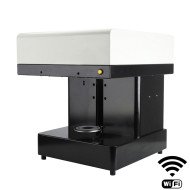
Platen Sizing and Garment Loading Tricks for Faster dtg printer Throughput

Understanding the Impact of Platen Sizing on DTG Printer Throughput
What Platen Size Really Means for Print Volume
The platen is the physical surface on which garments are fixed during direct-to-garment (DTG) printing. Many believe bigger platens are simply ‘more efficient,’ but without matching your garment stock and printer specifications, oversized platens can introduce waste in ink and time. Choosing the right platen size directly correlates with how many garments can be processed in one batch without frequent reloading.
Balancing Platen Size with Printer Capability and Ink Usage
Consider DPI, print area, and ink deposition rates when selecting platen sizes. A platen too large for the printer’s effective print zone causes excessive idle time and raises ink consumption unnecessarily. For example, a 16x20 inch platen on a printer calibrated for 12x16 inch prints means wasted ink border and lower throughput per hour. GNFEI regularly advises customers to match platen sizing to target print dimensions to optimize ink savings and reduce per-unit print cost.
Practical Troubleshooting: Handling Platen-Related Print Defects
Common platen-related issues include uneven garment elevation causing inconsistent print density, and platen movement impacting layer registration. To troubleshoot:
- Check platen mounting bolts for looseness—tighten to manufacturer torque specifications.
- Use precision-calibrated thickness shims to compensate for fabric bulk variance, especially on thicker garments.
- Clean the platen surface regularly to avoid print artifacts caused by residual ink or lint buildup.
GNFEI recommends a weekly platen inspection routine, focusing on mechanical stability and cleanliness to ensure consistent print quality and throughput.
Optimizing Garment Loading Techniques to Minimize Printer Downtime
Loading Workflow Bottlenecks in High-Volume Production Environments
Loading each garment manually onto platens is one of the largest throughput bottlenecks in DTG operations. Each second spent in repositioning or garment adjustment adds up when multiplied across hundreds of prints daily. Minimizing loading time without compromising print alignment is key.
Step-by-Step Efficient Garment Loading Procedure
Effective loading sequences include:
- Pre-sorting garments by size and fabric type using a well-organized rack system.
- Using adhesive sprays or gel platen pads strategically to reduce garment shifting during printing while simplifying unloading.
- Implementing dual-platen systems or multi-platen carousels to allow one garment to print while another is loaded or unloaded.
Fine-tuning these processes can shave minutes off total cycle time, increasing prints per hour significantly.
Addressing White Ink Clogging During Frequent Loading-Unloading Cycles
Repeated exposure of the platen to ambient air during loading can accelerate white ink drying and clogging, especially in humidity-controlled environments. Maintenance steps to mitigate include:
- Performing white ink circulation priming every 4-6 hours depending on print volume.
- Executing quick printhead spit cycles during loading breaks to prevent ink settling.
- Keeping platens covered with protective sheets where possible to reduce ink exposure.
GNFEI’s support team reports these practices reduce white ink maintenance downtime by 30% in production scenarios.
Deep Dive: ROI Calculation for Platen Upgrades and Throughput Improvements
Ink Cost Versus Throughput Gains in Platen Sizing Adjustments
Industrial printers use high-cost proprietary ink, often exceeding $300 per liter for specialized white ink. Enlarging platen size without adjusting garment fit wastes upwards of 15-25% more ink per print. Conversely, right-sized platens reduce ink costs while maintaining or increasing throughput by cutting loading time per garment.
Example calculation:
- Smaller platen (12x16): ink usage per print = 15 ml; print output = 25 shirts/hour
- Larger platen (16x20): ink usage per print = 18 ml; print output = 22 shirts/hour (due to longer loading)
- Ink cost/liter = $320; cost differential per hour: (18ml-15ml)*22 shirts * $0.32/ml = $21.12 more ink cost, but 3 fewer shirts printed.
This highlights the non-linear relationship between platen size, ink cost, and throughput, demanding strategic decisions.
Labor Efficiency Improvements with Enhanced Garment Loading Systems
Investments in loading apparatus like adjustable platens, garment clamps, or automated fixtures may involve upfront capital expense. Calculating labor hours saved is critical. Assume:
- Baseline loading time: 90 seconds per shirt
- Improved method: 60 seconds per shirt
- Operator wage: $18/hour
- Daily volume: 200 shirts
Daily labor savings = ((90-60)/60) hours * 200 shirts * $18/hr = $180 saved/day, equating to ~$4,500 monthly. GNFEI clients often recover equipment investments within 4 to 6 months through such labor efficiencies.
Quantifying Printhead Wear and Maintenance Costs
Printheads are typically warranted for a specific volume, roughly 3.5 million linear inches of printing. Aggressive platen sizes and frequent loading cycles increase mechanical stress, causing accelerated printhead degradation—a hidden cost often overlooked. Printhead replacement can run between $1,200 and $2,000 per unit.
Accurate ROI models must integrate depreciation based on printhead longevity adjusted for platen usage intensity. For example, moving from a 12x16 platen to a frequent-use 16x20 platen can reduce printhead life by 10-15%, adding incremental cost of $0.03 to $0.05 per print.
Material Considerations: How Garment Substrate Interacts with Platen Sizing and Loading
Cotton Versus Polyblend Fabric Impact on Print Adhesion and Drying
Cotton’s porous surface absorbs ink differently than polyblend fabrics. Larger platens loaded with varying fabric types may require calibration. Cotton supports heavier ink layers but demands longer curing times, impacting throughput if platen size does not match heat press capacity.
Polyblends often repel water-based DTG inks slightly, necessitating pre-treatment adjustments. Improper garment loading causing wrinkles on polyblend substrates drastically affects print quality. GNFEI testing labs found using segmented platens with variable vacuum zones helps maintain flatness across mixed fabric batches.
Printing on Thick Fabrics and Multilayered Garments
Heavy fabrics or layered garments increase platen height and may reduce nozzle-to-garment distance, leading to print inconsistency and nozzle strike damage. Adapting platen height through shims or adjustable supports during loading is essential. Overlooking these adjustments, especially on larger platens, causes throughput delays due to increased reprints.
Surface Hardness and Stability of Platens for Metal or Rigid Substrates
DTG printing on rigid substrates like metal plaques or wood requires specialized platens with non-slip coatings and hardened surfaces to avoid vibration or substrate movement. The size and shape of platens for these applications influence print registration accuracy and curing uniformity.
GNFEI recommends investing in custom platen fabrication tailored to these materials to maximize throughput and minimize error rates during high-volume runs.
Platen Mechanics: Engineering Features that Drive Throughput Enhancements
Vacuum and Clamp Systems to Secure Garments
Standard manual platen clamps consume time during loading/unloading. Vacuum-assisted platens improve garment hold without crease-inducing pressure points, speeding up loading. However, vacuum system maintenance is critical—filters and hoses require periodic cleaning or replacement to maintain suction strength.
Manufacturers like GNFEI provide modular vacuum platen upgrades with clear maintenance cycles to sustain throughput increases over prolonged production runs.
Multi-Platen Carousels for Continuous Printing
Multi-platen carousels allow print operators to load and unload garments on one platen while printer head works on another, virtually eliminating printer idle time. Implementation complexities include:
- Ensuring platen alignment repeatability
- Synchronizing printer software with platen movement
- Regular mechanical checks for carousel bearings and motors
In robust installation, throughput can increase by 35-50%, justified by throughput gains over incremental equipment costs.
Wear Resistance and Surface Coating Innovations
Platens endure chemical exposure (from pretreatments) and mechanical abrasion. Advanced coatings like Teflon or ceramic-infused layers extend platen lifespan and simplify garment loading by reducing friction. GNFEI’s research indicates proper plating coatings reduce downtime for platen surface refurbishment by up to 40%, improving overall shop efficiency.
Creating Standard Operating Procedures (SOPs) for Platen and Garment Loading Consistency
Key Components of an Effective SOP
An SOP for platen sizing and garment loading should encompass:
- Pre-shift platen standard calibration checklists
- Garment loading workflows prioritizing size and fabric type sorting
- Scheduled platen cleaning and vacuum system maintenance
- Ink and printhead priming routines aligned with workload
Clear SOPs lead to measurable throughput stability and reduce costly errors in print alignment and inventory shrinkage.
Training Staff for Speed without Sacrificing Print Quality
Fast loading often risks misalignment and print defects. Structured training programs combining hands-on practice with measurable KPIs can reduce per-garment loading time by as much as 33% without increasing reprints. Video tutorials and checklist adherence are practical tools—GNFEI partners with clients to develop customized training manuals specific to their platen and garment types.
Data-Driven Improvements and Continuous Monitoring
Tracking print throughput, print quality rejection rates, platen downtime, and maintenance frequency can highlight bottlenecks. Establishing digital dashboards with real-time printer data acquisition lets print managers adjust platen and loading parameters quickly. This iterative approach to throughput optimization often yields 10-15% incremental gains beyond initial process improvements.