Performance Limits of Edible Food Printers in Industrial Kitchens
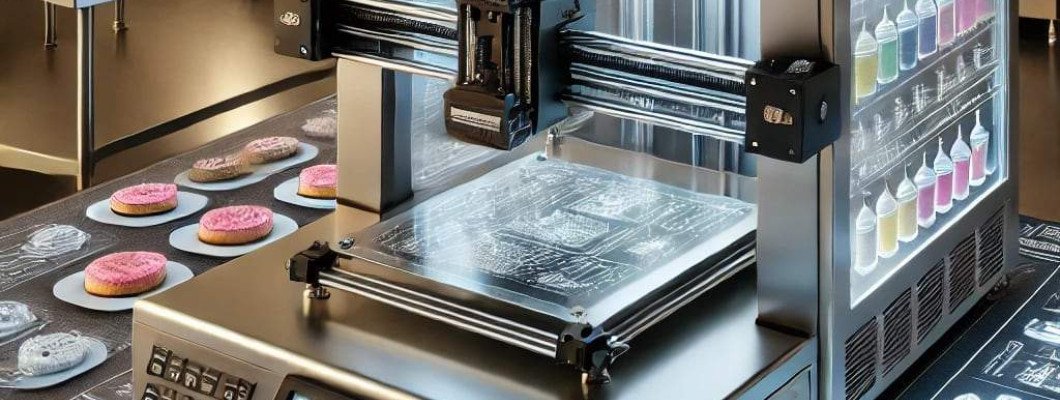
The Industrial Reality of Edible Food Printing in High-Volume Environments
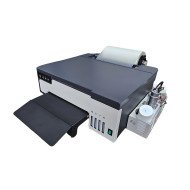
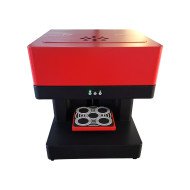
Industrial kitchens aiming to scale production with edible food printers like cake and pizza printers face unique operational challenges that extend beyond traditional printing technology. These devices are subjected to complex variables, including substrate irregularities of food surfaces, thermal sensitivities, and food-safe ink rheology. Unlike paper or plastic substrates, edible bases such as dough or fondant introduce dynamic moisture content, elasticity, and temperature fluctuations that heavily impact print fidelity and throughput.
For instance, consider a scenario inside a cloud kitchen specializing in personalized edible goods. The printer must maintain micron-level precision while depositing food-grade inks that solidify accurately without bleeding or flavor alteration. Given a throughput target of 500 units per 8-hour shift, any latency or printhead clogging due to ink viscosity swings directly reduces output and increases downtime for maintenance. Furthermore, the printers have to integrate into existing food prep lines, necessitating both hardware adaptability and software control systems compatible with fast-paced culinary environments.
This industrial setting exposes the constraints of current edible printer hardware, revealing gaps in printhead durability under food-grade ink chemistry and limits in motion control mechanisms designed initially for non-biological materials. Achieving consistent color accuracy and layering on diverse food substrates at production speeds exceeding 60 prints per hour remains a significant hurdle, raising questions about the practical application of cake and pizza printers in mass food production.
Hardware Design Constraints Define Operational Ceilings
Technical performance of edible food printers is principally bounded by the interplay of printhead parameters, motion system precision, and food-grade ink properties.
Printhead Resolution and Ink Droplet Size
Standard cake and pizza edible printers employ piezoelectric printheads capable of ejecting droplets in the range of 5 to 20 picoliters (pl). However, increasing droplet size benefits throughput but compromises micrometer-level resolution essential for detailed images and gradients on edible surfaces. Conversely, reducing droplet volume enhances detail but exponentially increases printing time.
Considering a nozzle diameter of 20 μm and a maximum firing frequency of 8 kHz, the theoretical maximum print speed can be approximated using fluid dynamics principles and motor acceleration limits. The volumetric throughput Q (in µL/s) per nozzle can be estimated as Q = V × f, where V is droplet volume and f is firing frequency. For a 10 pl droplet at 8 kHz, Q = 80 nL/ms or 0.08 µL/ms, translating into print speeds compatible with detail but potentially limiting production volumes.
Motion Control Dynamics
Precision motor systems such as closed-loop stepper motors or servo-driven linear actuators govern the XY axis movement. Their acceleration (a), velocity (v), and positional repeatability (±3 μm typical) define the maximal practical print speed. Assuming a print bed width of 300 mm and maximum acceleration of 10 m/s², the acceleration and deceleration phases limit effective printhead travel speeds to under 100 mm/s for high accuracy prints.
Thermal Management of Food Substrates
Thermal variations impact ink viscosity and substrate pliability. Edible inks typically require ambient temperatures between 18°C and 25°C for stable viscosity (~50 to 150 cP). Temperature deviation leads to clogged nozzles or ink spreading, necessitating integrated thermal regulation systems. However, these thermal systems add size, cost, and power consumption, complicating integration within tight commercial kitchen footprints.
Food-Grade Ink Chemistry and Shelf Life
Food-safe inks rely on natural colorants suspended in aqueous or oil-based carriers, with limited chemical stability over time. Inks with particle sizes under 200 nm ensure nozzle compatibility but require refrigeration and agitation to prevent sedimentation. Ink chemistry also affects printhead nozzle erosion and clog rates, directly influencing maintenance cycles and uptime.
Comparing Hardware Solutions for Industrial Edible Printing
| Feature | Piezoelectric Printhead System | Thermal Inkjet System |
|---|---|---|
| Droplet Volume | 5-20 pl (precise control) | 30-50 pl (larger droplets) |
| Print Resolution | Up to 1200 dpi | Up to 600 dpi |
| Ink Compatibility | Broad with food-safe inks | Limited due to heat sensitivity |
| Maintenance Frequency | Higher (due to complex mechanics) | Lower but prone to clogging |
| Thermal Impact on Ink | Minimal | Potential degradation |
| Print Speed | Slower but higher quality | Faster, lower fidelity |
Scenario Analysis of Industrial Application Use Cases
In assessing deployment of edible printers in scaled food operations, three scenarios present distinct operational insights.
Scenario 1: Boutique Bakery Customization
A small bakery requires high-definition decorative printing on cakes with intricate graphics. Priority is on resolution (≥1000 dpi) and color vibrancy rather than volume. Piezoelectric printheads with small droplet volumes excel here, but print times for large batches increase. Maintenance demands may rise due to frequent color changes.
Scenario 2: Quick-Service Pizza Chain Promotion
High throughput of approximately 1000 printed pizzas daily demands rapid print speeds and robust hardware that tolerates dough moisture. Thermal inkjet systems offer faster print rates but at reduced image fidelity, acceptable for promotional logos and simple designs. Ink drying time and substrate handling become critical bottlenecks.
Scenario 3: Large-Scale Event Catering
This use case mixes volume and complexity, where hundreds of edible prints must match brand standards. Hybrid systems combining slower, high-precision heads for logos with faster, lower-res heads for background elements can optimize throughput. Integration with conveyor systems and ambient temperature controls is essential to maintain print consistency.
Expert FAQ on Edible Food Printer Performance
What factors most critically influence printhead clogging in food printers?
Ink particle size and viscosity fluctuations combined with temperature variations are primary contributors. Protein and sugar content in inks also affect nozzle wetting and drying behavior, increasing clog risk during idle periods.
How do substrate irregularities affect print accuracy?
Variations in curvature, moisture, and elasticity alter the effective nozzle-substrate distance, causing droplet deformation or misplacement. Adaptive Z-axis control with real-time surface mapping mitigates this but adds hardware complexity.
Can edible inks maintain color fidelity under high-speed printing?
Faster printing often requires larger droplet volumes, which can reduce color saturation and increase edge bleeding. Optimizing ink formulation for rapid drying and viscosity balance is essential but remains a technical bottleneck.
What maintenance strategies maximize uptime?
Automatic nozzle purging, temperature stabilization, and scheduled ink circulation reduce clogging and component wear. Predictive analytics based on print job parameters can pre-empt failures, but adoption is currently limited.
Are there environmental risks in disposing food-grade inks?
While food-grade inks are non-toxic, large volumes may contribute biochemical oxygen demand (BOD) in wastewater. Proper disposal and treatment protocols compliant with local regulations are necessary for sustainable operations.
Strategic Verdict on Edible Food Printer Technology Trajectory
Edible food printers, particularly those designed for cakes and pizzas, sit at a complex junction of print technology, food science, and industrial automation. Current hardware architectures prioritize print quality over throughput, constraining scalability in industrial kitchens. Advances in ink chemistry, adaptive motion control, and integrated thermal management are requisite to push practical limits beyond 100 units per hour without compromising food safety or visual precision.
Continued innovation in multi-nozzle arrays and real-time substrate sensing promises to bridge gaps between artisanal quality and mass production demands. Yet, until such breakthroughs become cost-effective and widely standardized, edible food printers remain niche tools better suited to customization and limited batch production rather than full industrial throughput replacement.
The ongoing challenge will be balancing intricate print capabilities with operational robustness and maintenance efficiency in complex culinary environments.