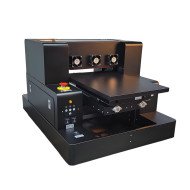
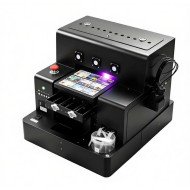
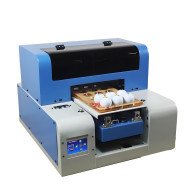
Navigating Lifecycle Maintenance Costs for A4 Multifunction LED UV Printers

The Industrial Reality
Understanding the lifecycle maintenance costs of economical A4 multifunction LED UV printers is critical for businesses aiming to optimize their printing operations. These devices, while offering multifunctionality, present unique challenges that require precise management and foresight.
Technical Deep-Dive
The Maintenance Matrix
To begin, we must consider the maintenance matrix of LED UV printers. These devices use LED technology to cure UV inks directly onto substrates, offering rapid output. However, the LED components require periodic inspection for performance deterioration due to thermal stress. The average lifespan of LED diodes is influenced by operational time and ambient temperature, demanding a robust environmental control system to optimize their longevity.
Printhead Precision
Printhead maintenance is paramount in ensuring high-quality output. The intricate design of A4 multifunction printers involves piezoelectric technology, which requires precise voltage control to avoid nozzle clogging. Clogging impacts dot formation control, reducing the device's print sharpness and color accuracy.
Data Analysis: Component Depreciation
Through hypothetical math, we examine component depreciation. Assuming an average usage rate of 60% capacity daily, the depreciation rate of LED components and piezoelectric printheads can be assessed using a standard linear model. This anticipates a 20% performance reduction annually, necessitating scheduled replacements to maintain operational efficiency.
Safety Compliance
Safety compliance cannot be overlooked. LED UV printers emit UV radiation; hence, shielding and operator training are vital. The implementation of safety interlocks and real-time monitoring systems can mitigate UV exposure risks, aligning with regulations like OSHA and ISO standards.
Comparative Hardware Insight
| Specification | Economical LED UV Printer | Industrial-Grade UV Printer |
|---|---|---|
| Printhead Type | Piezoelectric | Piezoelectric Advanced |
| LED Lifespan | 10,000 hours | 20,000 hours |
| UV Safety Features | Basic Interlocks | Advanced Monitoring |
| Annual Maintenance Cost (USD) | 500 | 1000 |
The comparative analysis reveals significant differences in operational capability and maintenance requirements.
Scenario Analysis
Three distinct use-cases underline the printer's intrinsic value and its potential inefficiencies.
Small Business Workflow
For small businesses, the printer's lower initial cost and multifunctional design aid in achieving cost-effective production. However, the hidden maintenance costs, such as frequent printhead replacements, can offset initial savings.
Commercial Printing Demands
In commercial settings, where throughput is critical, the hourly operation costs become essential. Here, the efficiency of LED curing and printhead sustainability directly affects profit margins. Regular component checks become integral for uninterrupted service.
Specialized Printing Needs
High-end artisanal printing demands micron-level precision. The printer's capability to produce high-resolution images at varying thicknesses necessitates precise substrate handling and ink viscosity management, affecting the maintenance timetable significantly.
Expert FAQ
What are the common failure points? LED degradation and printhead clogging are prevalent.
How does ambient temperature affect print quality? Higher temperatures accelerate LED wear and ink drying rates.
What are the cost implications of regular maintenance? Budgeting for 15% of the printer's cost annually is advisable.
How can safety compliance be ensured? Employ advanced UV shielding and operator training programs.
Is high-resolution output sustainable? Yes, with rigorous nozzle maintenance and ink management.
Strategic Verdict
Economical A4 multifunction LED UV printers present a balanced solution with reasonable initial costs. However, potential maintenance overhead can challenge long-term ROI. Their lifecycle demands careful asset management and strategic planning to maximize operational efficacy, making them viable for specific applications but requiring exacting maintenance regimes.