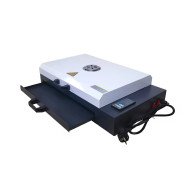
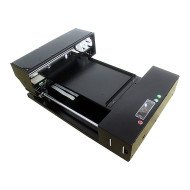
Navigating Infrastructure Integration Challenges with Automatic CD and PVC ID Printers
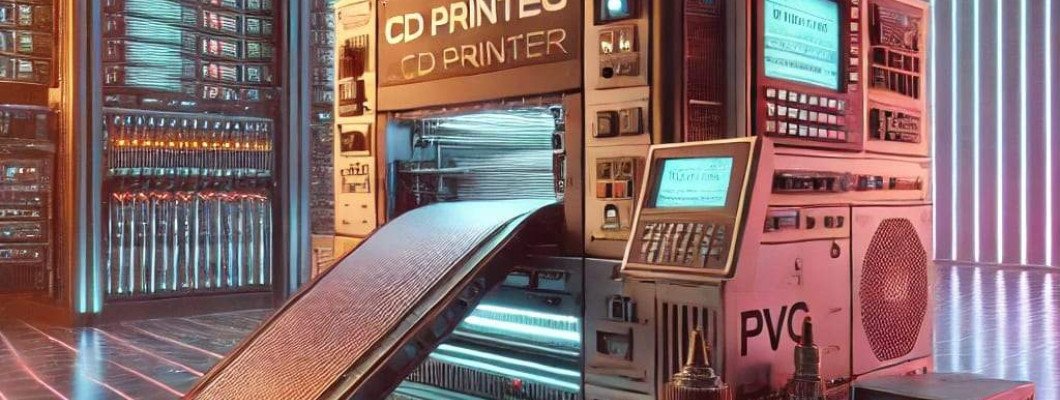
The Industrial Reality
In the world of high-output printing, integrating an automatic CD printer with PVC ID card capabilities poses unique challenges. Enterprises often encounter obstacles in optimizing infrastructure for seamless operation. The intricacies of aligning server architecture with specialized printers can lead to unexpected bottlenecks, affecting throughput and operational costs.
Technical Deep-Dive
Printhead Physics and Ink Chemistry
The precision required for PVC ID card printing necessitates a deep understanding of printhead physics. The substrate's compatibility with various ink chemistries plays a critical role in maintaining print quality over extended runs. The interaction between thermal management systems and ink viscosity must be meticulously calibrated to prevent nozzle clogging.
Thermal Management
Efficient thermal management is indispensable. Automatic printers often generate significant heat during high-speed operations. Managing this thermal output without compromising performance requires advanced cooling systems. A failure in this area can lead to hardware degradation and increased maintenance costs.
Rack Density Challenges
Integrating printers into existing infrastructural setups demands careful consideration of rack density. The physical space occupied by these devices, coupled with the airflow dynamics, influences overall system efficiency. Enterprises must evaluate server cabinet architectures to optimize spatial allocation.
Compliance and Safety Realities
Environmental and safety compliance add another layer of complexity. Ensuring equipment meets current regulations involves operational adjustments, often requiring additional capital investment. Compliance affects not only the printer itself but also the entire server infrastructure it supports.
Infrastructure Integration Process
The integration process extends beyond simple connectivity. It necessitates coordination between IT managers, maintenance personnel, and safety officers. The synchronization of various subsystems impacts data exchange protocols and seamless operations.
| Specification | Path A | Path B |
|---|---|---|
| Print Speed (CDs/hr) | 200 | 250 |
| Thermal Output (Watts) | 150 | 180 |
| Rack Units (RU) | 3 | 5 |
| Compliance Certification | ISO 14001 | ISO 9001 |
Scenario Analysis
Small Business Scaling: For emerging enterprises, the ease of integrating these printers with minimal disruption offers a competitive advantage. The compact design aids in fitting into constrained spaces, enabling smooth scalability.
Large Corporate Environment: Multinational corporations benefit from the printers' ability to seamlessly integrate with existing server setups, enhancing cross-site workflow efficiency.
High-Security Operations: In environments where data integrity is paramount, the integration must prioritize secure data transmission and redundancy. Failure in these areas can compromise sensitive operations.
Expert FAQ
Q1: What factors affect printhead longevity?
A: Material compatibility, cleaning frequency, and ink chemistry primarily impact printhead lifespan.
Q2: How can thermal management be optimized?
A: Implement advanced cooling systems and regular maintenance checks to ensure consistent thermal control.
Q3: What compliance certifications are essential?
A: ISO 14001 and ISO 9001 are critical for environmental and quality management standards, respectively.
Q4: How does rack density affect operation?
A: Higher rack densities can limit airflow, impacting cooling efficiency and potentially leading to increased maintenance.
Q5: What are the hidden costs associated with integration?
A: Costs include infrastructure upgrades, increased energy consumption, and additional compliance measures.
Strategic Verdict
The trajectory of automatic CD printers with PVC ID capabilities hinges on their ability to integrate seamlessly within diverse infrastructure environments. Enterprises must navigate thermal, compliance, and rack density challenges to fully leverage potential benefits. The technology continues to evolve, promising more efficient solutions over time.