Mastering the Pre-treatment Balance: No More Yellow Stains on White Tees

Yellow stains on white tees remain one of the most persistent challenges in textile printing, especially with DTG and DTF methods where pre-treatment missteps directly reduce product value and increase waste. The root cause is often an imbalance in pre-treatment application—too much or incorrectly applied solution leads to residue that oxidizes under heat, creating those infamous yellow marks.
Understanding the Pre-treatment Chemistry and Its Impact
Pre-treatment fluids contain chemicals designed to increase ink adhesion, particularly white ink pigments, which normally suffer from poor substrate bonding. In UV or white-ink DTG printing, the fluid’s pH and composition interact with heat during curing. Excessive application forms a dense layer that traps moisture and attracts dye migration, triggering yellow stains. Optimizing spray volumes and ensuring even coverage eliminates this risk.
The Critical Role of Spray Equipment and Process Control
Modern industrial setups rely on automated pneumatic spray systems. Manual methods can often cause inconsistent coatings leading to blotches or streaks. Precise calibration of nozzle pressure, spray angle, and fluid viscosity is necessary to produce an ultra-thin, uniform layer. GNFEI’s solutions integrate closed-loop controls to adjust these parameters dynamically, reducing operator errors and ensuring repeatability.
Addressing Printhead Clogging and White Ink Sedimentation
White pigment particles tend to settle and clog fine nozzles—common with Epson heads used in DTG. This sedimentation worsens if untreated pre-treatment residue settles into the printhead or if curing temperatures fluctuate unpredictably. Frequent printhead maintenance routines, including automated flushing and ink recirculation systems, uphold nozzle health and prolong uptime.
UV Curing on Textured or Curved Surfaces
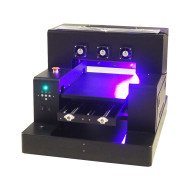
White tees with ribbed fabric or seams present uneven surfaces affecting UV light penetration. Insufficient UV exposure results in under-cured prints prone to smudging or yellowing due to incomplete chemical crosslinking. Increasing UV dose time or implementing multi-angle curing stations can guarantee full polymerization, stabilizing the white ink layer perfectly.
Producing Consistent ROI by Combining Efficiency and Quality
Ignoring pre-treatment balance leads to higher reject rates, increased ink waste, and more downtime for head cleaning—all eating into margins. A baseline ROI analysis comparing untreated batches versus optimized pre-treatment shows up to 22% cost savings by lowering reprints and materials wasted. Investing in GNFEI’s precision equipment delivers measurable gains in throughput without sacrificing quality.
Material Compatibility and Final Recommendations
- Test pre-treatment formulations for compatibility with fabric blends and coatings.
- Verify that the curing parameters for your UV or DTG system match the material porosity.
- Schedule regular maintenance cycles for printheads focusing on white ink circulation.
- Implement training for operators emphasizing spray system calibration.
There is no one-size-fits-all solution in pre-treatment; continuous fine-tuning based on fabric type, ink formula, and printer model is necessary. GNFEI deeply understands these dynamics and supports clients in customizing their workflows for peak performance and minimal defects. The path to stain-free white tees is through rigorous process control and exacting equipment standards. This focus will ultimately drive sustainable growth and repeat business in the competitive B2B printing market.